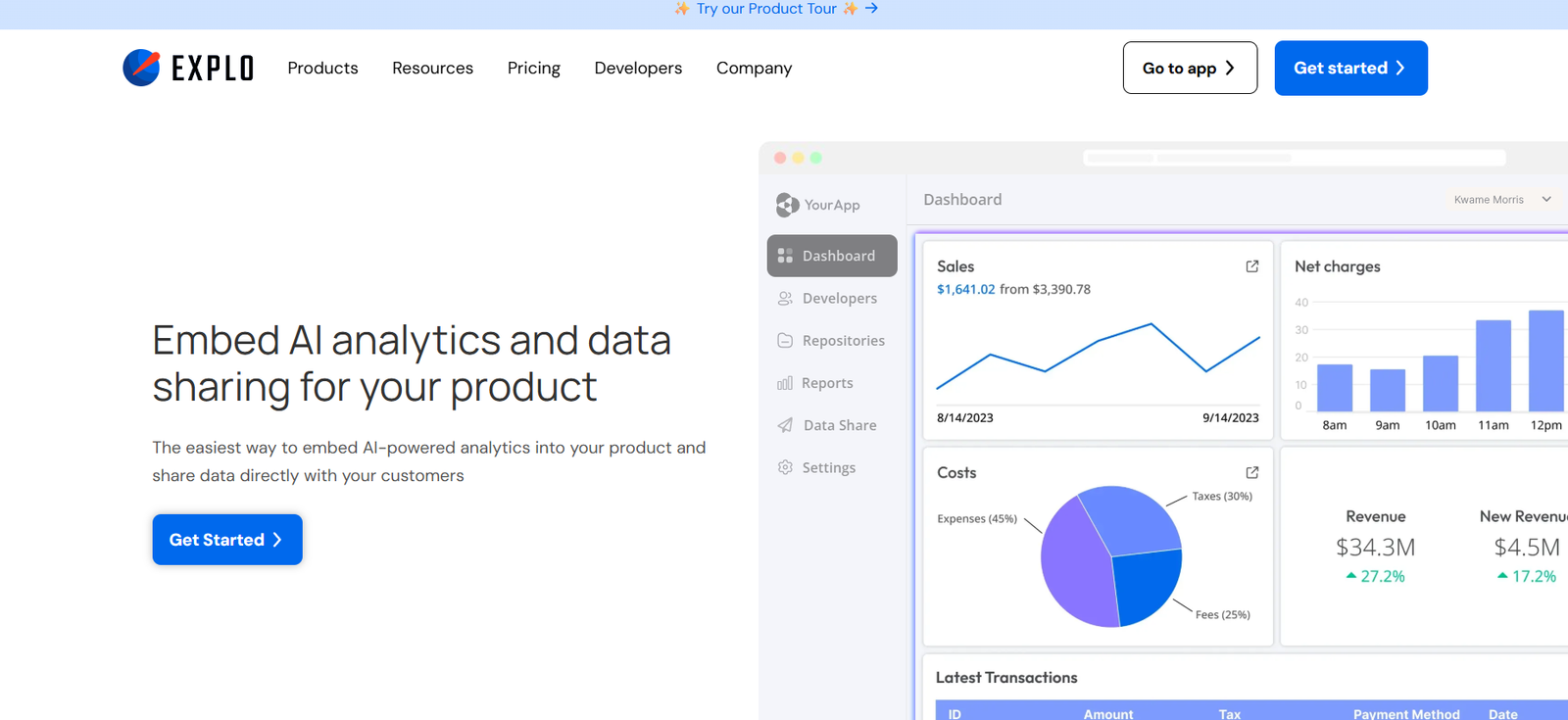
Explo is a modern embedded analytics platform that helps companies share live, interactive dashboards and reports with their customers. Built for teams that want to offer data-driven experiences directly within their product, Explo allows you to embed beautiful analytics interfaces without building them from scratch.
Explo connects directly to your production database or data warehouse and turns raw data into customizable visualizations. With support for role-based access control, white-labeling, and multi-tenant environments, it is ideal for SaaS companies and B2B platforms looking to deliver analytics as part of their product offering.
By eliminating the need for in-house dashboard development, Explo saves time, reduces engineering overhead, and enhances the user experience with powerful, real-time data insights.
Features
Explo offers a wide range of features focused on embedding and sharing analytics with external users. Its core functionality includes customizable dashboards that can be embedded directly into web applications. These dashboards support drag-and-drop editing, chart configuration, and responsive layouts.
The platform connects securely to databases such as PostgreSQL, MySQL, BigQuery, Snowflake, and Redshift. Users can build dashboards using SQL queries or through a no-code visual builder, making it accessible to both technical and non-technical users.
White-labeling allows companies to fully brand the dashboard experience, from fonts and colors to logos and custom domain settings. Explo also supports multi-tenancy, which means each end-user or customer can only access their specific data through secure filtering.
Role-based access controls ensure that internal and external users have the right level of permissions. Dashboards can be scheduled to send automated reports via email or Slack, and users can export data in formats like CSV or PDF. Explo’s embedded analytics components are also mobile-friendly and support real-time updates.
How It Works
Explo connects to your existing data sources via a secure, read-only connection. Once connected, teams can use Explo’s dashboard editor to create visualizations using SQL or the no-code builder. These visualizations can include bar charts, line graphs, tables, filters, KPIs, and other common data display formats.
Once a dashboard is built, it can be embedded into your web application using an iframe or React component. Explo provides full control over how dashboards look and function within your platform. Using row-level security and tenant-based data filtering, each user only sees the data they are authorized to access.
The Explo backend handles data querying, caching, and rendering, so your team doesn’t need to maintain additional infrastructure. Developers can use Explo’s SDKs and APIs to integrate dashboards into their frontend applications with minimal effort.
Security is a key focus, and Explo supports SOC 2 Type II compliance, encryption in transit and at rest, and audit logs for enterprise customers.
Use Cases
Explo is ideal for SaaS companies that need to provide analytics to their customers. Product teams use Explo to deliver dashboards and reports directly within the customer portal without building and maintaining analytics features in-house.
Customer success teams use the platform to create reporting portals that allow clients to view performance metrics and usage trends. Marketing and operations teams use Explo to provide partners and vendors with real-time insights on campaigns or logistics.
In healthcare and finance, Explo is used to build white-labeled dashboards that comply with data privacy requirements. Logistics and supply chain companies use it to share shipment tracking and operational data with clients.
Startups and scaling tech companies choose Explo to rapidly deploy customer-facing dashboards without investing months of engineering time into building analytics infrastructure.
Pricing
Explo offers multiple pricing tiers tailored to different company sizes and needs. While exact pricing is not listed publicly, the platform provides a 14-day free trial and encourages users to book a demo for customized pricing based on data usage, user count, and deployment requirements.
Plans are generally structured around the number of dashboard viewers, data sources, and feature access. Enterprise plans include advanced features such as audit logs, custom SLAs, dedicated support, and SSO integration.
Smaller companies or startups can begin with base plans that offer core functionality, while larger businesses can scale usage with flexible enterprise contracts. Prospective users are encouraged to request a demo or quote directly from the Explo team.
Strengths
Explo’s biggest strength is its ability to deliver fully embedded analytics with minimal engineering effort. It eliminates the need to build internal BI tools or dashboards, saving valuable development time. The platform is also designed for scalability, making it suitable for multi-tenant SaaS environments.
The interface is user-friendly, allowing non-technical users to build and customize dashboards easily. White-labeling ensures a seamless user experience, and the security features meet enterprise standards.
The platform integrates with a wide range of databases and data warehouses, ensuring compatibility with most modern tech stacks. With built-in email scheduling, exports, and real-time updates, Explo supports a variety of customer-facing use cases.
Its focus on secure, performant data delivery makes it particularly appealing for companies with strict compliance or client data separation requirements.
Drawbacks
One drawback of Explo is that pricing details are not publicly available, which may make it difficult for small businesses to assess cost without booking a demo. While the platform is designed for ease of use, setting up complex dashboards with advanced logic may still require SQL knowledge.
As a cloud-based platform, organizations with strict on-premise requirements may face limitations unless a hybrid deployment option is offered. While Explo provides strong visualizations, companies needing highly advanced analytics (such as predictive modeling or AI) may need to supplement it with additional tools.
Because it is focused on embedded dashboards rather than general-purpose BI, Explo is not intended to replace tools like Tableau or Power BI for internal enterprise analytics.
Comparison with Other Tools
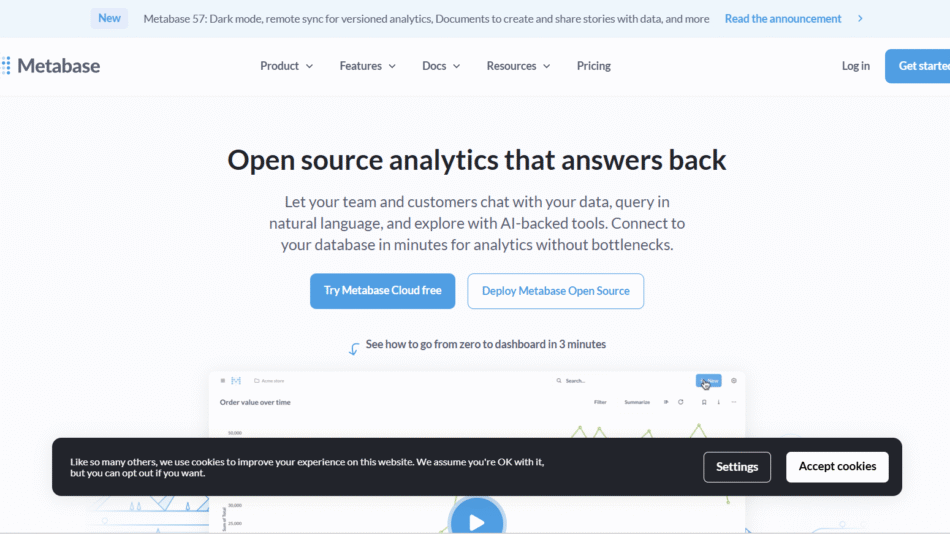
Explo is often compared to embedded analytics tools such as Metabase, Looker Embedded, and Power BI Embedded. Metabase offers open-source flexibility but may require self-hosting and more engineering resources. Looker Embedded provides powerful analytics but requires a Google Cloud ecosystem and more advanced setup.
Power BI Embedded integrates well with Microsoft tools but lacks the lightweight, SaaS-friendly deployment of Explo. Compared to these, Explo offers a streamlined, easy-to-integrate solution designed specifically for customer-facing analytics.
Its focus on white-labeling, multi-tenancy, and developer-friendly APIs makes it particularly well-suited for modern SaaS products and startups looking for a plug-and-play embedded dashboard solution.
Customer Reviews and Testimonials
Explo highlights several customer testimonials on its website, with clients praising the platform’s ease of use, quick deployment time, and professional UI. One client noted that Explo helped them deliver dashboards to customers within days rather than months of development.
Users consistently mention the speed at which they were able to build and embed analytics, along with the responsiveness of the Explo support team. Companies using Explo range from startups to enterprise SaaS platforms, all citing reduced engineering effort and improved customer satisfaction.
Public reviews on sites like G2 also reflect strong user sentiment, with high ratings for ease of setup, UI/UX, and customer support.
Conclusion
Explo is a powerful embedded analytics solution that enables companies to provide real-time, customer-facing dashboards without heavy development work. By combining flexible dashboard creation with secure, scalable infrastructure, it helps SaaS companies and data-driven platforms deliver insights directly within their products.
With features like white-labeling, multi-tenancy, and native integrations with leading databases, Explo streamlines the process of adding analytics to any application. Whether you are a startup or an enterprise, Explo offers a user-friendly, secure, and efficient way to turn internal data into a customer asset.