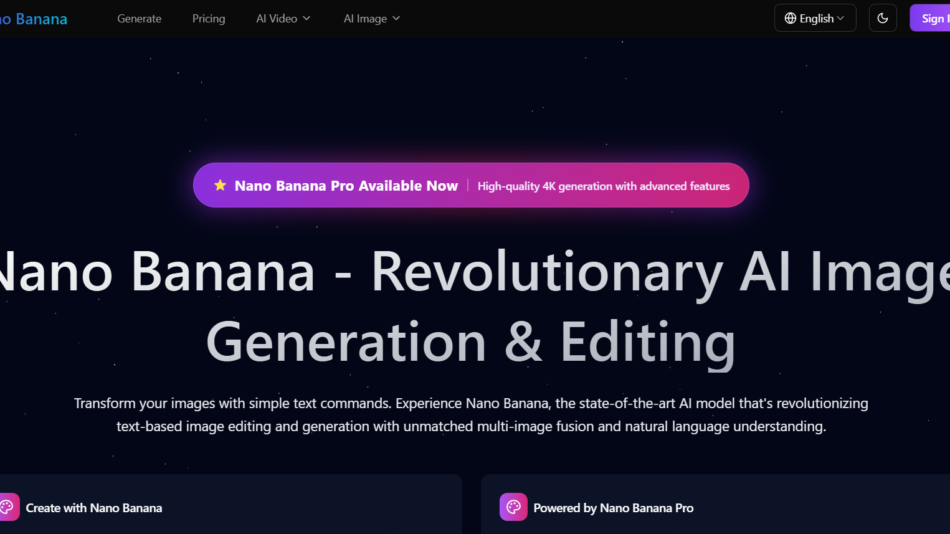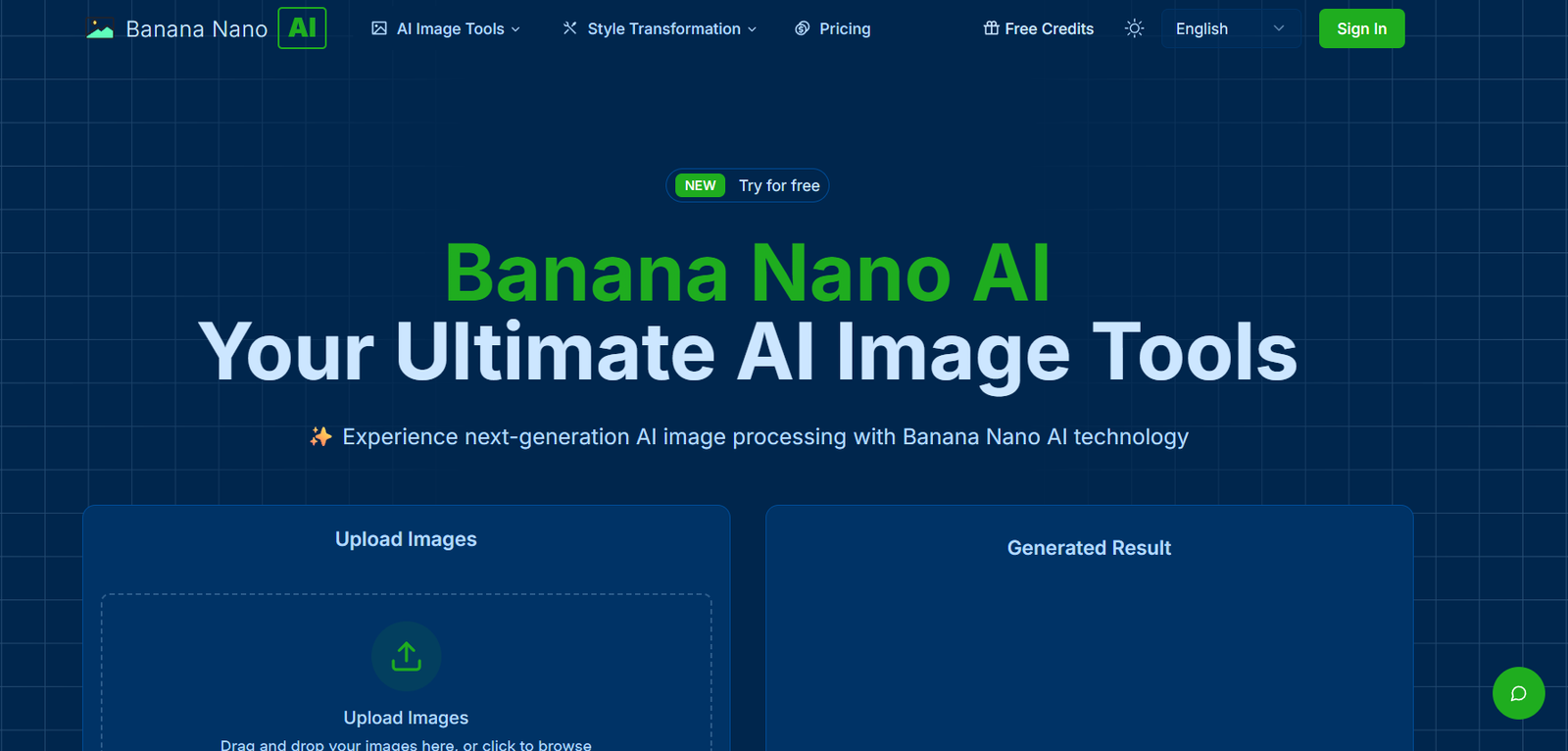
Banana Nano AI is an innovative platform that makes it incredibly easy to run, chat with, and deploy open-source large language models (LLMs) directly from your browser. Designed for developers, researchers, and AI enthusiasts, Banana Nano removes the complexity involved in running LLMs locally or in the cloud.
Instead of requiring GPUs, Python scripts, or complicated environment setups, Banana Nano allows users to interact with top-performing models through a simple web interface or API. The focus is on ultra-fast access, high customizability, and flexibility, especially for those who want control over which models they run and how they interact with them.
Banana Nano represents a new approach to AI deployment—one that prioritizes speed, simplicity, and openness by supporting leading-edge open-source models like Llama, Mistral, and others, all without users needing to host infrastructure themselves.
Features
Banana Nano AI offers a unique suite of features focused on direct access to powerful open-source AI models. The primary feature is the ability to instantly run large language models in your browser with no setup required. This includes a wide range of LLMs such as Meta’s LLaMA, Mistral, and other fine-tuned open models from Hugging Face or community releases.
The platform also enables conversational interaction, meaning you can chat with these models much like ChatGPT. You can run inference, ask questions, test prompts, or even build applications that use the models through Banana’s API.
Banana Nano supports running models on-device or through cloud endpoints, depending on the model size and complexity. It includes easy toggling between different models, prompt templates, and system settings, giving users total control over how each model behaves.
Another valuable feature is private model execution. Since the models can be run locally in the browser, your data never leaves your device—this provides a layer of privacy that many cloud-based AI platforms cannot offer.
Developers can use Banana Nano to test and fine-tune models without needing to deploy on AWS or set up their own GPU servers. It simplifies AI development and experimentation, especially for those working with open-source models.
How It Works
Banana Nano AI uses a client-side or lightweight server-based approach to run models efficiently. When a user selects a model, the platform loads it either locally (if the model is small enough) or from Banana’s optimized backends if it’s a larger model.
Once loaded, users can immediately begin interacting with the model using a chat interface. This interface works similarly to tools like ChatGPT, where you type a prompt and receive responses in real-time.
Behind the scenes, Banana Nano uses WebAssembly and other browser-optimized technologies to run LLMs directly in-browser where possible. For larger models, the platform securely manages cloud endpoints to deliver fast responses.
Developers also have the option to call models via an API, which allows integration into apps, tools, or workflows. You can switch models at any time, making it ideal for testing different architectures and tuning prompt engineering strategies.
Use Cases
Banana Nano AI serves a wide variety of use cases across technical and creative fields. For developers, it is a sandbox to test and compare open-source language models without installing anything or renting expensive GPUs. Researchers can use it to validate model behaviors and benchmark performance across datasets and tasks.
AI hobbyists and learners benefit from the simplicity of being able to interact with complex models instantly, turning Banana Nano into a hands-on educational tool.
It’s also valuable for those working on AI-powered products or features. You can prototype chatbot functions, content generators, or summarization tools using any of the supported models.
For privacy-conscious users or organizations, Banana Nano’s ability to run certain models locally means sensitive data can be processed without ever touching the cloud.
Pricing
As of the current information on the official Banana Nano AI website, the platform is free to use for general browsing, chat, and testing with supported models.
There is no published premium pricing plan at this time, and the site emphasizes open access and ease of experimentation. However, API usage or commercial deployments may be subject to separate terms or limits, which are expected to be detailed in future updates as the platform evolves.
Users are encouraged to create an account for better model access, history saving, and additional control features.
Since Banana Nano is still in active development, pricing structures for advanced features or enterprise support may be introduced later. At the moment, it is a highly valuable free tool for anyone interested in experimenting with open-source AI models.
Strengths
Banana Nano AI’s biggest strength is instant, frictionless access to powerful open-source language models. It removes traditional barriers to LLM usage such as infrastructure setup, GPU requirements, and software dependencies.
The platform is fast, responsive, and privacy-focused. Its support for local inference ensures that users with appropriate devices can run models entirely offline. The flexibility to switch between models and prompt settings makes it ideal for prompt engineers, researchers, and developers.
Another strength is the simplicity of the user interface. It feels familiar for those who’ve used chat-based tools, yet powerful enough for technical users needing deeper control over model behavior. Banana Nano’s community-focused approach also supports openness and experimentation.
Drawbacks
While Banana Nano is powerful, it has some limitations. Since it relies heavily on browser technology, running larger models locally may not be possible for all users, especially those with limited computing power.
Additionally, the platform is best suited for technical users. Beginners might not fully understand how to select or configure different models, although the interface is relatively user-friendly.
Another limitation is the current lack of commercial or enterprise-specific documentation. For teams seeking SLAs, data governance, or advanced deployment support, Banana Nano may not yet be a complete solution.
Because the tool is still evolving, occasional bugs or changes in supported models may affect long-term reliability for production use.
Comparison with Other Tools
Compared to other AI model hosting platforms like Hugging Face Spaces, Google Colab, or Replicate, Banana Nano stands out for its browser-first approach and simplicity. Hugging Face Spaces provides interactive model demos but often requires more technical setup. Google Colab enables custom model runs but requires coding and GPU management.
Replicate focuses on running models via API, often for a fee, and doesn’t offer local execution. In contrast, Banana Nano makes AI models feel like apps—instant, interactive, and low-friction.
Unlike ChatGPT or Claude, which are locked behind proprietary APIs and models, Banana Nano gives you the power to choose and run community-backed, open-source models. This appeals to developers who need control and transparency in their AI tooling.
Customer Reviews and Testimonials
Banana Nano AI has generated buzz in the AI and developer communities for its no-install, no-GPU-needed experience. Early users have shared positive feedback across platforms like Twitter, Reddit, and Product Hunt.
Users praise the ability to interact with powerful models like LLaMA and Mistral without needing a local setup. One developer mentioned that Banana Nano helped them test prompt variations across three different models in less than an hour—something that would normally take days using traditional environments.
Another user appreciated the privacy-first approach, saying it gave them peace of mind knowing that sensitive data could be processed locally.
The platform’s responsiveness, sleek design, and alignment with the open-source community have positioned it as a favorite among AI builders and experimenters.
Conclusion
Banana Nano AI is a revolutionary platform that lowers the barrier to working with open-source large language models. By offering instant access through the browser and allowing for both cloud and local execution, it combines convenience with flexibility in a way that few AI tools currently do.
Whether you’re an AI developer, researcher, or curious technologist, Banana Nano offers an accessible, powerful way to explore the growing ecosystem of open models like LLaMA, Mistral, and more. Its free access model and user-friendly interface make it a great entry point for anyone looking to understand or build with generative AI.