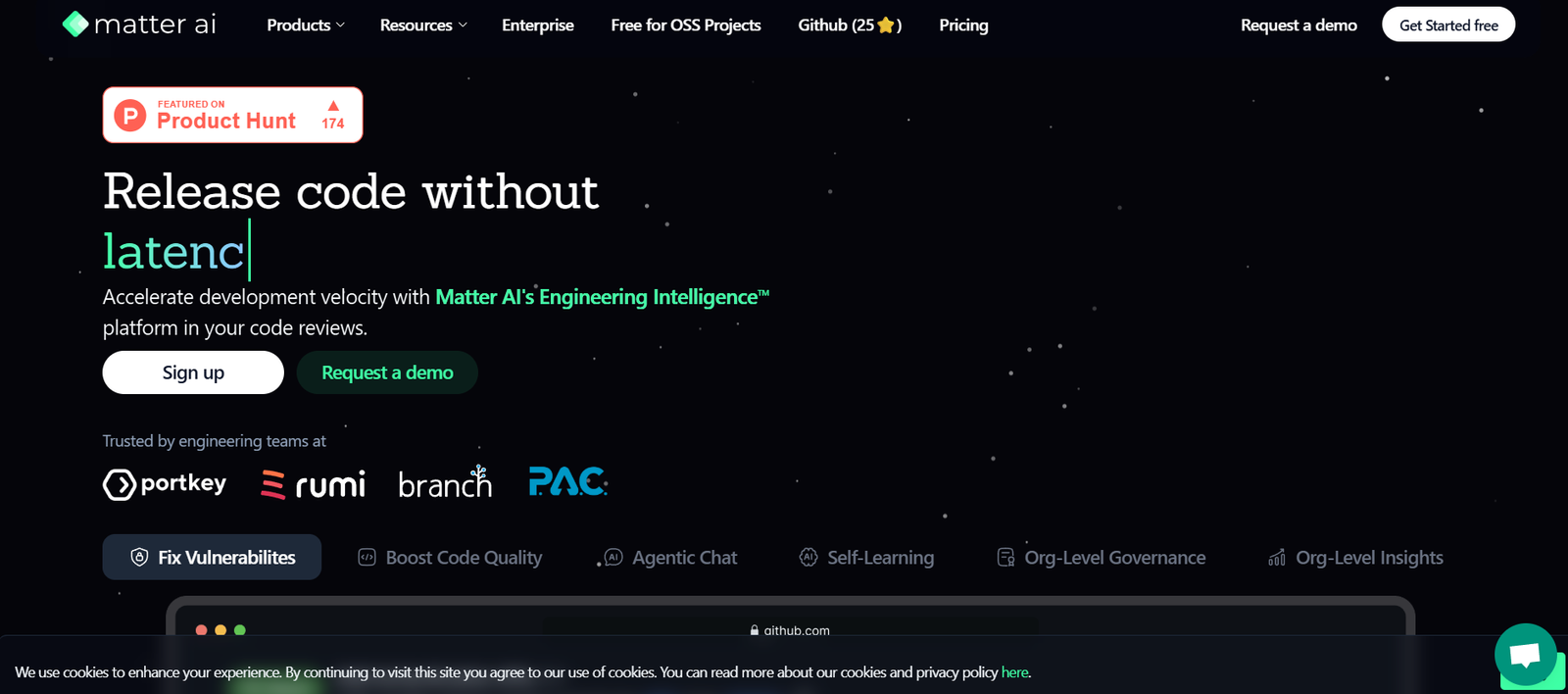
MatterAI.dev is a platform built for developers and engineers who want to create and deploy custom autonomous AI agents. It provides the core infrastructure and modular architecture needed to design agents that can reason, act, and interact with APIs, tools, or data sources—without reinventing the wheel.
MatterAI is built around flexibility, extensibility, and speed, enabling you to build AI systems that perform autonomous tasks in real-world applications, from task automation to customer interaction and intelligent decision-making.
Features
MatterAI.dev is packed with developer-focused features for building AI agents:
Modular Agent Framework: Build agents using plug-and-play modules for planning, reasoning, memory, and tool integration.
Extensible Architecture: Integrate external APIs, webhooks, or internal tools via code.
Local and Cloud Deployment: Run agents locally for development or deploy them in production environments.
Memory and State Management: Persistent memory capabilities for long-term contextual understanding.
Built-in Toolchain: Comes with HTTP clients, file systems, task queues, and more.
Multi-Agent Collaboration: Create agent teams that work together across workflows.
Developer SDK and CLI: Programmatic control for custom workflows, deployments, and debugging.
Open-Source Friendly: Built to support self-hosting and open agent architectures.
How It Works
MatterAI.dev is designed for technical users and developers:
Set Up Your Environment: Install the MatterAI framework locally or start in the cloud.
Define Your Agent: Configure your agent’s personality, goals, and capabilities via a YAML or JSON config or code.
Connect Tools & APIs: Extend the agent’s capabilities by integrating internal tools, databases, or APIs.
Deploy and Monitor: Test your agent locally, then deploy to production and monitor actions via logging or dashboards.
Iterate and Scale: Improve agent logic, performance, and integrations over time using code-first principles.
Use Cases
MatterAI.dev supports a wide variety of AI agent applications:
Task Automation: Build agents to automate internal operations like data entry or report generation.
DevOps Automation: Use AI to triage issues, manage tickets, or control CI/CD workflows.
Customer Support Agents: Deploy multi-modal agents that answer questions or handle repetitive support tasks.
Knowledge Assistants: Build agents that respond to user queries based on internal documentation or systems.
Research Automation: Create AI agents that browse websites, extract data, and produce summaries.
Pricing
As of the latest update, MatterAI.dev offers the following pricing model:
Free Tier:
Access to the SDK and basic agent framework
Local development
Limited modules and integrations
Pro Plan (~$20–$49/month):
Access to cloud-based deployment tools
Advanced agent configurations
Enhanced memory and API limits
Enterprise Plan (Custom pricing):
Custom hosting
SLA-backed performance
Team collaboration and multi-agent orchestration
For up-to-date pricing and enterprise solutions, visit MatterAI.dev/pricing.
Strengths
MatterAI.dev provides key benefits for technical teams:
Developer-First: Tailored for engineers—not just prompt designers.
Flexible and Modular: Build anything from a one-off bot to an enterprise-grade AI agent.
No Vendor Lock-In: Supports open standards and self-hosted deployments.
Production-Ready: Offers all the infrastructure you need to take agents from prototype to production.
Multi-Agent Support: Coordinate multiple agents in collaborative workflows.
Drawbacks
A few limitations to consider:
Developer-Oriented: Not suitable for non-technical users or low-code teams.
Learning Curve: Requires knowledge of APIs, coding, and deployment pipelines.
No UI-Based Agent Builder (Yet): Lacks a drag-and-drop interface.
Limited Community Resources (Early Stage): As a newer platform, community support may be growing.
Comparison with Other Tools
Here’s how MatterAI.dev compares with similar platforms:
Versus AutoGPT: MatterAI offers a more structured, production-focused approach; AutoGPT is more experimental.
Versus LangChain: LangChain focuses on LLM chains; MatterAI emphasizes long-running, autonomous agent systems.
Versus OpenAI Assistants API: OpenAI provides built-in assistant logic; MatterAI gives full control over infrastructure and execution.
MatterAI.dev stands out for its modularity, local-first development model, and extensible architecture for developers.
Customer Reviews and Testimonials
Developers using MatterAI praise its flexibility and performance:
“Finally a tool that lets me build agents without being boxed into a template.”
“The SDK is solid, and deploying agents to the cloud was straightforward.”
“Great for internal automation—I built a doc assistant that interacts with our GitHub in under an hour.”
Feedback highlights engineering control, extensibility, and time-to-deploy.
Conclusion
MatterAI.dev is a powerful framework for building autonomous AI agents tailored to real-world business and development needs. With its open architecture, developer-friendly design, and emphasis on flexibility, it’s ideal for engineers who want full control over how their AI agents think, act, and interact with the world.
If you’re a developer or technical team building AI-first products, MatterAI.dev gives you the infrastructure to scale from prototype to production—fast.