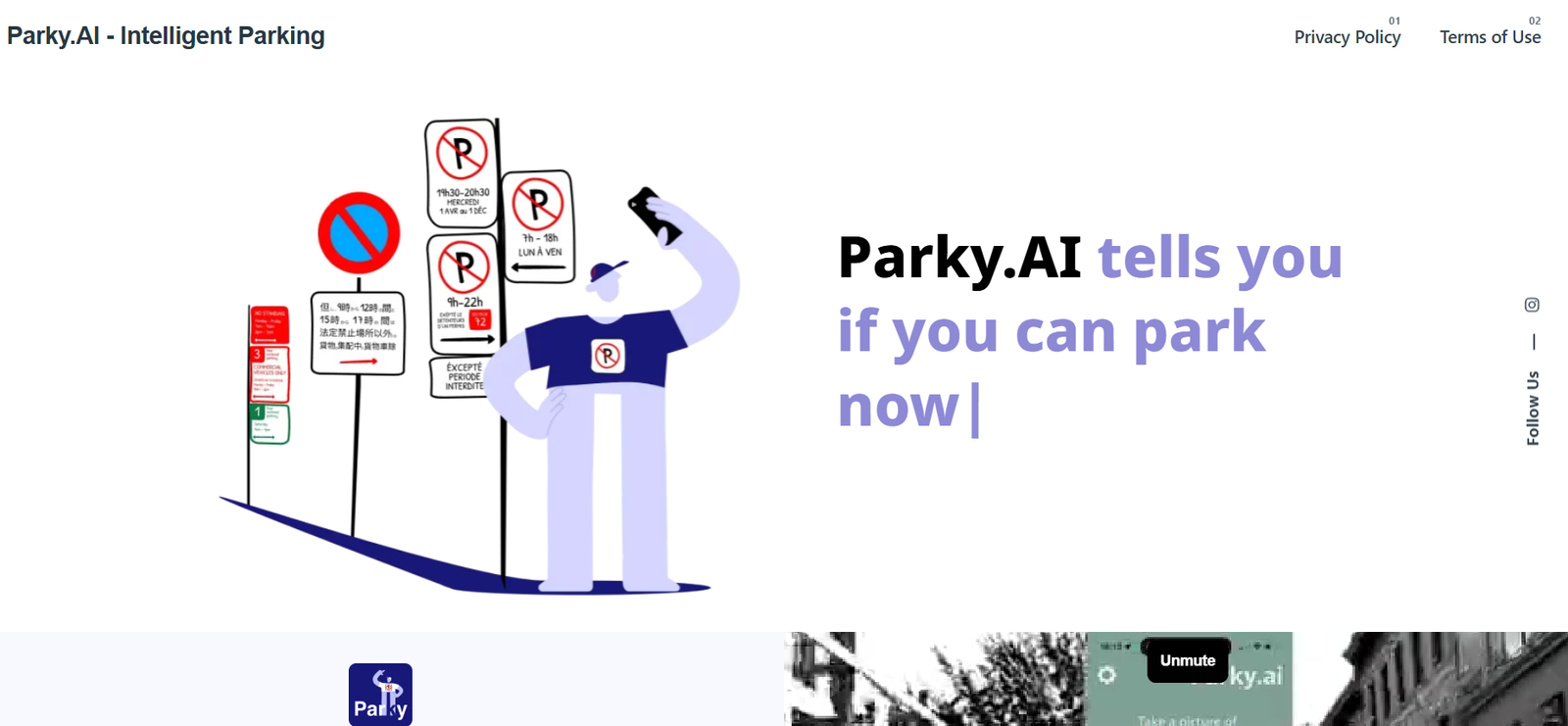
Parky.ai is an AI-powered parking management platform designed to automate and optimize parking spaces for businesses, commercial complexes, gated communities, and smart campuses. By combining artificial intelligence with IoT technology, Parky.ai enables real-time monitoring, seamless access control, and intelligent analytics to improve efficiency, reduce human dependency, and enhance the overall parking experience.
With contactless entry, license plate recognition (LPR), cloud-based dashboards, and automated visitor authentication, Parky.ai transforms conventional parking into a smart, fully digital system. Its AI-driven insights help property managers and facility operators reduce costs, improve occupancy, and make informed decisions.
Features
Parky.ai offers a comprehensive suite of features built around automation, intelligence, and user convenience:
AI-Based Parking Automation: Replace manual processes with AI-powered access, tracking, and reporting.
License Plate Recognition (LPR): Automatically detects and registers vehicle entry and exit using camera-based license plate scanning.
Cloud Dashboard: Centralized control panel for real-time monitoring, user management, and data visualization.
Visitor Management: Automates visitor parking allocation with OTP-based authentication and timed access.
Contactless Access Control: Entry and exit managed through QR codes, RFID, or license plates, ensuring zero-touch interaction.
Analytics and Reports: Provides detailed metrics on parking usage, peak hours, average occupancy, and security logs.
Real-Time Alerts: Notifies admins of unauthorized access or anomalies through the dashboard and mobile app.
Integration with Smart Devices: Supports IP cameras, boom barriers, motion sensors, and gate control units.
Mobile App for Admins and Users: Allows facility managers and users to control, monitor, and access parking features from their smartphones.
Role-Based Access: Assign specific permissions for security staff, residents, or tenants to manage vehicle movement and approvals.
How It Works
Parky.ai modernizes parking infrastructure through a combination of AI software, IoT hardware, and cloud-based data systems. The process begins with the installation of access control devices like IP cameras, sensors, and automated gates integrated with Parky.ai’s platform.
When a vehicle approaches the entrance, the LPR system scans the license plate and checks for authorization in real time. If access is approved, the gate opens automatically. For visitors or guests, QR codes or OTP-based systems manage entry permissions for a limited period.
All activities are logged in the admin dashboard, where facility managers can view vehicle history, generate reports, and receive alerts for suspicious activity. The platform supports both fixed allocations (for residents or tenants) and flexible parking (for guests or staff).
Using AI analytics, Parky.ai continuously monitors patterns, predicts space utilization, and helps optimize parking space availability without manual supervision.
Use Cases
Parky.ai is ideal for managing modern parking challenges across multiple property types:
Gated Communities: Automate resident and visitor parking, reducing friction at entry points and enhancing security.
Corporate Offices and IT Parks: Streamline employee parking allocation and enable real-time space tracking.
Commercial Complexes and Malls: Offer contactless entry, dynamic slot assignment, and occupancy tracking.
Hospitals and Educational Institutions: Manage high-traffic parking scenarios with minimal human intervention.
Smart Cities and Urban Projects: Support centralized, scalable parking management integrated with broader smart infrastructure.
Industrial Campuses and Warehouses: Track logistics vehicles and ensure secure access for delivery fleets.
Coworking Spaces: Provide a seamless parking experience for tenants and clients with flexible access rules.
Pricing
Parky.ai does not list fixed pricing on its official website. Pricing depends on multiple factors such as:
Number of parking slots to manage
Type of access control hardware required
Custom features like integrations, branding, or reporting
Location and installation complexity
Type of facility (residential, commercial, institutional)
To receive a quote, businesses and property managers are encouraged to contact Parky.ai’s sales team through their website or request a demo. Custom packages are available for small and large-scale deployments.
Strengths
Parky.ai delivers a robust set of advantages for modern parking facilities:
Complete Automation: Eliminates manual ticketing and human intervention with smart AI workflows.
Enhanced Security: Real-time monitoring and LPR ensure only authorized vehicles gain entry.
Improved User Experience: Contactless, fast, and intuitive access for both residents and visitors.
Scalable Infrastructure: Works equally well for small complexes and large commercial campuses.
Centralized Management: Manage multiple gates and sites from one dashboard.
Detailed Analytics: Enables data-driven decision-making to optimize space and reduce congestion.
Customizable Setup: Tailor workflows, user permissions, and integration with existing hardware.
Mobile-First Approach: Gives administrators and residents full control from their phones.
Drawbacks
While Parky.ai is a strong solution, there are a few considerations to be aware of:
Initial Setup Required: Implementation involves hardware installation, which may require coordination and planning.
Hardware Dependency: Functionality depends on compatible cameras, gates, and sensors.
Not Self-Service for Individuals: Designed for properties and businesses—individual users cannot deploy it independently.
Internet Connectivity Required: Real-time data sync and access control depend on a stable internet connection.
Limited Public Documentation: Detailed technical documents are not available publicly; onboarding is handled through demos.
Comparison with Other Tools
Parky.ai vs. Park+ or MyGate: While these platforms offer visitor and parking management, Parky.ai focuses more on full automation with AI, LPR, and analytics capabilities.
Parky.ai vs. Traditional Access Systems: Conventional RFID or guard-controlled systems lack smart analytics and real-time updates. Parky.ai offers a modern, scalable alternative.
Parky.ai vs. Smart Parking Apps (like JustPark or SpotHero): These apps focus on public parking reservations. Parky.ai is an infrastructure solution for private and commercial parking.
Parky.ai vs. Gate Management Tools: Many gate systems offer basic control but lack data insights. Parky.ai combines security, AI, and automation in one platform.
Parky.ai vs. IoT Gate Controllers: While both use IoT hardware, Parky.ai integrates AI, cloud dashboards, visitor flows, and analytics in a cohesive system.
Customer Reviews and Testimonials
While Parky.ai does not list detailed customer reviews publicly, its presence in gated communities, corporate campuses, and smart buildings suggests strong adoption and positive outcomes.
A facilities manager at a residential complex shared in a case study:
“With Parky.ai, we eliminated manual logs and reduced gate entry times by over 50%. It’s been a game-changer for security and convenience.”
A commercial property manager commented:
“We now manage over 500 parking spots across two buildings with just one dashboard. The data insights are extremely useful for optimizing usage.”
The platform is particularly appreciated for its real-time visibility, ease of use, and seamless integration with modern smart building infrastructure.
Conclusion
Parky.ai is a next-generation parking management platform that leverages AI and automation to create smart, secure, and efficient parking ecosystems. With its contactless access, license plate recognition, and data-driven analytics, Parky.ai modernizes the parking experience for residents, employees, visitors, and facility managers.
For businesses and properties looking to eliminate parking chaos, reduce operational costs, and implement future-ready infrastructure, Parky.ai offers a reliable and scalable solution. Its intelligent approach aligns perfectly with the growing demand for smart cities and digital-first buildings.