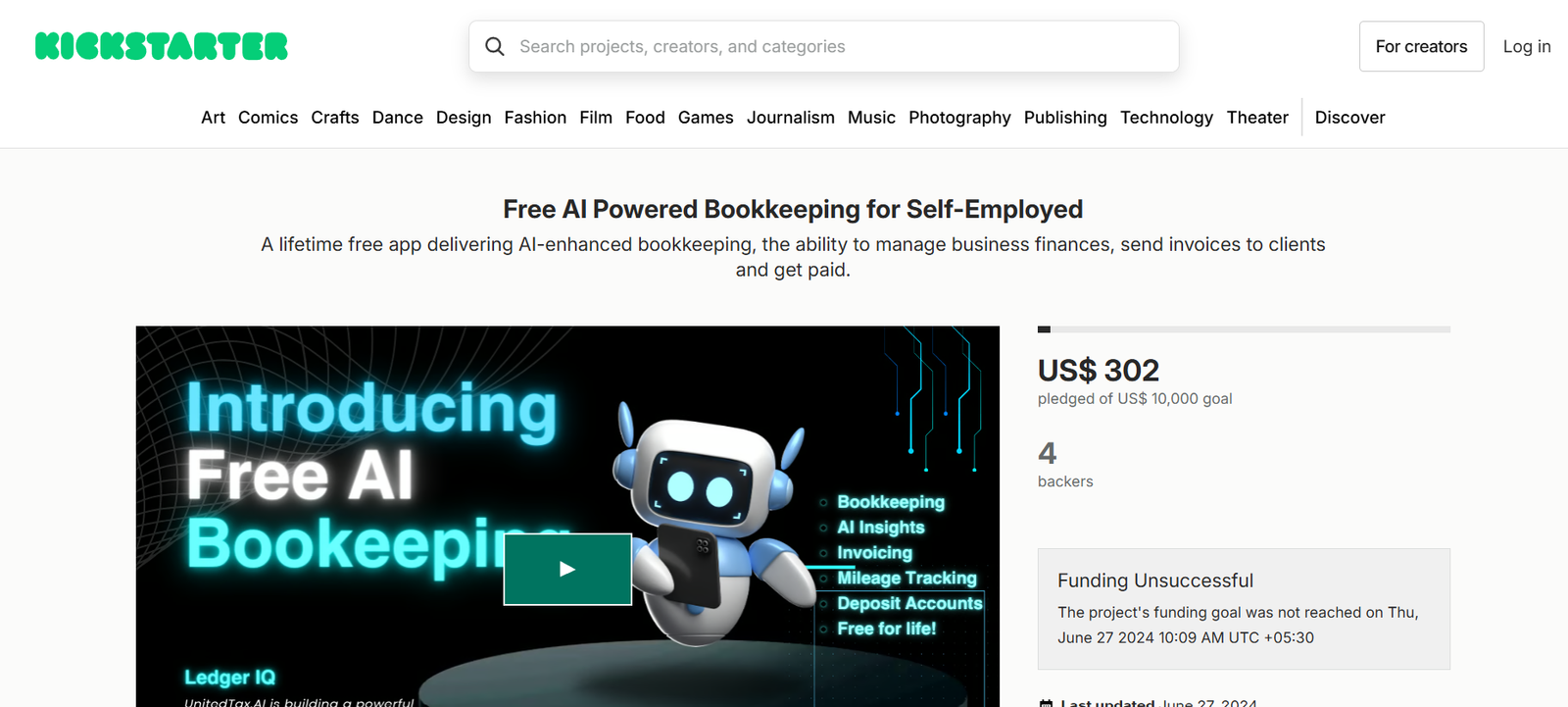
Kickstarter is a crowdfunding platform that enables creators to fund their creative projects by connecting directly with supporters around the world. Since its launch in 2009, Kickstarter has helped bring thousands of artistic, technological, and entrepreneurial ideas to life by allowing individuals to pledge financial support in exchange for unique rewards, early access, or simply the satisfaction of supporting innovation.
Unlike traditional funding avenues, Kickstarter empowers creators to maintain control over their projects while reaching a global audience. Campaigns span categories such as film, music, games, design, art, publishing, and technology. Kickstarter operates on an all-or-nothing funding model, meaning creators only receive funds if their campaign goal is fully met, ensuring commitment on both sides.
Kickstarter is known not only as a funding tool but also as a vibrant community of backers and creators who support each other in building original, independent work.
Features
Kickstarter offers a suite of features tailored to support creators in successfully launching and promoting their projects.
Project creation tools guide users through setting up a campaign, including uploading visuals, writing compelling pitches, setting funding goals, and choosing reward tiers.
The all-or-nothing funding model ensures that backers are only charged if the campaign reaches its funding target. This reduces risk and builds trust between creators and supporters.
Reward tiers let creators offer incentives such as early access, limited-edition items, or behind-the-scenes content. These tiers can be customized based on pledge amounts.
Creator dashboard provides real-time analytics on campaign performance, including traffic sources, funding trends, and backer demographics.
Backer community tools allow creators to post updates, send messages, and build long-term relationships with supporters throughout and after the campaign.
Social sharing integrations help campaigns gain momentum by making it easy to promote projects on platforms like Twitter, Facebook, and Instagram.
Creator handbook and help center offer detailed resources and best practices for crafting effective campaigns, managing backers, and fulfilling rewards.
Project verification ensures that campaigns meet Kickstarter’s standards for originality and transparency before going live.
How It Works
Kickstarter operates as a platform for launching and backing creative projects. The process begins when a creator signs up, selects a project category, and builds a campaign page with details like title, description, funding goal, deadline, and reward levels.
Once submitted, Kickstarter reviews the campaign to ensure it meets its guidelines. After approval, the campaign goes live and is open for pledges from the public.
Backers browse projects on the website or through curated collections and pledge support by choosing a reward tier. Pledges are only collected if the project reaches its funding goal by the deadline. This model gives creators the confidence to commit to production while protecting backers from projects that fail to meet their minimum viability.
Throughout the campaign, creators can post updates, interact with backers, and track progress in real time. After successful funding, Kickstarter collects the pledged funds (minus fees) and transfers them to the creator, who is then responsible for delivering the promised rewards.
Kickstarter does not offer fulfillment services, so creators must independently manage production and delivery. However, the platform provides resources to guide creators through these phases.
Use Cases
Kickstarter is widely used by creators and startups across different industries to raise funds and generate community interest.
Independent filmmakers use Kickstarter to fund production and post-production costs for short films, documentaries, and feature-length movies, often offering exclusive screenings or credits as rewards.
Game developers, especially in board games and indie video games, launch campaigns to test market interest and secure funding for design, manufacturing, and distribution.
Artists and designers use the platform to create and sell limited-edition prints, apparel, or functional art objects while engaging directly with a fanbase.
Authors and publishers raise money to self-publish books, comics, or zines by offering signed editions or special acknowledgments in print.
Tech startups use Kickstarter to validate concepts and fund prototypes or production runs for innovative gadgets, often giving backers early access at discounted prices.
Musicians and bands fund album production, tours, or vinyl releases while offering custom merchandise or exclusive music content.
Nonprofits and community leaders launch campaigns for educational tools, public art installations, and social initiatives that benefit specific communities.
Pricing
Kickstarter does not charge creators to launch a campaign, but it does deduct fees from successfully funded projects.
Platform fee is 5% of the total funds raised for any successful campaign.
Payment processing fees are typically around 3% to 5% and are charged separately. These fees cover credit card processing and vary slightly by country and payment method.
If a campaign does not meet its funding goal, no fees are charged and no pledges are collected.
Backers are not charged any fees directly by Kickstarter. Their credit cards are only charged once a project successfully meets its goal.
Kickstarter does not offer paid advertising or premium listing options. All creators have access to the same tools and visibility mechanisms.
There are no ongoing subscription fees, licensing fees, or usage charges. The cost structure is simple and contingent on success.
Strengths
Kickstarter is highly trusted, having helped raise billions of dollars for over 200,000 successful projects. Its reputation and built-in audience give new campaigns immediate visibility.
The all-or-nothing funding model reduces the risk for both creators and backers. It ensures that projects launch only if they meet realistic funding targets.
Its strong sense of community encourages backer engagement, repeat contributions, and word-of-mouth promotion.
Kickstarter’s focus on creative work differentiates it from more general crowdfunding sites, attracting a specific audience interested in original, independent innovation.
Resources and support content are extensive, including campaign guides, case studies, and live support for creators.
Kickstarter’s interface is user-friendly and supports international campaigns in multiple currencies and languages.
Drawbacks
Kickstarter’s all-or-nothing model, while effective in many cases, can be limiting for creators who fall just short of their goals and receive no funding at all.
It does not support every type of project. For example, charity fundraising, personal financial needs, or non-creative commercial services are not permitted.
The platform does not handle reward production or shipping logistics. Creators must manage all post-funding responsibilities independently.
Kickstarter campaigns are highly competitive. Without a pre-built audience or effective marketing strategy, it can be difficult to stand out or reach funding targets.
Once launched, campaign details such as funding goals and reward tiers cannot be changed, which limits flexibility during a live campaign.
Customer support for backers is limited in cases where creators fail to deliver. Kickstarter does not issue refunds or mediate disputes between creators and backers.
Comparison with Other Tools
Compared to Indiegogo, another major crowdfunding platform, Kickstarter is more restrictive but also more trusted. Indiegogo offers flexible funding options, allowing creators to keep funds even if they don’t meet their goals, which appeals to some but may carry more risk for backers.
GoFundMe, while popular, is primarily focused on personal causes and charitable fundraising, which makes it unsuitable for creative projects that Kickstarter specializes in.
Patreon offers a subscription-based model for ongoing creator support, which contrasts with Kickstarter’s one-time project-based funding. Many creators use both platforms at different stages of their careers.
Compared to equity crowdfunding platforms like SeedInvest or StartEngine, Kickstarter does not offer any ownership or financial return to backers. It is ideal for creators looking for community support, not investors.
BackerKit, although not a competitor in crowdfunding, often integrates with Kickstarter campaigns for post-campaign fulfillment and pledge management, showing how Kickstarter fits within a broader ecosystem of tools.
Customer Reviews and Testimonials
Kickstarter has received thousands of reviews across platforms like Trustpilot, G2, Reddit, and independent blogs. Creators often praise the platform for its visibility, ease of use, and impact on launching careers or businesses.
Many backers appreciate the opportunity to support creative innovation and receive exclusive rewards. They often cite the emotional satisfaction of helping ideas come to life as a key motivator.
However, some backers have expressed frustration with campaigns that failed to deliver on promises or missed deadlines. Kickstarter’s limited involvement post-funding means that trust lies primarily with the creator.
Creators who succeed frequently return to the platform for future projects and build long-term relationships with their backers. Case studies on the Kickstarter blog highlight successful campaigns, including Pebble Watch, Exploding Kittens, and Critical Role.
For objective feedback, users are encouraged to explore public review platforms and the Kickstarter community forums.
Conclusion
Kickstarter remains a cornerstone of the global crowdfunding ecosystem, enabling creators to launch original projects with direct support from a global community. Its creator-first philosophy, transparent funding model, and commitment to creativity make it the go-to platform for artists, designers, developers, and innovators.
While the all-or-nothing model requires careful planning and strong promotion, the potential rewards are significant—both financially and in terms of community engagement. With the right strategy and compelling story, Kickstarter gives creators the tools they need to turn ideas into reality.
Whether you’re looking to fund your first short film, develop a new game, or publish an illustrated novel, Kickstarter offers a proven path to gather support, build an audience, and bring your vision to life.