
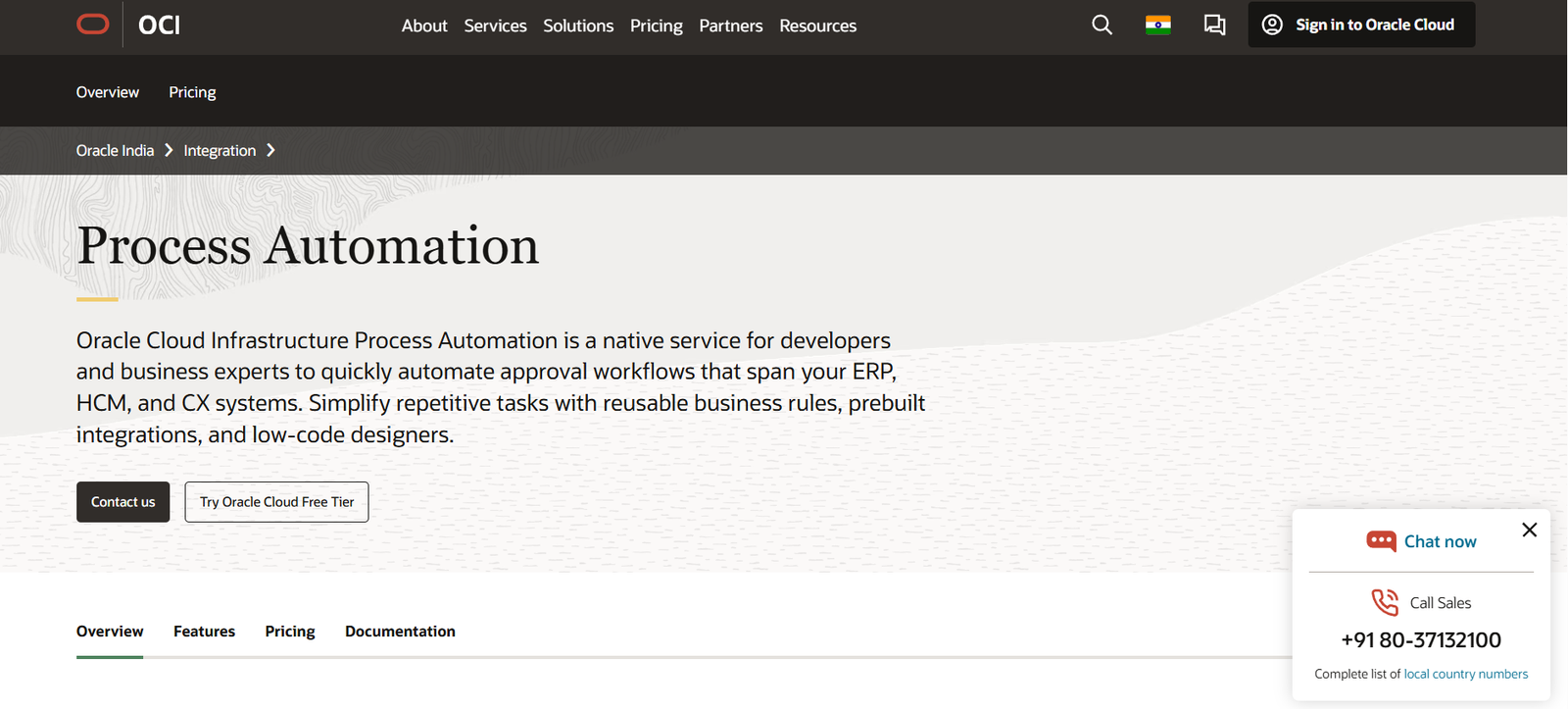
Oracle is a multinational technology corporation known for its robust suite of enterprise software, database management systems, cloud infrastructure services, and, more recently, AI-powered business tools. Founded in 1977, Oracle has evolved into one of the largest and most trusted providers of business technology solutions globally, serving customers in over 175 countries.
With a focus on digital transformation, Oracle offers integrated platforms that combine applications, analytics, and infrastructure to help organizations streamline operations, drive innovation, and reduce costs. Its technology stack supports everything from simple cloud-based apps to complex multi-cloud and hybrid deployments. Oracle’s enterprise-grade security, scalability, and reliability make it a preferred choice for businesses across sectors including finance, healthcare, retail, and manufacturing.
Oracle’s commitment to innovation is reflected in its continuous development of AI, machine learning, and autonomous services that enhance its cloud offerings and software applications. From databases and ERP systems to customer experience and AI-infused analytics, Oracle empowers enterprises to operate smarter and faster.
Features
Oracle offers a wide array of features across its products and services, tailored to meet the demands of large-scale business environments.
Oracle Cloud Infrastructure (OCI) delivers high-performance computing, networking, and storage capabilities designed for mission-critical applications. It supports both traditional and cloud-native workloads and is optimized for performance, availability, and cost-efficiency.
Autonomous Database technology enables databases to self-patch, self-tune, and self-secure, reducing administrative overhead and human error. It’s a flagship offering in Oracle’s AI-powered suite.
Enterprise Resource Planning (ERP) solutions help businesses manage financials, procurement, risk management, and other core operations with a unified cloud platform that scales globally.
Customer Experience (CX) Cloud integrates sales, marketing, and customer service data to provide a seamless and personalized experience. AI tools predict customer behavior and recommend optimized actions.
Human Capital Management (HCM) Cloud offers a complete solution for HR needs, including talent acquisition, workforce planning, and employee engagement, all powered by real-time analytics.
Oracle Analytics Cloud provides AI-enhanced business intelligence with features like data visualization, natural language processing, and automated forecasting.
Fusion Applications suite brings together ERP, CX, HCM, and SCM (Supply Chain Management) in a unified framework that allows for better data flow, collaboration, and business agility.
Security and Compliance are built into all Oracle products, ensuring end-to-end data protection with tools for identity management, threat detection, and regulatory compliance.
How It Works
Oracle’s core systems operate through a layered technology stack, including infrastructure, platform, and software services delivered via the cloud. Organizations can choose to run their workloads on Oracle Cloud Infrastructure, deploy hybrid architectures, or use Oracle’s on-premise solutions.
When using Oracle Cloud services, users access a central portal to deploy and manage resources. Developers and IT teams can use OCI for infrastructure provisioning, application deployment, data storage, and AI training workloads. The interface supports automation through APIs and SDKs, allowing seamless integration with existing enterprise systems.
For database services, Oracle’s Autonomous Database handles routine tasks like backups, patching, and performance optimization without human intervention. It uses AI and machine learning to monitor and adjust configurations, ensuring maximum uptime and efficiency.
Business users access Oracle Fusion Applications through web-based dashboards that unify data across departments. This interconnected ecosystem allows decision-makers to leverage real-time analytics, automate business processes, and gain predictive insights.
Oracle’s AI and machine learning capabilities are embedded throughout its product line. This includes personalized marketing through CX Cloud, predictive workforce analytics in HCM, and automated financial forecasting in ERP.
Use Cases
Oracle is used by enterprises across nearly every major industry for a variety of critical business operations.
Large enterprises rely on Oracle ERP Cloud to manage global financial systems, supply chain logistics, and compliance reporting.
Healthcare providers use Oracle Health for managing patient data, improving operational efficiency, and ensuring regulatory compliance through secure cloud infrastructure.
Retail businesses leverage Oracle CX Cloud and analytics to understand customer behavior, personalize campaigns, and optimize inventory and sales strategies.
Manufacturing companies utilize Oracle SCM Cloud to coordinate production schedules, monitor inventory, and automate procurement processes with real-time visibility.
Educational institutions implement Oracle Cloud for student information systems, administrative workflows, and predictive analytics to improve retention and engagement.
Public sector organizations depend on Oracle’s secure and scalable infrastructure for digital transformation, citizen services, and critical public data management.
AI development teams use Oracle’s AI infrastructure and GPU-powered computing to train models and deploy scalable machine learning applications.
Pricing
Oracle pricing varies significantly depending on the product or service selected and the deployment model. Oracle offers both subscription-based pricing for cloud services and traditional licensing for on-premise solutions.
Oracle Cloud Infrastructure pricing is based on a pay-as-you-go model or monthly flex pricing, with costs associated with compute, storage, networking, and database usage. Detailed calculators are available on the Oracle website to estimate costs based on workloads.
Oracle Autonomous Database is charged based on compute and storage consumption, with separate pricing tiers for transaction processing and data warehousing.
Oracle Fusion Applications, such as ERP, HCM, and CX Cloud, are typically priced per user per month and may vary based on the size of the business and level of customization required.
Enterprise agreements and custom quotes are available for large-scale deployments and long-term partnerships. Oracle also offers a free tier for OCI services with limited resources and time-bound trials for select applications.
For precise and updated pricing, businesses should consult Oracle’s official pricing pages or speak with a sales representative.
Strengths
Oracle’s greatest strength lies in its ability to deliver enterprise-grade solutions at scale. Its technology stack is highly integrated, allowing businesses to run entire ecosystems—from data centers to end-user applications—on a single platform.
The Autonomous Database represents a major innovation, reducing manual database management and increasing reliability. It also allows businesses to allocate IT resources more effectively.
Oracle’s global infrastructure, compliance with international data regulations, and robust security posture make it a trusted provider for industries with strict compliance needs.
The integration of AI and machine learning across cloud applications provides actionable insights and automation, helping businesses become more data-driven.
Another key advantage is Oracle’s hybrid cloud capability, which gives enterprises flexibility in managing workloads both on-premise and in the cloud without sacrificing performance or security.
Drawbacks
Oracle’s complexity can be a drawback for smaller businesses or those without dedicated IT teams. Initial setup, customization, and migration can require significant resources and technical expertise.
The pricing structure can be challenging to navigate, especially for businesses without enterprise-level budgets. While Oracle offers comprehensive functionality, it may come at a higher cost compared to simpler SaaS alternatives.
Users have also reported a steep learning curve for some Oracle applications, particularly when transitioning from legacy systems or non-Oracle software.
Some updates and changes to the user interface or APIs can create challenges in maintaining long-term configurations without constant monitoring.
While Oracle has improved its customer support, response times and resolution quality may vary depending on service level agreements and account tiers.
Comparison with Other Tools
Compared to competitors like Amazon Web Services (AWS) and Microsoft Azure, Oracle Cloud Infrastructure focuses more on enterprise workloads, database optimization, and integrated applications. While AWS and Azure offer broader developer ecosystems, Oracle is preferred for high-performance database and ERP workloads.
Against Salesforce, which dominates in customer relationship management, Oracle CX Cloud offers deeper integration with financial and supply chain systems but may lack the same level of third-party extensibility.
Compared to SAP, Oracle Fusion Applications are more cloud-native and updated more frequently. Oracle also offers greater automation through AI and autonomous services, whereas SAP remains heavily reliant on integrator support and customization.
In comparison to IBM, which has strong AI tools through Watson, Oracle provides more unified enterprise software across ERP, HCM, and CX, with a growing set of AI features in real-time business processes.
Customer Reviews and Testimonials
Oracle receives strong feedback from enterprise customers for its robustness, scalability, and integrated solutions. On platforms like Gartner Peer Insights, G2, and Capterra, users frequently highlight Oracle’s reliability, advanced database performance, and comprehensive business application suite.
Large organizations often praise the ability to centralize operations through Oracle’s cloud ecosystem, improving collaboration and decision-making.
Some customers note the initial complexity in deployment but report high satisfaction once systems are fully implemented. Others appreciate the AI features that automate repetitive processes and provide predictive insights.
Common points of improvement include ease of customization, user interface enhancements, and support responsiveness, particularly for mid-sized clients.
Oracle maintains a strong presence on Product Hunt, LinkedIn, and other tech forums, where IT professionals discuss real-world use cases and share implementation experiences.
Conclusion
Oracle continues to be a global leader in enterprise technology, delivering scalable, secure, and intelligent solutions that power digital transformation across industries. With offerings that span cloud infrastructure, AI, databases, and business applications, Oracle provides a comprehensive ecosystem designed to meet the evolving needs of modern organizations.
Its strength lies in its ability to unify disparate business processes, integrate data across systems, and apply AI to generate meaningful insights. While its complexity and pricing may require careful planning, the long-term value Oracle offers through automation, reliability, and innovation is substantial.
Whether you’re an enterprise seeking robust cloud solutions, an IT team deploying mission-critical workloads, or a business looking to enhance operations through AI and automation, Oracle delivers the tools and infrastructure needed to succeed in today’s competitive landscape.


