
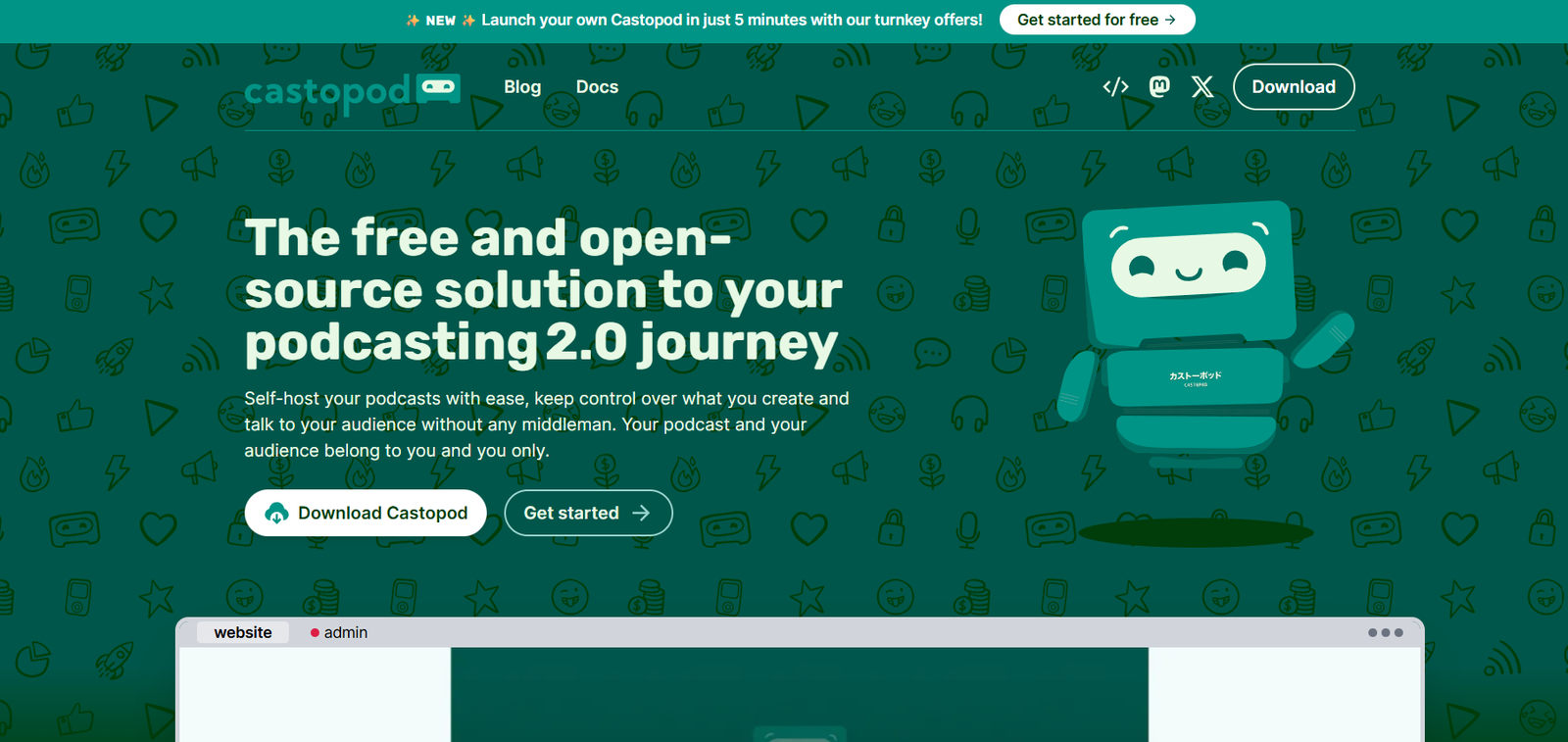
Castopod is an open-source podcast hosting solution built for creators who value control, freedom, and decentralization. Designed to help podcasters publish, manage, and distribute their shows independently, Castopod goes beyond traditional podcast hosting by integrating with the Fediverse—a decentralized network of platforms like Mastodon and PeerTube.
Unlike most commercial podcast platforms that limit customization or charge recurring fees, Castopod gives you complete ownership of your content and your data. It’s free to use, self-hosted, and developed with the modern podcaster in mind.
With features like dynamic RSS feeds, episode analytics, social integration, and a user-friendly web interface, Castopod empowers podcasters to grow their audiences without relying on centralized platforms.
Features
At the core of Castopod is its self-hosted nature. You install it on your own server or hosting provider, giving you full control over your podcast’s infrastructure and branding. It supports multiple podcasts under a single instance, making it suitable for both solo creators and podcast networks.
The platform generates Podcasting 2.0-compatible RSS feeds, which means you can take advantage of advanced features like episode transcripts, value-for-value monetization, chapter markers, and more.
Each podcast comes with a customizable public page that showcases episodes, descriptions, guests, and social links. The layout is clean, responsive, and SEO-friendly, helping your show stand out and stay discoverable.
One of Castopod’s standout features is Fediverse integration. Your podcast becomes a social account within decentralized networks like Mastodon. That allows you to interact with followers, receive comments on episodes, and build community in a privacy-respecting, ad-free environment.
You also get detailed analytics, including listener counts, episode popularity, download trends, and referrer sources. These insights help you understand audience behavior and optimize future content.
Other features include multilingual support, built-in media player, episode scheduling, and the ability to manage guests and co-hosts. As an open-source platform, developers can extend its capabilities or contribute improvements via GitHub.
How It Works
To use Castopod, you start by installing it on a web server. It requires PHP, a database, and standard hosting tools. The Castopod documentation provides a step-by-step installation guide to help users set it up manually or via Docker.
Once installed, you log into the admin dashboard to create your first podcast. You upload cover art, write your show description, and set up your RSS feed details. From there, you can begin uploading episodes, adding show notes, and setting publication dates.
Each episode is published to your Castopod site and included in your RSS feed, making it accessible to platforms like Apple Podcasts, Spotify, and Pocket Casts. With Fediverse integration enabled, episodes are also posted as social updates, allowing listeners to engage through decentralized networks.
You can monitor analytics, manage guest profiles, and customize your podcast’s public page—all from one intuitive interface. And since everything is hosted on your own server, you have complete control over data storage, privacy, and backups.
Use Cases
Independent podcasters use Castopod to avoid third-party hosting limitations and maintain ownership over their content. By self-hosting, they can brand their show freely, avoid platform restrictions, and keep control of monetization options.
Developers and privacy-focused creators use Castopod to integrate podcasting into decentralized online spaces. Through the Fediverse, they can grow their audience without being tied to mainstream social networks or closed algorithms.
Podcast networks and organizations use Castopod to host multiple shows on a single platform. This centralizes operations while offering flexibility in how each show is presented and managed.
Educational institutions, nonprofits, and open media initiatives also choose Castopod for its transparency, zero-cost licensing, and commitment to open standards. It aligns with values of open access, ethical technology, and user autonomy.
Pricing
Castopod is completely free to use. As an open-source project licensed under AGPL, it can be downloaded, installed, modified, and distributed without cost. There are no subscription fees or usage limits.
However, because Castopod is self-hosted, users must pay for their own server or hosting plan. Costs will vary depending on the provider and usage requirements, such as storage space, bandwidth, and traffic.
For those without technical experience, working with a developer or managed hosting provider may be necessary. But for tech-savvy users, running Castopod on platforms like DigitalOcean, Linode, or AWS can be cost-effective and scalable.
There’s also an active community and GitHub repository where updates, support, and contributions are shared freely.
Strengths
Castopod’s biggest strength is freedom. Unlike commercial hosting services, it doesn’t lock you into monthly plans, limited features, or content restrictions. You own everything—your audio files, feed, website, and data.
Its integration with the Fediverse makes it one of the few podcasting platforms that embrace decentralization and ethical technology. It allows podcasters to grow communities without relying on ad-based, algorithm-driven platforms.
The interface is clean, modern, and user-friendly. Even though it’s self-hosted, once set up, day-to-day use is as easy as any other podcast platform.
Castopod’s compliance with Podcasting 2.0 standards future-proofs your content for new tools and monetization options, such as micropayments, transcript embedding, and interactive metadata.
Being open-source also means you can audit the code, add features, or even build custom tools on top of it.
Drawbacks
The biggest tradeoff with Castopod is that it requires self-hosting. If you’re not familiar with server setups or website management, you may find the installation process a bit technical. It’s not as plug-and-play as commercial platforms like Buzzsprout or Podbean.
There’s no mobile app or built-in hosting infrastructure, which means users must rely on third-party services for storage and delivery. This may involve some trial and error to get right.
While the community is active and helpful, there’s no formal customer support team. You’ll need to depend on documentation and community forums if you run into issues.
For teams or agencies that need advanced workflow automation or integrations with CRM tools, some customization may be necessary.
Comparison with Other Tools
Castopod differs from traditional podcast hosting tools like Anchor, Podbean, or Transistor by being fully open-source and self-hosted. These platforms offer convenience but often lock users into pricing tiers, branding limits, or data policies.
In contrast, Castopod gives you full control with no recurring fees. It’s closest in spirit to tools like Podcast Generator, Podlove, or Hindenburg, which also focus on self-hosting or open-source publishing, but Castopod leads in social integration and Podcasting 2.0 support.
Compared to Anchor, which is owned by Spotify, Castopod offers greater independence and fewer limitations but lacks automatic distribution and built-in monetization options.
With its Fediverse support, Castopod stands in a unique position. No other podcast host currently offers built-in ActivityPub support for decentralized publishing and engagement.
Customer Reviews and Testimonials
As an open-source project, most feedback on Castopod comes from developers, independent creators, and digital rights advocates. Users often highlight how refreshing it is to see a podcasting tool that prioritizes freedom, privacy, and user control.
Podcasters praise the clean design, rich features, and ability to customize without vendor lock-in. One user said it gave them “peace of mind knowing my show won’t disappear or be restricted because of a platform’s terms of service.”
Developers appreciate the well-documented API and the ability to contribute improvements. Organizations that value ethical tech note how Castopod aligns with their principles of transparency and decentralization.
While there are fewer user testimonials compared to mainstream platforms, the tool has received growing support in the open-source and tech communities.
Conclusion
Castopod is a forward-thinking podcast hosting platform for creators who care about independence, open standards, and long-term control. With powerful tools for managing episodes, publishing to the Fediverse, and embracing the Podcasting 2.0 movement, it offers a unique alternative to mainstream hosts.
While it may not be the right fit for users who want instant setup or dedicated customer support, it’s a strong choice for anyone ready to take ownership of their podcast and embrace ethical, decentralized technology.
For podcasters who believe in openness and want their content to be future-proof, Castopod is one of the most exciting platforms available today.


