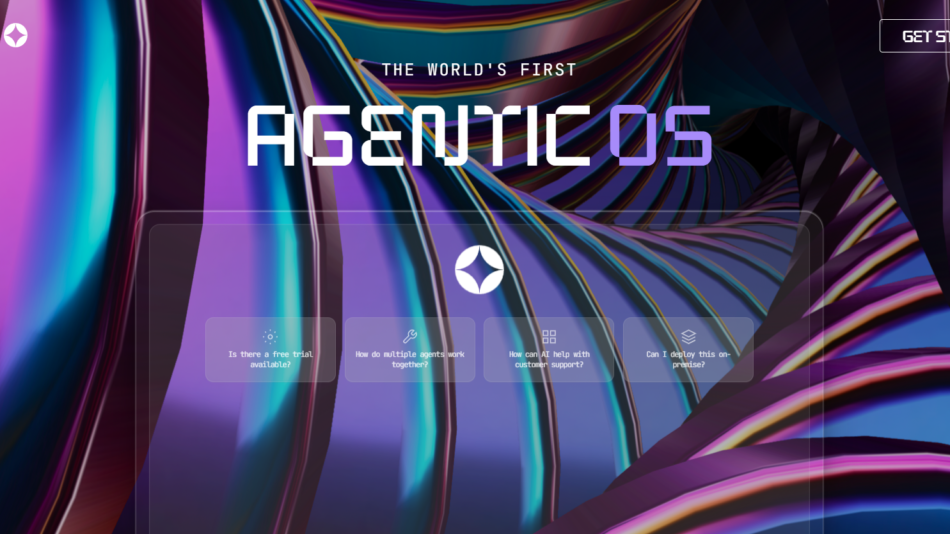
Cascading AI is a comprehensive AI enablement and workflow automation platform designed for enterprises and modern teams. The platform focuses on helping organizations operationalize artificial intelligence by integrating AI into everyday workflows securely, scalably, and without the need for deep technical expertise.
Cascading AI stands out by offering a no-code environment where teams can build, manage, and deploy AI-powered tools and workflows. It bridges the gap between non-technical teams and powerful AI capabilities by allowing users to create internal apps, automation scripts, and intelligent assistants—all within a secure and compliant environment.
The platform supports organizations that want to move beyond basic AI experiments and instead build repeatable, secure, and scalable AI-driven processes. With features focused on data integration, workflow logic, user interface generation, and enterprise governance, Cascading AI enables faster digital transformation through intelligent automation.
Features
Cascading AI delivers an extensive range of features tailored for enterprise-grade AI adoption:
Workflow Automation
Users can automate end-to-end workflows involving data ingestion, processing, decision-making, and response generation using AI.
No-Code Builder
A visual, no-code interface allows users to build AI applications, workflows, and tools without writing code.
AI Agent Integration
Deploy intelligent agents that use models like GPT-4 or Claude to perform tasks such as summarization, Q&A, classification, and more.
Data Connectors
Integrate with internal and external data sources including APIs, databases, SaaS tools, and spreadsheets for real-time access and contextual AI usage.
Secure Execution Environment
Cascading AI runs in a secure environment with access controls, role-based permissions, and encryption to protect sensitive enterprise data.
Prompt Management
Centralized prompt engineering and management tools help teams create reusable, consistent AI prompts for various workflows.
Collaboration and Sharing
Built for teams, the platform allows users to share workflows, collaborate on building tools, and maintain centralized governance.
Audit Logs and Versioning
Provides full visibility into workflow execution and changes, supporting auditability and compliance.
Custom UI and Embeds
Create internal tools with custom front-end interfaces or embed AI-powered widgets into other applications.
Model Flexibility
Supports integration with multiple LLM providers such as OpenAI, Anthropic, and open-source models, giving teams flexibility in model selection.
How It Works
Cascading AI is designed to make building AI-enabled workflows simple and secure. Users start by accessing the visual builder, where they can drag and drop components to define workflow logic. This includes actions such as triggering based on data input, calling an LLM for a specific task, connecting to internal data, and delivering outputs via dashboards, APIs, or notifications.
Each workflow can include:
Input sources (e.g., uploaded files, API calls, forms)
AI model tasks (e.g., summarization, categorization, document analysis)
Data transformation steps
Output channels (e.g., email, database update, Slack messages)
These workflows can be scheduled or triggered by external events. The platform also provides reusable prompt templates and allows prompt testing to ensure consistent and high-quality AI responses.
For organizations needing custom internal tools, Cascading AI allows users to build and host internal apps powered by AI. These apps can be shared across teams or embedded into existing portals. Teams can monitor performance, edit logic, and update workflows in real-time—all without writing code.
Use Cases
Cascading AI serves a wide range of use cases across industries and departments:
Customer Support Automation
Build AI assistants to handle customer queries, escalate tickets, and automate FAQ responses using integrated data and LLMs.
Legal Document Analysis
Use AI to summarize, extract, and classify clauses from legal contracts, accelerating legal reviews and compliance tasks.
Sales Enablement
Automate lead qualification, proposal generation, and account research by integrating CRM data with AI workflows.
Human Resources
Develop workflows for resume screening, candidate communication, and internal policy Q&A tools.
Marketing Content Creation
Automate the generation of emails, blog posts, and SEO copy with tailored workflows that use branded content libraries and prompts.
Finance and Operations
Streamline invoice processing, budgeting reports, and risk assessments by automating document handling and data entry.
Custom Internal Tools
Develop AI-powered dashboards, internal search tools, and process assistants tailored to business needs—without code.
Pricing
As of now, Cascading AI does not list public pricing on its website. The platform targets mid-sized to large enterprises, and pricing is likely customized based on:
Number of users or seats
Volume of workflow execution
Level of support and onboarding required
Data integration and infrastructure needs
AI model usage (based on provider and model type)
Prospective users are encouraged to request a demo and discuss their specific use case with the Cascading AI team to receive a tailored pricing plan.
You can contact the team directly through their official website at cascading.ai.
Strengths
Cascading AI offers several advantages for enterprises looking to scale AI adoption:
Enterprise-Grade Security
Designed with data privacy, encryption, and access control at its core, making it safe for sensitive workflows.
No-Code Simplicity
Empowers non-developers to build and deploy AI tools, reducing the reliance on engineering teams.
Scalable and Modular
Supports workflows of varying complexity and scales with organizational needs, from prototypes to production tools.
Model Flexibility
Compatible with major LLM providers, giving organizations flexibility and cost control.
Workflow Governance
Includes robust tracking, version control, and audit logs for enterprise compliance.
Cross-Functional Collaboration
Designed for teams across departments, enabling shared development and deployment of AI tools.
Custom UI Creation
Supports building apps and dashboards that act as user-friendly front ends to AI workflows.
Drawbacks
While Cascading AI is powerful, there are some limitations to consider:
No Transparent Pricing
The lack of public pricing may limit accessibility for small teams or solo developers.
Requires Workflow Planning
Teams must invest time in mapping workflows and defining clear goals to fully leverage the platform.
Early-Stage Product
While promising, the platform is still evolving and may lack some advanced features available in older RPA or automation platforms.
LLM Costs
Depending on the models used (e.g., GPT-4), AI usage costs may accumulate with high-volume workflows.
Technical Guidance May Be Needed
Although no-code, complex integrations might still require IT support or developer input, especially for data and API setups.
Comparison with Other Tools
Cascading AI can be compared with platforms like Zapier, Retool, and AirOps, though each serves different market segments.
Cascading AI vs Zapier
Zapier focuses on connecting apps and automating tasks between tools using predefined triggers. Cascading AI offers deeper integration with AI models and more complex workflow logic, especially for enterprise use cases.
Cascading AI vs Retool
Retool is a developer-focused platform for building internal tools using code. Cascading AI is no-code, allowing a broader set of users to build tools and workflows with integrated AI.
Cascading AI vs AirOps
AirOps is also AI-focused and provides workflow automation tools. Cascading AI differentiates itself through strong governance features, no-code UI generation, and enterprise readiness.
Cascading AI excels where organizations require secure, scalable AI workflows with easy deployment, making it ideal for cross-functional teams in regulated industries.
Customer Reviews and Testimonials
As of now, Cascading AI does not publicly showcase customer testimonials or user case studies on its website. However, the company is actively engaging with enterprise clients and early adopters across industries.
Based on the features and positioning, early feedback from enterprise teams has emphasized:
Ease of use for non-technical staff
Effective collaboration between technical and business teams
Faster AI deployment cycles compared to custom software development
Confidence in secure, compliant AI integration
Organizations interested in customer success stories or product demonstrations are encouraged to request a demo via the official site.
Conclusion
Cascading AI is a forward-thinking platform that empowers organizations to integrate AI into their operations without writing code. With a clear focus on enterprise-grade security, workflow automation, and collaboration, it enables teams to build internal tools and AI-powered processes that scale efficiently and safely.
Whether you’re aiming to automate support tasks, streamline document processing, or build custom AI-powered apps, Cascading AI offers a robust, flexible solution for turning artificial intelligence into practical, everyday productivity. Its no-code approach, combined with deep AI capabilities and strong governance features, makes it an ideal choice for teams seeking to operationalize AI in a secure and compliant environment.
As the demand for AI enablement grows across industries, Cascading AI positions itself as a valuable partner for digital transformation.