
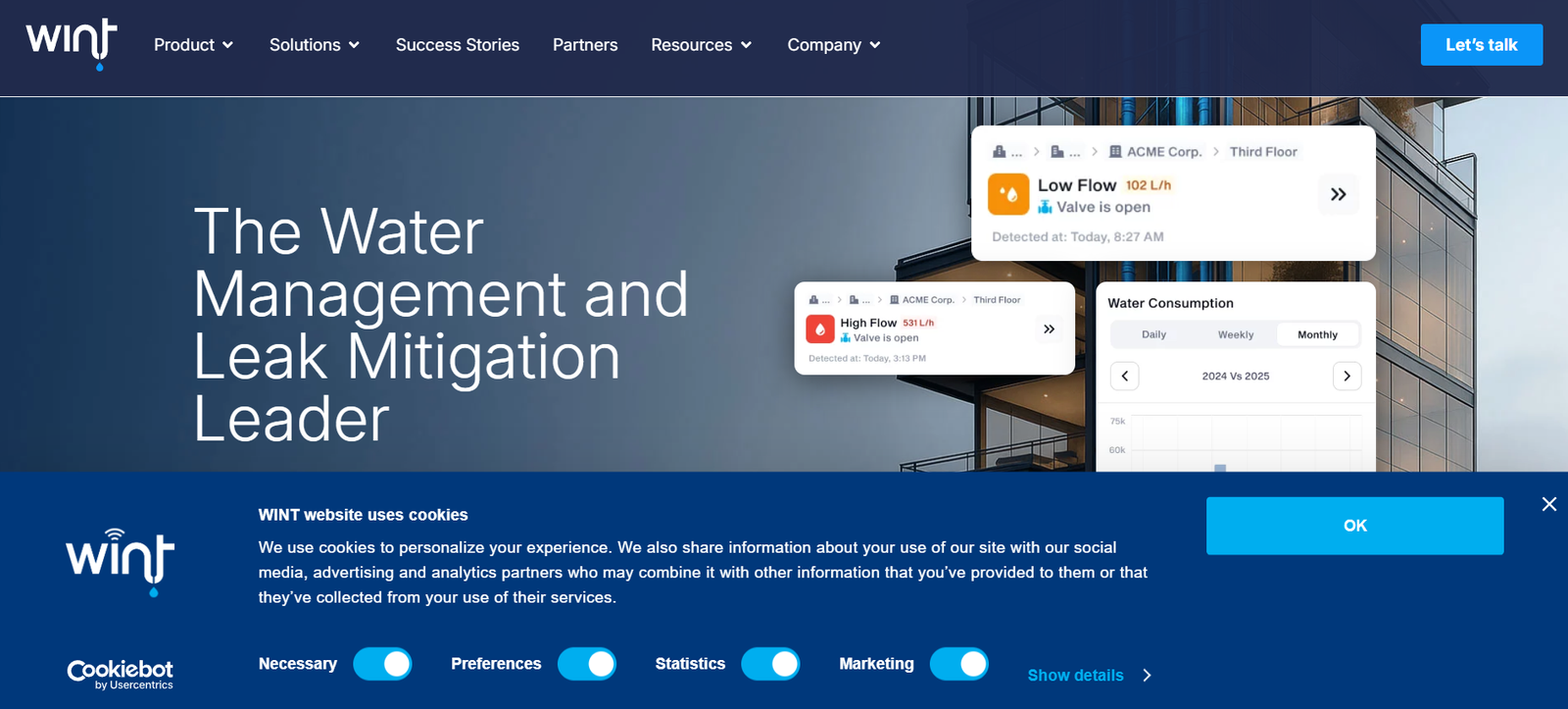
WINT (Water Intelligence) is an AI-driven water management solution designed to detect and prevent leaks, reduce water waste, and mitigate water-related damage in commercial buildings, construction sites, and industrial facilities. Using advanced machine learning and real-time flow monitoring, WINT identifies anomalies in water usage, alerts stakeholders instantly, and automatically shuts off water when necessary to prevent damage.
With increasing concerns about sustainability, ESG compliance, and property damage from leaks, WINT offers a proactive approach to water management. The system integrates seamlessly with existing plumbing infrastructure and is used by global corporations, real estate developers, and contractors to improve operational efficiency, reduce costs, and protect assets.
Features:
AI-Based Leak Detection
WINT uses machine learning to continuously analyze water usage patterns and detect leaks or anomalies in real time.Automatic Water Shutoff
Upon detecting a leak, WINT can automatically close a valve to stop water flow and prevent damage.Real-Time Alerts
The system sends immediate notifications to facility managers and stakeholders via mobile, email, or integrated platforms.Usage Monitoring and Analytics
Provides detailed dashboards and reports on water usage by area, time, and system, supporting conservation and compliance.Cloud Platform and App Access
WINT’s cloud-based interface allows remote monitoring and control from any device, including mobile apps for on-the-go management.Multi-Zone Coverage
WINT can monitor and manage multiple systems or zones within a single site or across multiple properties.Integrations with Building Systems
Easily integrates with Building Management Systems (BMS), ERP platforms, and facility maintenance tools.Construction Site Monitoring
Specialized solutions for construction projects prevent water damage during development phases—a leading cause of insurance claims.ESG and Compliance Reporting
Provides actionable data to support sustainability targets and environmental compliance.
How It Works:
Installation of Sensors and Valves
WINT devices are installed on main water lines or at key points within a facility. The system includes flow meters, pressure sensors, and motorized valves.Real-Time Monitoring
Water flow data is continuously collected and analyzed by WINT’s AI engine in the cloud.Anomaly Detection
The system learns normal water usage patterns and flags deviations, such as continuous flow during off-hours or unusually high consumption.Alerts and Automatic Response
If a leak is detected, WINT sends alerts to designated users. In critical cases, it can automatically shut off the water to prevent flooding.User Dashboard and Control
Facility managers can review usage data, receive maintenance insights, and configure thresholds or alerts via the WINT dashboard.Historical Reporting
Data is stored for long-term analysis, enabling organizations to track water usage trends, optimize performance, and report on ESG metrics.
Use Cases:
Commercial Buildings
WINT protects offices, hotels, and shopping centers from water damage and supports green building certifications like LEED and WELL.Construction Sites
Reduces risk of flooding, pipe bursts, and water-related delays or insurance claims during construction phases.Industrial Facilities
Monitors water consumption in production lines, cooling systems, and utility areas, helping cut waste and improve operational reliability.Data Centers
Provides early leak detection in cooling systems where water damage could cause critical downtime.Multi-Family Residential Buildings
Helps property managers identify water misuse, prevent leaks, and manage consumption by zone or tenant.Hospitals and Universities
Manages water usage and safeguards infrastructure in large, complex environments where early leak detection is vital.
Pricing:
WINT does not provide fixed pricing on its website, as solutions are customized based on site size, application, and system complexity. However, the pricing model typically includes:
Hardware Costs:
Flow meters, valves, sensors, and control units are priced based on installation scale (main lines, zones, or building-wide).Software Subscription:
Access to WINT’s AI platform, analytics, and mobile app is billed as a recurring subscription. Pricing may vary based on features and number of monitored zones.Installation and Support:
Onboarding, integration with existing systems, and training are included in the setup cost. WINT offers enterprise-grade customer support.
For tailored quotes, WINT encourages prospective customers to contact their sales team through the official contact form:
https://wint.ai/contact/
Strengths:
Automatic Shutoff Functionality: Prevents catastrophic water damage through AI-triggered valve closures.
Highly Accurate AI Detection: Machine learning improves over time, reducing false alerts and improving accuracy.
Scalable: Suitable for both small buildings and large-scale enterprise infrastructure.
Sustainability-Focused: Helps reduce water consumption and provides data for ESG reporting.
Construction-Ready: Specific solutions designed for active construction environments.
Multi-Site Management: Centralized monitoring for portfolios of buildings or projects.
Robust Security: Enterprise-level data security and cloud architecture.
Proven ROI: Helps reduce insurance claims, utility bills, and costly repairs.
Drawbacks:
No Public Pricing: Lack of upfront cost details may deter smaller customers or those with budget constraints.
Professional Installation Required: WINT systems require integration by trained personnel, which may increase deployment time and cost.
Subscription Costs: Ongoing software and support fees may not fit all budgets.
Best Suited for Commercial Use: May not be cost-effective for single-family homes or basic residential applications.
Wi-Fi and Network Dependency: Requires stable connectivity for real-time data and alerts.
Comparison with Other Tools:
Aquai: Aquai offers a more affordable, DIY water monitoring solution for homeowners and property managers. WINT is more advanced, enterprise-grade, and includes automatic shutoff and AI-based leak prevention.
Flo by Moen: Flo targets high-end residential customers and offers shutoff features. WINT is designed for large-scale, commercial, and industrial applications with multi-zone coverage.
Phyn Plus: Like Flo, Phyn is geared toward smart homes. WINT distinguishes itself with its robust AI, scalability, and suitability for construction and commercial use.
HydroIQ: HydroIQ focuses on water utilities and communities in Africa. WINT, on the other hand, targets corporate, industrial, and commercial infrastructure in developed markets.
Customer Reviews and Testimonials:
WINT has been adopted by several Fortune 500 companies, large construction firms, and global real estate managers. Publicly shared customer outcomes include:
Microsoft Data Center Deployment: WINT was implemented to prevent water damage in cooling systems and maintain uptime reliability.
Enterprise Real Estate Management Firm: Reported up to 25% water waste reduction across commercial properties using WINT.
Construction Firms: Noted significant reduction in insurance claims and faster detection of water events during site development.
Conclusion:
WINT is a powerful AI-driven water intelligence platform designed for commercial buildings, construction sites, and industrial applications. With its ability to detect leaks, shut off water automatically, and provide in-depth usage analytics, WINT helps organizations reduce waste, cut costs, and avoid water-related damage.
Its focus on sustainability, risk mitigation, and enterprise scalability makes it an essential tool for facility managers, developers, and corporations seeking smarter water management and ESG compliance. While premium in its features and pricing, WINT delivers substantial return on investment through prevention and efficiency.


