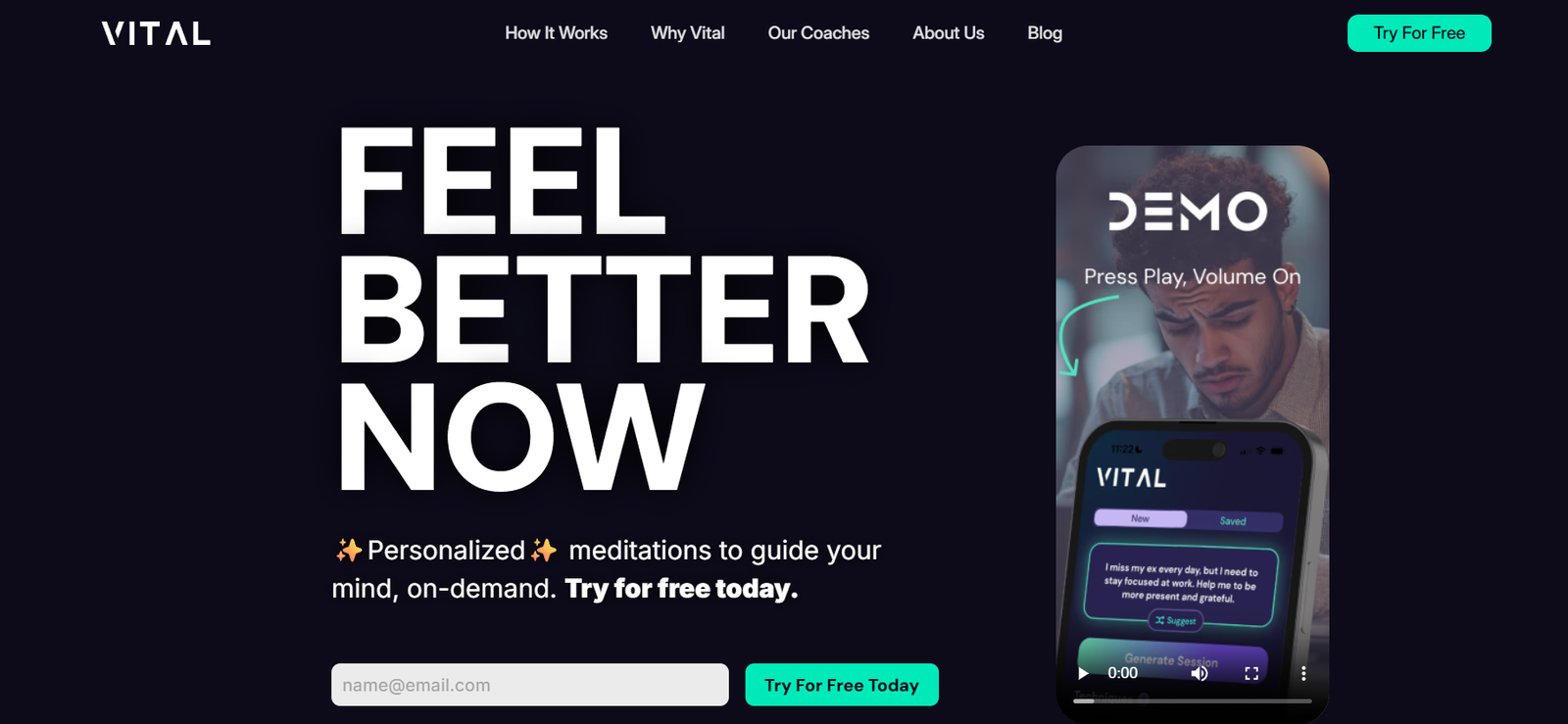
Vital AI is a healthcare technology company focused on building AI-driven software for hospitals and emergency departments. Its platform functions as an AI clinical co-pilot, designed to simplify hospital operations, enhance clinical decision-making, and improve patient engagement.
Rather than replacing clinicians, Vital AI works alongside them—automating data interpretation, triage, and communication workflows, so that healthcare professionals can focus more on patient care and less on administrative tasks.
The platform is built using best-in-class design and powered by proprietary machine learning models tailored to emergency and inpatient settings. Vital’s mission is to make hospital systems smarter, more connected, and radically more human.
Features of Vital AI
Vital AI delivers a range of intelligent, clinically relevant features for both hospital staff and patients:
AI-Enhanced Triage
Assesses patient data to support triage decisions and prioritization in emergency departments.Real-Time ED and Inpatient Insights
Provides care teams with actionable updates about patient status, wait times, and clinical needs.Smart Discharge Planning
Suggests optimized discharge timelines and next steps based on clinical and operational data.Patient Communication Tools
Sends updates to patients and caregivers in real-time, including wait times, care instructions, and discharge summaries.Natural Language Processing (NLP)
Interprets EHR notes and patient data to summarize information and support clinical decisions.Mobile-First Design
Interfaces are optimized for smartphones and tablets, enhancing ease of use for both clinicians and patients.EHR Integration
Seamlessly integrates with major EHR platforms like Epic and Cerner to access and update clinical data.HIPAA-Compliant and Secure
Designed with enterprise-grade security to meet healthcare privacy regulations.
How Vital AI Works
Vital AI functions as a real-time layer of intelligence over existing hospital workflows. Here’s how it typically operates:
Integrate with Hospital Systems
Vital connects to a hospital’s EHR, clinical systems, and operational databases.Analyze Patient Data
The AI processes data from triage notes, lab results, and vitals to generate meaningful insights.Deliver Recommendations
Vital offers actionable suggestions to care teams—whether it’s risk scoring, next steps in care, or potential discharge readiness.Engage Patients and Families
Patients receive timely updates via SMS or mobile apps about their care journey, reducing uncertainty and improving satisfaction.Continuously Learn and Adapt
The AI models are designed to improve over time based on new data and hospital-specific patterns.
This approach allows hospitals to elevate the quality and speed of care without overhauling their existing systems.
Use Cases of Vital AI
Vital AI supports a wide range of use cases across emergency departments and inpatient settings:
Emergency Room Optimization
Enhances triage, reduces wait times, and supports faster clinical decisions.Inpatient Care Management
Tracks patients throughout their stay and flags important updates for clinical teams.Discharge Efficiency
Identifies discharge-ready patients and improves transition planning.Family Engagement
Keeps patients and families informed, easing anxiety and reducing the burden on staff.Resource Management
Helps clinical teams prioritize tasks and allocate resources more effectively.
Pricing of Vital AI
As of May 2025, Vital AI does not list public pricing on its website. The solution is designed for hospitals and large health systems, and pricing is customized based on the organization’s size, infrastructure, integration needs, and deployment scope.
Healthcare institutions interested in Vital AI can request a personalized demo and pricing consultation through the official contact form at https://joinvital.ai.
Strengths of Vital AI
Built specifically for emergency and inpatient workflows
Real-time, intelligent insights that reduce clinician burden
Seamless EHR integration for easy deployment
Mobile-friendly and intuitive for patients and staff
Supports better communication and transparency in care delivery
Used by leading U.S. hospitals with strong case studies and outcomes
Fully HIPAA-compliant and secure
Drawbacks of Vital AI
Not available for individual or small practice use—enterprise only
No public pricing or free trial available
Requires integration with hospital IT systems, which may involve onboarding time
AI performance may vary based on quality of underlying clinical data
Does not currently offer outpatient or primary care features
Comparison with Other Healthcare AI Platforms
While other platforms like Suki AI, HealthTap, or Qventus also offer healthcare automation and decision support, Vital AI differentiates itself through its dedicated focus on emergency and inpatient settings.
Suki AI is more focused on voice-powered documentation.
Qventus specializes in hospital operations and predictive analytics.
Vital AI blends clinical decision support, patient engagement, and real-time operational insights into a single platform purpose-built for acute care environments.
This makes it a unique solution for hospitals looking to upgrade the quality, safety, and efficiency of their care delivery.
Customer Reviews and Testimonials
Vital AI is used by notable U.S. hospital systems, including:
Children’s Hospital Los Angeles
CommonSpirit Health
St. Luke’s Health System
Testimonials from clinicians and hospital administrators highlight:
“Vital has helped reduce burnout by streamlining communication.”
“Patients feel more informed, which improves their overall experience.”
“Our care teams make faster, smarter decisions with less friction.”
These endorsements reflect the platform’s impact on both clinical outcomes and patient satisfaction.
Conclusion
Vital AI is redefining how hospitals manage emergency and inpatient care by offering a real-time, AI-powered co-pilot for clinicians and healthcare staff. Through smart triage, workflow optimization, and seamless patient communication, it helps healthcare teams do more with less—delivering faster, safer, and more connected care.
As the healthcare industry continues to modernize, platforms like Vital AI offer a clear path toward tech-enabled, human-centered care. For hospital leaders seeking to enhance operations and reduce staff overload, Vital AI represents a scalable and intelligent solution.