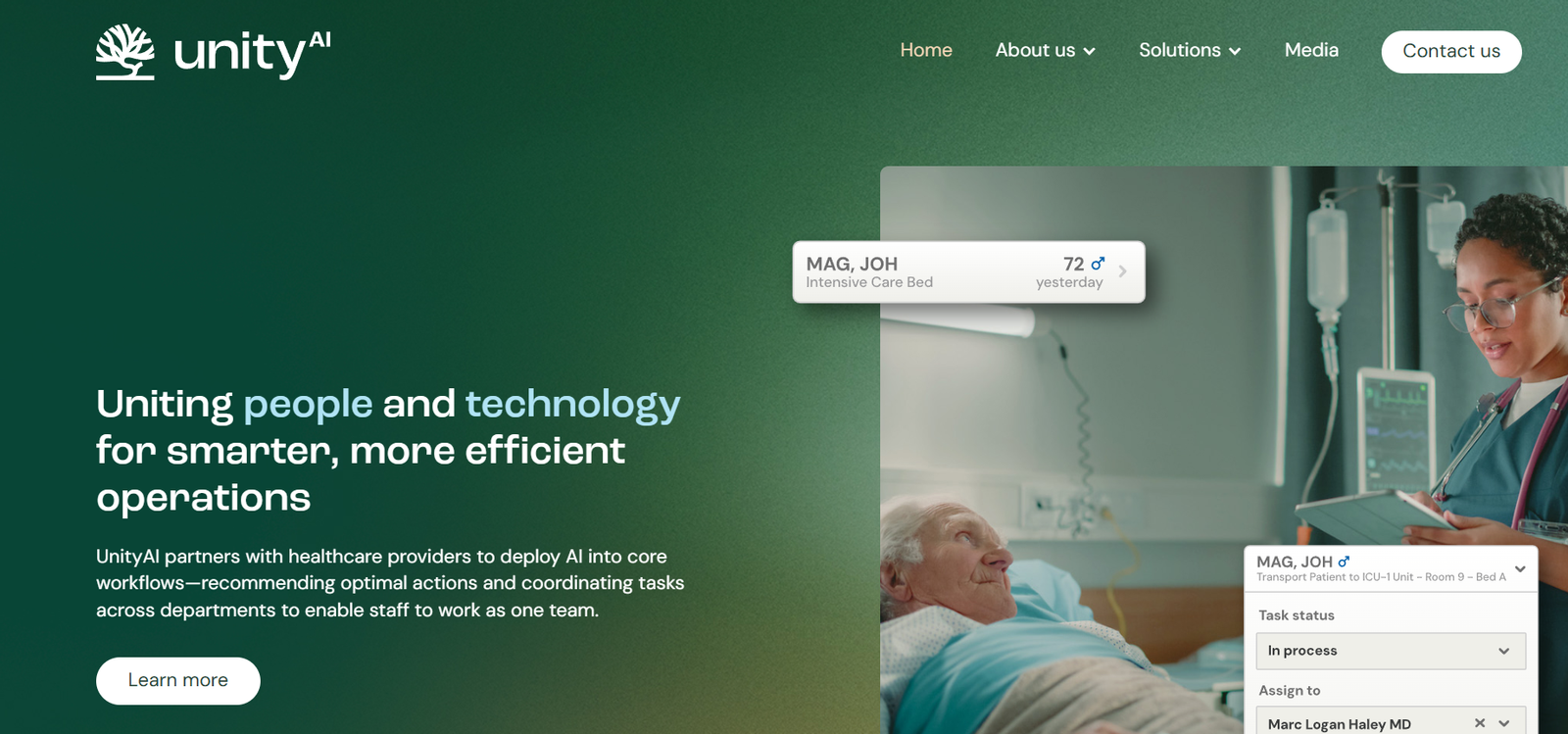
Unity AI is a healthcare technology platform designed to simplify the adoption of artificial intelligence in medical imaging. The platform provides radiology teams with access to a wide array of FDA-cleared and CE-marked AI algorithms, all of which can be deployed, monitored, and scaled through a single interface.
By acting as a unified marketplace and orchestration layer, Unity AI removes the technical and operational barriers that often prevent health systems from using multiple AI tools. It ensures compatibility with existing radiology infrastructure (like PACS and RIS systems) and allows clinicians to run multiple AI models across imaging modalities such as CT, X-ray, and MRI.
Features
Unity AI offers a robust suite of features designed specifically for radiology AI adoption:
Unified AI Marketplace: Access to a growing catalog of vetted, regulatory-approved AI models from top developers.
Vendor-Agnostic Platform: Integrates AI models from multiple vendors, eliminating the need for separate installations.
Plug-and-Play Deployment: Rapid integration into existing imaging workflows without heavy IT lift.
Multi-Model Inference: Run multiple AI models on the same imaging study, each targeting different findings.
Real-Time Result Delivery: AI insights are delivered to radiologists in seconds, directly in their PACS viewers.
Usage Analytics and Monitoring: Track AI model performance, utilization, and clinical value over time.
EHR and PACS Integration: Seamlessly fits into enterprise imaging ecosystems.
Regulatory Compliance: Supports use of FDA-cleared and CE-marked algorithms with full audit trails.
Secure and Scalable Infrastructure: HIPAA-compliant and built to scale across large health systems.
Clinical Validation Tools: Enables pre-deployment validation to assess model performance on local patient data.
How It Works
Unity AI functions as a middleware and orchestration layer that connects radiology workflows to multiple AI engines. Here’s how it works step-by-step:
Model Selection: Radiology teams select approved AI models from the Unity AI marketplace based on clinical need.
Integration: Unity AI connects with the site’s existing PACS, RIS, and EHR systems to route imaging studies to selected AI models.
AI Analysis: Imaging data is processed in real time or batch mode, depending on the workflow configuration.
Results Review: Radiologists receive AI outputs—such as lesion detection, triage alerts, or annotations—embedded in their diagnostic viewer.
Ongoing Monitoring: The platform provides dashboards for clinical, technical, and operational oversight of AI usage and performance.
This architecture allows hospitals to scale their AI usage without adding complexity or technical debt.
Use Cases
Unity AI is built to support a wide variety of radiology and imaging use cases:
Stroke Detection: Deploy AI models for intracranial hemorrhage and large vessel occlusion triage.
Lung Nodule Detection: Use AI to assist in early lung cancer screening with chest CT or X-ray.
Bone Fracture Identification: Identify wrist, hip, or spine fractures on emergency X-rays.
Mammography Screening: Apply AI tools for breast density scoring and abnormality detection.
Pneumonia and TB Detection: Assist with triage in high-volume settings and resource-limited environments.
Workflow Prioritization: Auto-flag urgent studies for faster review and reduced turnaround times.
Clinical Trial Support: Use AI outputs for quantitative imaging biomarkers in research studies.
Pricing
Unity AI does not publicly list pricing information on its website. It follows a custom pricing model tailored to each organization’s needs, which may depend on:
Number of AI models deployed
Type of imaging modalities supported
Size of the institution or radiology group
Deployment (on-premise, hybrid, or cloud)
Support and customization requirements
To receive a personalized quote or platform demo, healthcare organizations can contact Unity AI through their official contact form.
Strengths
Unity AI offers multiple advantages to radiology departments and health systems adopting imaging AI:
Centralized deployment and management of multiple AI tools
Rapid deployment with no vendor lock-in
Supports a variety of use cases from leading AI vendors
Delivers clinically relevant insights directly in existing workflows
Simplifies governance and monitoring with a single dashboard
Complies with regulatory standards and data security norms
Enables AI testing and validation before full-scale rollout
Reduces IT overhead and time to value
Drawbacks
While Unity AI provides a powerful infrastructure, some limitations include:
No self-service option for small clinics or solo radiologists
Focused only on radiology—limited utility outside imaging domains
Success depends on availability and quality of integrated AI models
Requires institutional commitment to AI strategy and IT integration
Pricing not transparent or standardized for small practices
Comparison with Other Tools
Unity AI is part of a growing category of AI orchestration platforms for medical imaging. Comparable solutions include:
CARPL.ai: Similar vendor-neutral AI orchestration focused on large-scale hospital networks.
Aidoc: Offers proprietary triage and decision-support AI tools, but less open to third-party models.
Blackford Platform: Also provides AI integration across imaging workflows, focused more on UK/EU markets.
Subtle Medical: Specializes in image enhancement AI but offers fewer multi-model orchestration tools.
Unity AI stands out for its marketplace of multiple FDA-cleared tools, its rapid integration capability, and its focus on performance transparency and scalability.
Customer Reviews and Testimonials
Unity AI does not currently list customer reviews on platforms like G2 or Capterra. However, it showcases active partnerships with AI model developers, radiology practices, and enterprise health systems, reflecting industry interest.
Testimonials and case studies shared by Unity AI highlight:
Streamlined AI deployment across multi-site institutions
Reduced radiologist workload through intelligent triage
Faster ROI due to simplified vendor onboarding
Increased physician trust via explainable, consistent outputs
Conclusion
Unity AI is redefining how radiology teams deploy and manage artificial intelligence by offering a unified, vendor-neutral platform that streamlines integration and oversight of multiple AI tools. It solves a key pain point in digital health—how to scale AI adoption without fragmenting workflows or increasing operational complexity.
For healthcare organizations looking to future-proof their imaging departments and maximize the clinical value of AI, Unity AI offers a scalable, compliant, and intelligent foundation. With its marketplace of FDA-cleared models and seamless integration into radiologist workflows, Unity AI brings a new level of efficiency and agility to medical imaging.