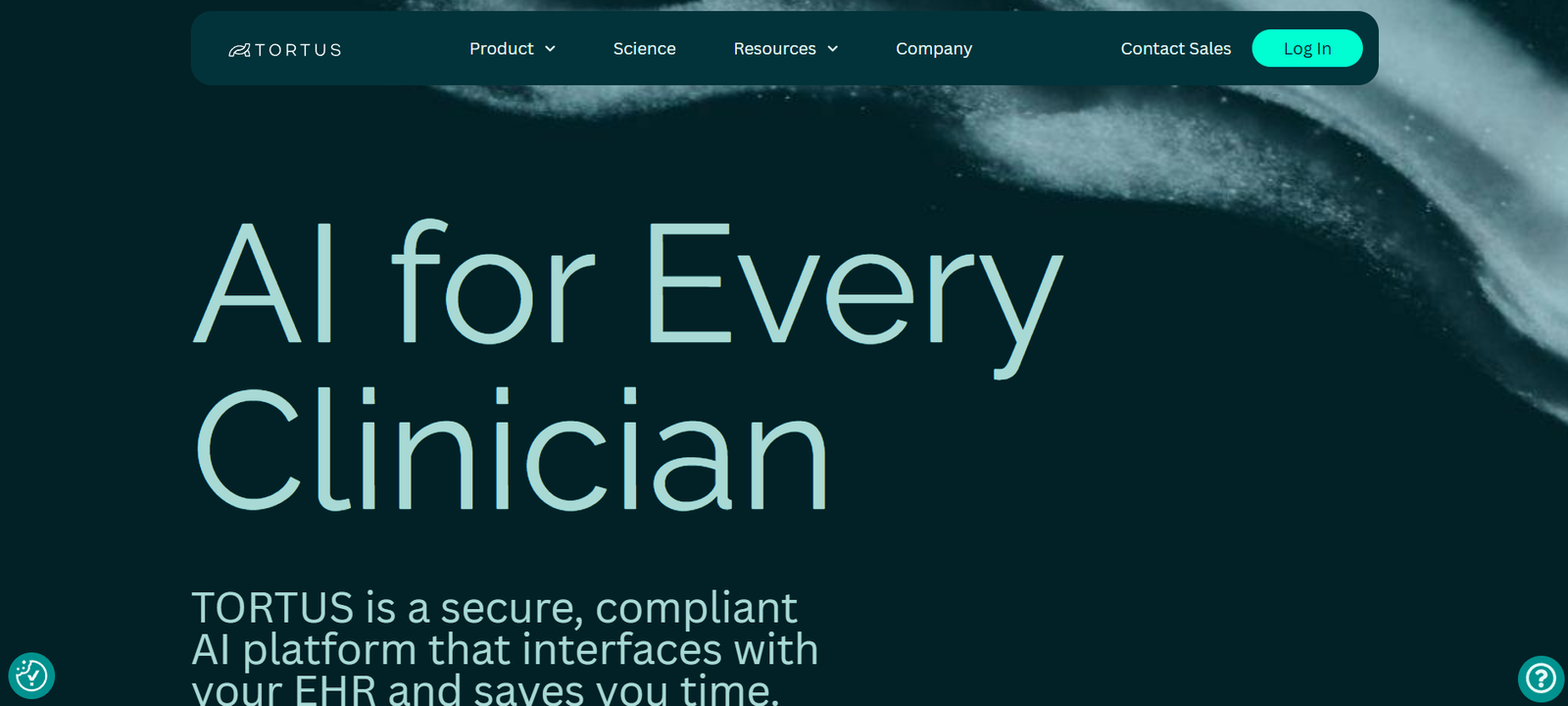
Tortus AI is an artificial intelligence assistant designed specifically for the healthcare environment. Its primary function is to streamline and automate the time-consuming process of clinical documentation. With its core product, O.S.L.E.R. (Operating System for Learning Electronic Records), Tortus AI listens to conversations between clinicians and patients and then automatically generates structured, editable medical notes.
This real-time, voice-enabled documentation assistant is designed to work seamlessly in the background without requiring additional input or changes in workflow. Built for doctors, nurses, and healthcare providers across specialties, Tortus AI helps reduce burnout, improve documentation accuracy, and return valuable time back to clinical staff.
Features
Tortus AI offers a range of features specifically crafted to address the needs of modern healthcare professionals:
Real-Time Documentation: Captures and generates clinical notes during patient consultations.
Passive Listening: Runs quietly in the background without interrupting clinical interactions.
Customizable Templates: Allows clinicians to tailor note structure according to specialty or personal preference.
EHR Compatibility: Designed to integrate with common electronic health record (EHR) systems.
High Accuracy: Uses medically-trained language models for better contextual understanding.
Data Privacy and Security: Built with HIPAA and GDPR compliance in mind.
Speech Recognition: Accurately captures medical dialogue, even with accents and technical terms.
Adaptive Learning: Improves over time with feedback from clinicians.
Edit and Approve Workflow: Allows users to review and adjust notes before finalizing them.
Time-Saving Dashboard: Displays performance metrics and time saved through AI assistance.
How It Works
Tortus AI’s O.S.L.E.R. assistant is designed to work in real clinical environments with minimal disruption. Here’s how it works in practice:
Once activated, O.S.L.E.R. passively listens to the natural conversation between the clinician and the patient. Using advanced natural language processing and machine learning algorithms, it identifies relevant medical details such as symptoms, diagnoses, medications, treatment plans, and patient history.
It then converts this spoken data into structured clinical notes tailored to the specific needs of the clinician or practice. Notes are presented in a standardized format, ready for review, approval, and entry into the electronic health record.
Importantly, O.S.L.E.R. is designed to work across a wide range of medical specialties and adapts to the preferences of individual users, becoming smarter with continued use.
Use Cases
Tortus AI supports a wide range of healthcare settings and specialties:
General Practice: Streamlines notes for patient visits, physical exams, and follow-ups.
Emergency Medicine: Captures fast-paced consultations and generates real-time documentation.
Mental Health: Records nuanced conversations in psychiatry or therapy sessions.
Internal Medicine: Automates charting for chronic condition management.
Pediatrics: Ensures accurate documentation during family-centered consultations.
Nursing and Allied Health: Supports note-taking during rounds and patient handovers.
Telehealth: Works during virtual consultations to generate documentation remotely.
Academic Medicine: Assists residents and medical students with accurate clinical note formatting.
Pricing
Tortus AI does not currently list public pricing on its official website. Interested healthcare professionals, clinics, or hospital systems are encouraged to request a demo or contact the sales team via the Tortus AI contact page to learn about subscription plans and enterprise pricing.
Pricing may vary based on:
Number of clinicians or users
Specialty or workflow customization
Integration requirements with EHR systems
Level of support and onboarding needed
Tortus AI is currently operating in select pilot programs and beta deployments in real clinical environments.
Strengths
Tortus AI offers several clear advantages that make it well-suited for healthcare professionals:
Reduces administrative burden significantly
Improves accuracy and consistency of clinical documentation
Saves time per patient, increasing provider productivity
Works seamlessly in the background without changing clinical workflows
Adapts to individual note-taking styles and specialties
Built with healthcare-specific AI models, ensuring clinical relevance
Promotes clinician well-being by minimizing burnout
Drawbacks
While Tortus AI is a promising solution, some limitations should be noted:
No public pricing available, which may deter smaller practices
Still in limited release, with broader availability expected in the future
Requires an internet connection for cloud-based processing
Initial onboarding and customization may require time investment
Dependent on background noise conditions and voice clarity
Comparison with Other Tools
Tortus AI is part of a growing ecosystem of AI tools for clinical documentation, including platforms like Suki AI, Nuance DAX (by Microsoft), and DeepScribe. Here’s how it compares:
Suki AI uses voice commands to generate notes but requires more active dictation. Tortus AI operates passively, reducing cognitive load.
Nuance DAX is an enterprise-level solution integrated deeply into Microsoft’s healthcare cloud, ideal for large hospital systems. Tortus offers a more agile and potentially lower-cost option for smaller practices.
DeepScribe also provides ambient clinical documentation but is more US-centric. Tortus AI positions itself with a global focus, starting in the UK.
Tortus AI’s unique advantage lies in its passive, real-time note generation that doesn’t require structured dictation, offering a more natural and hands-off experience for clinicians.
Customer Reviews and Testimonials
Tortus AI is still in its early rollout phase and has not yet published third-party reviews on platforms like G2, Capterra, or Trustpilot.
However, early clinical feedback from pilot users, shared on their website and in press coverage, highlights the following:
Clinicians report saving hours per week on administrative tasks
Users appreciate the non-intrusive design, allowing focus to remain on the patient
Several beta testers highlight a reduction in burnout and improved work-life balance
As broader adoption continues, more formal user reviews and case studies are expected to emerge.
Conclusion
Tortus AI is redefining how clinical documentation is done. With its intelligent assistant O.S.L.E.R., the platform offers a futuristic yet practical solution to one of healthcare’s most pressing challenges—time-consuming and error-prone note-taking.
By leveraging real-time AI to passively capture and generate structured notes, Tortus AI allows healthcare professionals to reclaim their time, reduce stress, and focus more on patient care.
Whether you’re a general practitioner, hospital physician, or telehealth provider, Tortus AI represents the next generation of medical productivity tools—blending artificial intelligence seamlessly into clinical practice.
For providers seeking to modernize documentation without compromising on quality or compliance, Tortus AI is a platform worth watching closely.