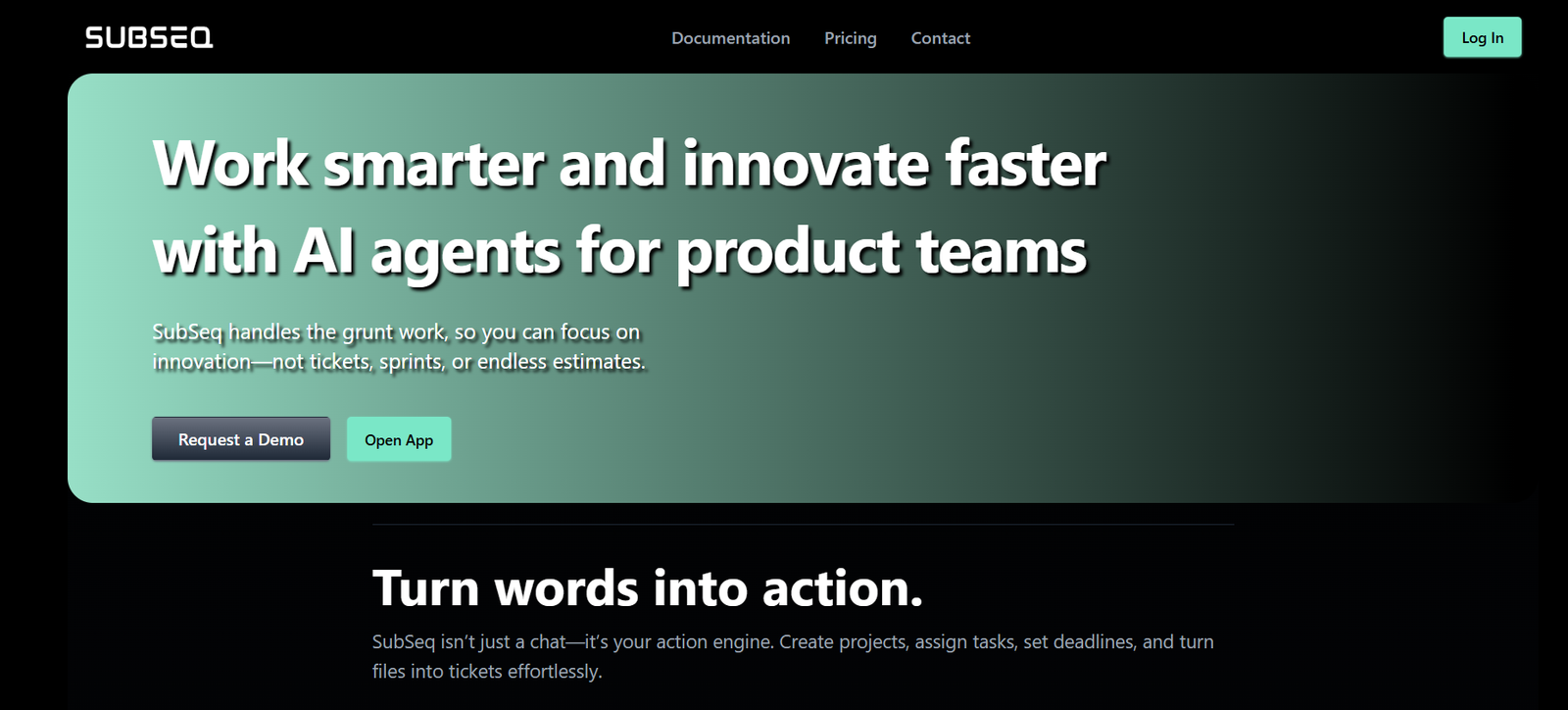
Automation is crucial for businesses looking to optimize efficiency and reduce manual work. Subseq.io is an AI-powered workflow automation platform that helps businesses automate repetitive tasks, manage data, and integrate with other applications. It simplifies complex workflows, making automation accessible for both technical and non-technical users.
In this article, we’ll explore Subseq.io’s features, pricing, use cases, advantages, and drawbacks to help you determine whether it suits your needs.
What is Subseq.io?
Subseq.io is a no-code AI automation tool that enables businesses to build automated workflows using sequences of actions. The platform helps users automate tasks like data processing, customer communication, and system integrations.
With its drag-and-drop workflow builder, even non-technical users can create automation sequences. Subseq.io integrates with popular applications such as Slack, Gmail, Google Sheets, and APIs, making it a flexible solution for many industries.
Key Features of Subseq.io
1. Drag-and-Drop Workflow Builder
Subseq.io provides an easy-to-use, no-code visual builder that allows users to create automation workflows without programming knowledge.
2. AI-Powered Sequences
The platform enables intelligent automation, adapting workflows based on real-time input and pre-set conditions.
3. Seamless App Integrations
Subseq.io connects with third-party tools like Slack, Gmail, Google Sheets, and API-based services to automate processes across multiple platforms.
4. Conditional Logic & Triggers
Users can define if-then conditions, ensuring automation adapts to different scenarios dynamically.
5. Data Processing & API Requests
The platform automates data manipulation and transformation, allowing users to fetch and send data between various systems via API calls.
6. Team Collaboration & Role-Based Access
Businesses can invite team members to collaborate on workflows and assign roles for better control over automation tasks.
How Subseq.io Works
Step 1: Sign Up & Log In
Users start by creating an account on Subseq.io and logging into the platform.
Step 2: Build an Automation Workflow
The drag-and-drop workflow builder allows users to set up automation sequences by defining triggers, actions, and conditions.
Step 3: Connect with Other Applications
Users can integrate Subseq.io with external services like Gmail, Slack, Google Sheets, and API-based systems for data exchange and automation.
Step 4: Test & Deploy the Workflow
Before launching, users can run test executions to verify if their automation setup works as expected.
Step 5: Monitor and Optimize
After deployment, workflows can be monitored for performance, and modifications can be made based on real-time feedback.
Use Cases of Subseq.io
Customer Support Automation
Businesses can automate customer inquiries and support ticket responses, integrating with email and CRM systems.
Sales & Marketing Automation
Subseq.io can streamline lead nurturing, email marketing, and CRM updates, reducing manual effort in sales processes.
HR & Employee Onboarding
HR teams can automate new employee onboarding, including document collection, account creation, and training reminders.
Data Processing & Reporting
The platform automates data extraction, formatting, and reporting, helping businesses generate insights without manual input.
IT & DevOps Automation
IT teams can schedule and monitor API-based operations, such as system alerts and server management.
Subseq.io Pricing
Subseq.io does not publicly disclose its pricing structure. The cost likely depends on:
- Usage limits, such as the number of workflows and API calls.
- Team size and collaboration requirements.
- Advanced AI automation capabilities.
For detailed pricing, visit Subseq.io and request a quote.
Strengths of Subseq.io
- No-Code Interface – The drag-and-drop workflow builder makes automation accessible to non-technical users.
- AI-Powered Workflows – Intelligent automation allows dynamic task execution.
- Integrations with Popular Tools – Connects seamlessly with Slack, Gmail, Google Sheets, and APIs.
- Flexible and Customizable – Users can set up complex conditional workflows based on business logic.
- Team Collaboration Features – Role-based access ensures controlled workflow management.
Drawbacks of Subseq.io
- Pricing Transparency – Pricing details are not readily available. Users must request a quote.
- Limited Market Awareness – Compared to industry leaders like Zapier and Make.com, Subseq.io is relatively new.
- Learning Curve – Although it’s a no-code tool, mastering complex workflows may require practice.
Comparison with Other Workflow Automation Tools
Subseq.io vs. Zapier
Zapier is widely known for its extensive integrations and ease of use, but it lacks AI-driven automation. Subseq.io provides a more advanced AI-powered experience, making it better suited for dynamic workflows.
Subseq.io vs. Make (Integromat)
Make (formerly Integromat) is known for deep customization and complex workflow automation. However, Subseq.io offers AI-driven decision-making, which is more adaptable for certain business needs.
Subseq.io vs. Power Automate
Microsoft Power Automate is a strong competitor for enterprise automation but requires familiarity with Microsoft’s ecosystem. Subseq.io is more flexible in terms of third-party integrations.
Customer Reviews & Testimonials
As Subseq.io is a newer tool, publicly available reviews are limited. However, early adopters appreciate:
- User-friendly design – The drag-and-drop builder simplifies automation setup.
- Powerful AI features – Automated workflows adapt dynamically based on triggers.
- Reliable customer support – Users report positive experiences with onboarding and support teams.
For the latest customer feedback, visit platforms like Product Hunt, G2, or Capterra.
Conclusion: Is Subseq.io Worth It?
Subseq.io is an AI-powered workflow automation tool that helps businesses streamline operations with intelligent sequences and integrations. Its no-code approach, AI-driven automation, and flexibility make it a great choice for companies looking to reduce manual work.
However, its lack of pricing transparency and limited public awareness may make some businesses hesitant to adopt it immediately. For companies seeking AI-powered automation with smart decision-making, Subseq.io is worth exploring.
To learn more or request pricing, visit Subseq.io today.