Rainforest Connection (RFCx) is a pioneering environmental technology nonprofit that leverages artificial intelligence and acoustic monitoring to protect forests and biodiversity around the world. The organization’s mission is to use sound-based technology to detect and prevent threats like illegal logging, poaching, and habitat destruction. RFCx works by deploying devices called Guardians in remote ecosystems. These devices listen to forest sounds 24/7 and stream them to the cloud, where AI models analyze the data in real time to detect threats and monitor wildlife.
RFCx partners with governments, conservation organizations, indigenous communities, and researchers to enable scalable, non-invasive, and data-driven forest conservation. Their solutions offer a unique edge by providing real-time alerts and long-term ecological insights.
Features:
Guardian Devices
These solar-powered acoustic sensors are installed high in the tree canopy and continuously capture environmental audio, even in remote areas without cellular infrastructure.AI-Powered Sound Analysis
RFCx uses advanced machine learning models to analyze audio data and identify specific sounds such as chainsaws, gunshots, trucks, and animal calls.Real-Time Alerts
When a potential threat like illegal logging is detected, alerts are sent in real time to rangers, local communities, and authorities for immediate action.Bioacoustic Monitoring
The platform doesn’t just detect threats—it also monitors species presence, abundance, and behavior through vocalization patterns.RFCx Arbimon Platform
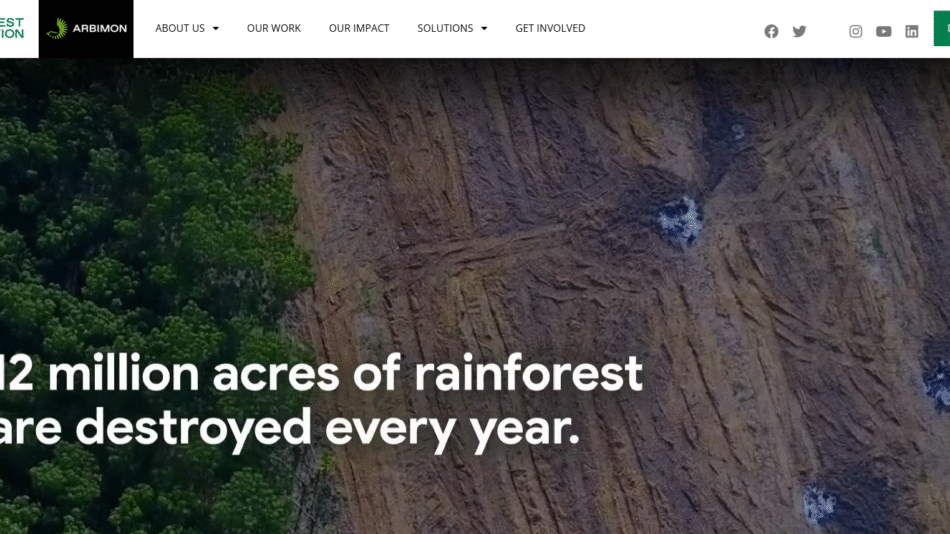
Arbimon is RFCx’s cloud-based platform for bioacoustic data visualization and analysis. It supports manual and automated labeling of species calls, long-term monitoring, and collaboration.Mobile App Access
Field teams can access alerts and audio streams via mobile devices, making real-time response feasible even in remote forest locations.Global Deployment Support
RFCx provides full support for hardware deployment, AI customization, and training to ensure local teams can manage conservation operations effectively.
How It Works:
Installation of Guardian Devices
Devices are placed in trees in areas needing protection. These devices are solar-powered and equipped with microphones and cellular or satellite connectivity.Audio Streaming to the Cloud
The Guardian devices continuously capture sound and stream it to the RFCx cloud server, even in low-bandwidth environments.Real-Time Acoustic Analysis
The RFCx AI models analyze incoming audio to identify and classify sounds of interest—such as chainsaws, gunshots, or specific animal species.Detection and Alerting
When a threat is detected, the system sends real-time alerts via SMS, email, or app notifications to on-the-ground response teams.Data Storage and Analysis via Arbimon
All collected audio is stored in the Arbimon platform, where it can be analyzed over time to track ecological changes, species presence, and habitat health.Partner Collaboration
RFCx works closely with local stakeholders to interpret data, plan interventions, and optimize conservation strategies.
Use Cases:
Illegal Logging Detection
RFCx’s most well-known application is detecting chainsaw activity in protected forests, enabling law enforcement to respond quickly.Wildlife Monitoring
Researchers and conservationists use RFCx to study species distributions, migration patterns, and habitat use through acoustic recordings.Poaching Prevention
Gunshot detection helps monitor and combat poaching in conservation areas and national parks.Ecological Research
Bioacoustic datasets collected over months or years enable deep insights into ecological health and species behavior.Community Conservation
Indigenous and local communities use RFCx technology to defend their territories and manage natural resources more effectively.Climate and Carbon Projects
Acoustic monitoring data supports forest carbon projects by verifying forest integrity and detecting disturbances that affect carbon storage.
Pricing:
Rainforest Connection (RFCx) operates primarily as a nonprofit and works through partnerships rather than offering a standardized pricing model. The cost of services and deployment varies depending on project scale, location, and stakeholder needs.
Key Cost Elements May Include:
Guardian device hardware and installation
Custom AI model development
Access to the Arbimon platform
Training and support services
Data analysis and reporting tools
For pricing details, potential users and organizations are encouraged to contact RFCx directly through their website to discuss custom deployment and partnership options: https://rfcx.org/contact
Strengths:
Real-Time Threat Detection: Enables immediate response to illegal activities.
AI-Powered Analysis: Automates the identification of complex sounds with high accuracy.
Non-Invasive Monitoring: No need to physically track species or intrude on habitats.
Global Reach: Deployed in forests across Latin America, Africa, Asia, and more.
Partnership-Driven: Works closely with local communities and governments.
Comprehensive Platform: Arbimon enables long-term ecological monitoring beyond threat detection.
Drawbacks:
Connectivity Requirements: Real-time monitoring depends on cellular or satellite connections, which may be unreliable in some areas.
Specialized Equipment: Guardian devices must be installed and maintained, which can be logistically complex.
Learning Curve for Arbimon: While powerful, the Arbimon platform may require training for new users.
Customized AI Needs: Sound recognition models may need to be tailored for local environments, which requires technical expertise.
Comparison with Other Tools:
Wildlife Insights: While Wildlife Insights uses camera traps and computer vision for image-based monitoring, RFCx focuses on sound. Both aim to automate wildlife monitoring, but with different modalities—visual vs. acoustic.
Zooniverse: A citizen science platform for manual image/audio labeling. Unlike RFCx, Zooniverse does not provide real-time detection or alerts.
Google Earth Engine: Offers satellite-based environmental monitoring, but lacks the ground-level acoustic insights provided by RFCx.
EcoAcoustics (QUT): Another bioacoustics platform, but RFCx stands out for combining AI-driven real-time detection with a global deployment model and integrated alert systems.
Customer Reviews and Testimonials:
RFCx has been featured and endorsed by major global organizations, including:
United Nations Development Programme (UNDP)
Highlighted RFCx’s role in promoting sustainable development through technology-driven conservation.National Geographic
Recognized RFCx as a breakthrough innovation in forest monitoring.Partners like Google.org
Have supported RFCx initiatives for scaling AI in environmental protection.
In one success story from Peru, RFCx helped indigenous communities detect and stop illegal logging in protected territories, proving the power of combining local stewardship with cutting-edge technology.
In Indonesia, RFCx-supported monitoring led to a 90% reduction in illegal activity in monitored areas, demonstrating the tool’s real-world effectiveness.
Conclusion:
Rainforest Connection stands at the intersection of technology, conservation, and community empowerment. By using AI and acoustic monitoring, it offers a transformative approach to forest protection and biodiversity monitoring. Its ability to detect threats in real time, without invasive methods, makes it an essential tool for governments, NGOs, researchers, and indigenous communities working to safeguard the planet’s remaining forests.
RFCx is not just a tool—it’s an ecosystem for acoustic conservation. With deployments in over 35 countries, it has already made a measurable impact and continues to scale its mission globally.
Organizations and individuals looking to adopt innovative, data-driven conservation technologies should consider Rainforest Connection as a strategic ally in protecting nature and addressing climate change.