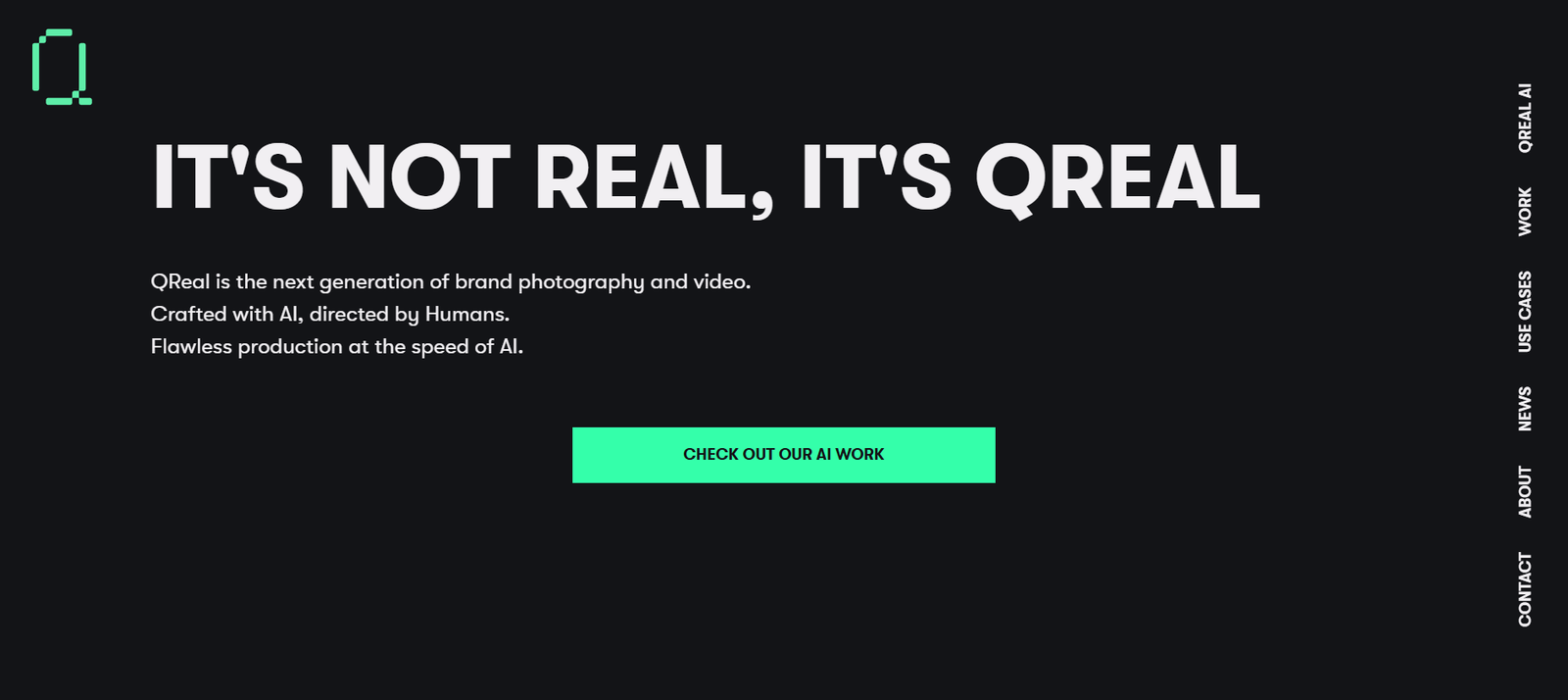
QReal AI is a leading platform that specializes in producing hyper-realistic 3D and augmented reality (AR) content for brands. Originally focused on food and lifestyle visuals, QReal has expanded its services to offer photorealistic 3D content creation across industries, including fashion, luxury, beauty, automotive, and consumer goods.
The platform combines cutting-edge 3D modeling, machine learning, and real-time rendering to help brands enhance product presentation in e-commerce, advertising, and social media. With QReal, brands can create immersive, interactive customer experiences that drive engagement and boost conversions.
QReal operates at the intersection of art and technology. Its AI-assisted workflows and talented creative team ensure content accuracy, brand alignment, and visual fidelity. Whether you’re launching a product, building a virtual store, or enhancing online shopping experiences, QReal delivers stunning 3D assets that look and feel real.
Features
QReal AI offers a range of advanced features focused on the creation and deployment of high-quality 3D models.
Its core service is photorealistic 3D content creation. QReal produces visually striking digital twins of physical products using a hybrid approach of human artistry and AI-assisted modeling. These assets are so realistic that they can replace photography in many contexts, reducing time and production costs.
Another key feature is augmented reality integration. QReal’s models can be deployed into AR platforms including Apple ARKit, WebAR, Snapchat, and Instagram filters. This allows brands to offer try-on experiences, product previews, and interactive ads directly within mobile devices and web browsers.
QReal also supports real-time 3D visualization. Using their viewer, brands can embed interactive models on product pages, enabling users to rotate, zoom, and explore items in full detail without leaving the site.
Customization and scalability are also built into the QReal pipeline. Clients can request different material finishes, lighting variations, or environmental backgrounds. Once created, 3D assets can be reused across platforms, saving brands time and ensuring visual consistency.
How It Works
QReal begins each project with a discovery and consultation phase. Clients share physical products, reference materials, or branding guidelines. The QReal team then creates a 3D content strategy tailored to the client’s goals, whether it’s for e-commerce, advertising, or immersive experiences.
The modeling process starts with either 3D scanning or reference image collection. Skilled 3D artists, supported by AI tools, model the product in high detail. Texture mapping, lighting, and rendering are handled by a specialized team to ensure photorealism.
After modeling, assets are optimized for different platforms. This includes versions suitable for web use, AR filters, or native applications. Clients receive access to these assets along with any required integrations or embedding support.
Throughout the process, QReal maintains client collaboration through reviews, edits, and approvals, ensuring the final output meets branding and quality standards.
Use Cases
QReal AI serves a wide array of industries, with use cases that extend across product marketing, virtual commerce, and social media engagement.
In fashion and beauty, brands use QReal’s 3D models for virtual try-ons and product showcases. A consumer can see how a pair of sunglasses or a lipstick shade looks on them through AR filters, enhancing purchase confidence.
Food and beverage companies use QReal’s lifelike renders in delivery apps, menus, and social media. Instead of standard images, restaurants can show 3D visuals that make food appear more appetizing and realistic, improving digital ordering experiences.
Luxury brands employ QReal to create digital product twins for watches, handbags, and jewelry. These assets can be displayed in online showrooms or featured in AR-enhanced campaigns that replicate the in-store experience.
Automotive and electronics companies leverage QReal to show complex products with interactive 3D models. Users can explore features, zoom in on components, and even preview customization options.
In advertising, QReal’s content is used for immersive banners, interactive videos, and branded AR experiences that increase engagement and recall.
Pricing
QReal does not list standard pricing on its website as it offers custom services based on project scope, complexity, and volume. Pricing typically depends on factors such as the number of 3D models required, level of photorealism, platform compatibility, and delivery timeline.
Interested businesses are encouraged to contact QReal directly for a tailored quote. The company offers consultations to determine creative requirements and provide detailed estimates.
Due to the high level of craftsmanship and technology involved, QReal services are positioned toward premium and enterprise-level clients, including top consumer brands and agencies.
Strengths
One of QReal’s major strengths is its ability to deliver unmatched visual quality. The 3D assets created by QReal often look indistinguishable from high-resolution photographs. This level of detail helps brands maintain visual integrity and appeal in a highly competitive digital space.
The platform’s multi-platform deployment capability is another advantage. Brands can create once and deploy everywhere—from e-commerce sites to AR apps and social media filters—ensuring brand consistency and reducing asset development costs over time.
QReal’s combination of AI and human artistry allows for scale without sacrificing quality. The involvement of skilled designers ensures that final outputs meet brand standards, while AI tools accelerate repetitive tasks like optimization and lighting configuration.
Additionally, the company has a proven track record with global brands, establishing trust and credibility in the market. Their ability to tailor content strategies to each client’s goals adds strategic value beyond simple 3D modeling.
Drawbacks
While QReal offers premium services, it may not be accessible to smaller businesses or startups with limited budgets. The lack of publicly available pricing and self-service tools makes it less suited for users looking for quick or DIY solutions.
The service is primarily geared toward enterprises and high-end consumer brands, meaning turnaround times and onboarding may involve longer planning phases and approvals compared to off-the-shelf 3D solutions.
QReal is not currently a self-service platform, so clients must work directly with QReal’s creative team throughout the process. This may be less flexible for those seeking automated 3D asset creation tools or faster experimentation.
There is also no built-in e-commerce platform, so clients will need to integrate QReal’s 3D assets into their existing infrastructure manually or with the help of developers.
Comparison with Other Tools
QReal differs from self-service platforms like Vectary or Sketchfab, which allow users to create or host their own 3D models. Those tools are more suited for designers or developers, while QReal is focused on brand-level content with artistic supervision and bespoke service.
Compared to services like CGTrader or Threedium, QReal stands out for its emphasis on photorealism and immersive storytelling. Many competitors offer 3D modeling marketplaces or templates, but QReal’s hand-crafted approach ensures that each model reflects the brand’s identity with precision.
QReal also goes beyond traditional 3D content by enabling AR deployment and social integration, positioning itself as a full-service provider for digital content experiences. This end-to-end service model is a key differentiator in the 3D content space.
Customer Reviews and Testimonials
While the QReal website does not include individual user reviews, its portfolio and client list speak to its reputation. The company has worked with notable brands in fashion, food, and lifestyle sectors, showcasing its ability to deliver at scale and with high quality.
Clients have publicly acknowledged QReal’s role in helping them improve engagement rates, particularly on social media and mobile apps. For example, restaurants have seen increased order rates through delivery apps using QReal visuals, while luxury retailers have highlighted increased user interaction with interactive product pages.
Industry publications and partners have also praised QReal’s commitment to realism, calling it one of the most advanced 3D visualization companies in the space. These endorsements suggest a high level of satisfaction and brand trust.
Conclusion
QReal AI is redefining how brands visualize their products online by offering hyper-realistic 3D content that engages, informs, and converts. From AR filters to interactive product pages, QReal’s end-to-end creative services help brands deliver immersive digital experiences that stand out in crowded markets.
Though its services are best suited for enterprise and premium clients, the quality and cross-platform compatibility of QReal’s 3D assets offer unmatched value. For brands looking to elevate digital storytelling and deliver product experiences that rival real life, QReal represents the next evolution in 3D content marketing.
As the demand for virtual commerce and AR-driven engagement grows, QReal is well-positioned to be a leader in this transformation, combining artistic precision with technological innovation.