
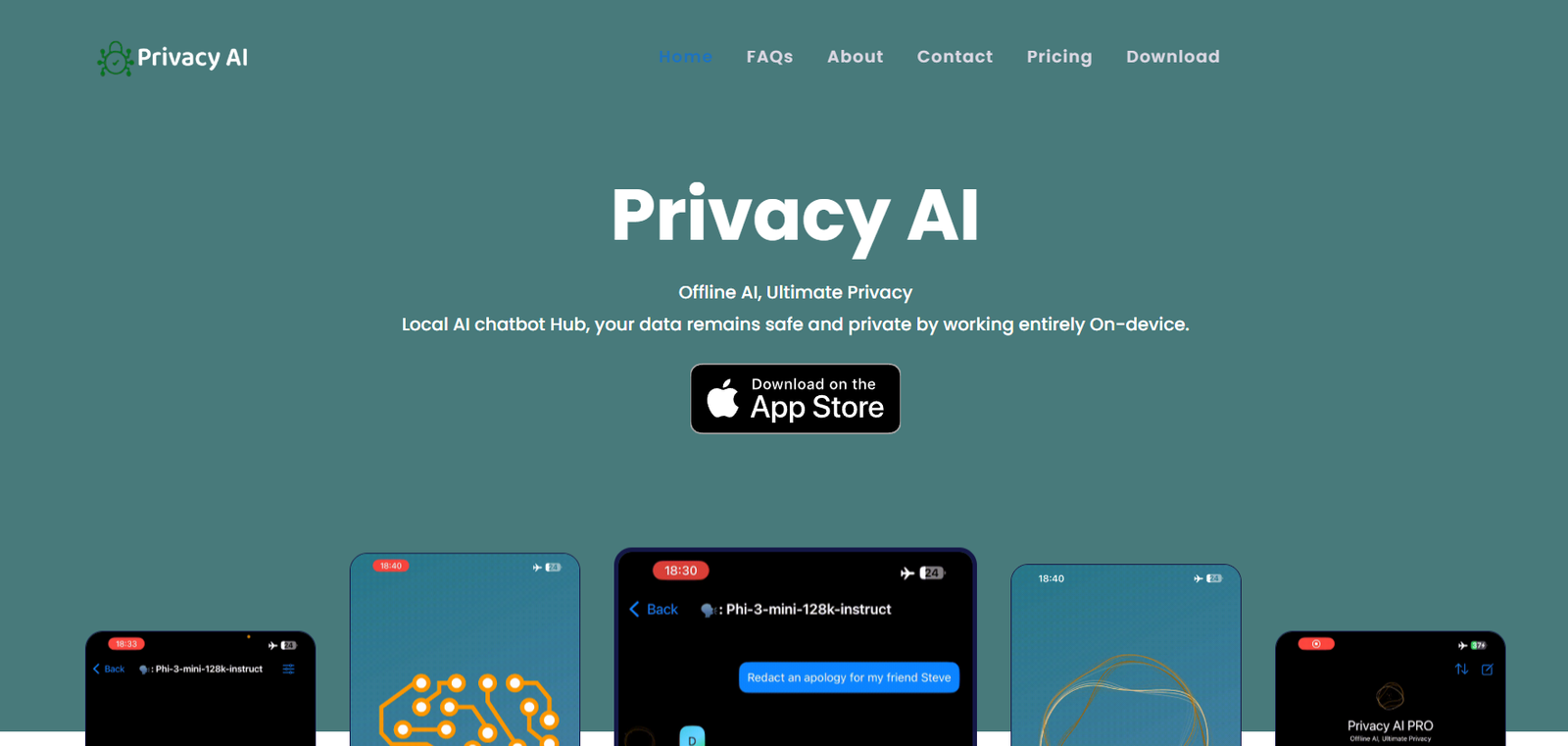
PrivacyAI is an AI-driven privacy compliance platform designed to help businesses automate the detection, management, and remediation of personal and sensitive data across their systems. It helps organizations comply with data privacy regulations such as GDPR, CCPA, and India’s Digital Personal Data Protection (DPDP) Act by providing a unified system for identifying risks and responding to data subject requests (DSRs).
The platform is built to serve legal, compliance, and IT teams by simplifying complex privacy operations. Using AI, PrivacyAI continuously scans structured and unstructured data across cloud and on-premise environments to detect personally identifiable information (PII), assess risks, and enable privacy-by-design implementation across the enterprise.
With rising regulatory pressure and increasing consumer awareness around data privacy, PrivacyAI offers a modern solution that helps organizations achieve compliance, minimize data exposure, and build customer trust.
Features
PrivacyAI offers a wide range of features that streamline privacy compliance and data governance.
The core feature is automated PII detection, where AI scans enterprise data sources such as databases, documents, emails, and cloud storage to identify sensitive personal information.
It provides a unified data map that visualizes where and how personal data is stored, making it easier for teams to understand risk exposure and audit their environment.
The platform supports regulation-specific compliance modules, including prebuilt workflows for GDPR, CCPA, and the DPDP Act, helping businesses stay aligned with region-specific laws.
DSR automation tools allow organizations to manage data subject requests at scale, such as access, correction, or deletion requests from users.
PrivacyAI includes risk scoring and prioritization, enabling compliance teams to focus on high-risk areas first.
Its data minimization and retention policy enforcement tools help businesses apply privacy principles automatically.
The platform also offers integration APIs to connect with existing systems like CRMs, ERPs, HR tools, and cloud infrastructure for deeper privacy automation.
How It Works
PrivacyAI connects to an organization’s internal systems and cloud services to begin scanning for personal and sensitive data. The AI engine uses natural language processing and machine learning models to identify a wide range of PII types, including names, emails, addresses, identification numbers, financial details, and health records.
Once identified, the platform tags this data and populates a data inventory dashboard, which shows where data is located, how it is being processed, and who has access.
Compliance teams can use built-in tools to generate compliance reports, respond to DSRs, and configure workflows for regular monitoring.
PrivacyAI also includes alerting and remediation features that notify teams of non-compliance risks or data misconfigurations in real time.
For continuous compliance, the system runs ongoing scans, updates the data map, and applies policy-based automation to ensure privacy rules are enforced without manual oversight.
Use Cases
Large enterprises use PrivacyAI to manage compliance across complex, multi-region infrastructures and ensure alignment with international data privacy laws.
Startups leverage the platform to integrate privacy-by-design principles into their product development lifecycle from day one.
E-commerce platforms use PrivacyAI to detect and protect customer data stored across web forms, transaction records, and marketing tools.
Healthcare providers and insurers use the platform to ensure patient and policyholder data remains secure and auditable under health data regulations.
Financial institutions utilize PrivacyAI to automate customer data audits, reduce regulatory fines, and improve risk oversight.
Pricing
PrivacyAI does not list fixed pricing plans publicly. Instead, it offers custom pricing based on factors such as data volume, number of connected systems, organization size, and compliance scope.
Prospective customers are encouraged to request a demo or consultation through the official website to receive a tailored quote.
This pricing model is common for enterprise-grade platforms where configurations, integrations, and compliance needs vary widely between clients.
Strengths
PrivacyAI’s biggest strength lies in its AI-driven automation, which significantly reduces the manual effort required for privacy audits and compliance tracking.
The platform’s real-time data discovery and mapping capabilities help organizations visualize their data landscape and respond proactively to risks.
Support for multiple global regulations ensures that businesses operating across jurisdictions can manage compliance in one place.
Its DSR automation tools are especially valuable for organizations handling large volumes of customer requests, reducing legal overhead.
The platform’s integration readiness enables deployment in diverse IT environments without needing major overhauls.
Drawbacks
The platform appears to be enterprise-focused, which may not make it suitable or affordable for small businesses or startups with limited data infrastructure.
There is currently no transparent pricing available, which can make early evaluation difficult for budget-conscious teams.
The learning curve may be steep for non-technical users or small compliance teams unfamiliar with data mapping and privacy automation platforms.
Public third-party reviews or independent case studies are not readily available at the time of writing, which may limit trust for first-time buyers.
Comparison with Other Tools
Compared to data privacy tools like OneTrust, BigID, or Securiti.ai, PrivacyAI offers similar core functionality such as data discovery, DSR management, and regulatory compliance.
OneTrust is more focused on broader governance, risk, and compliance (GRC) use cases, while PrivacyAI appears more focused on automated privacy workflows and actionable AI insights.
BigID is well-known for deep data classification and advanced metadata tagging; PrivacyAI competes with lighter deployment and AI-first architecture.
Securiti.ai also offers similar privacy features but may require more configuration or engineering involvement, while PrivacyAI positions itself as a streamlined and easier-to-deploy solution.
Customer Reviews and Testimonials
At the time of review, there are no publicly listed customer reviews for PrivacyAI on platforms like G2, Capterra, or Product Hunt.
However, the official website outlines how enterprise clients use the platform to reduce compliance workloads, automate audit readiness, and minimize personal data exposure.
Users reportedly appreciate the ease of integration, AI insights, and real-time alerts that help prioritize high-risk areas.
Testimonials mention faster turnaround on DSRs and improved cross-team visibility into data flows.
More detailed case studies or independent testimonials would help further validate the platform’s impact and scalability.
Conclusion
PrivacyAI is a modern, AI-powered privacy compliance platform designed to help organizations detect, manage, and protect personal data at scale. With its automation-first approach, it simplifies regulatory compliance, reduces data risks, and streamlines privacy operations for legal, IT, and compliance teams.
Although it may not be suited for smaller businesses due to its enterprise-oriented structure and custom pricing, PrivacyAI is an ideal solution for medium to large organizations operating in regulated industries or handling sensitive user data.
With growing global focus on data protection, PrivacyAI offers an intelligent, scalable, and proactive approach to achieving and maintaining privacy compliance.


