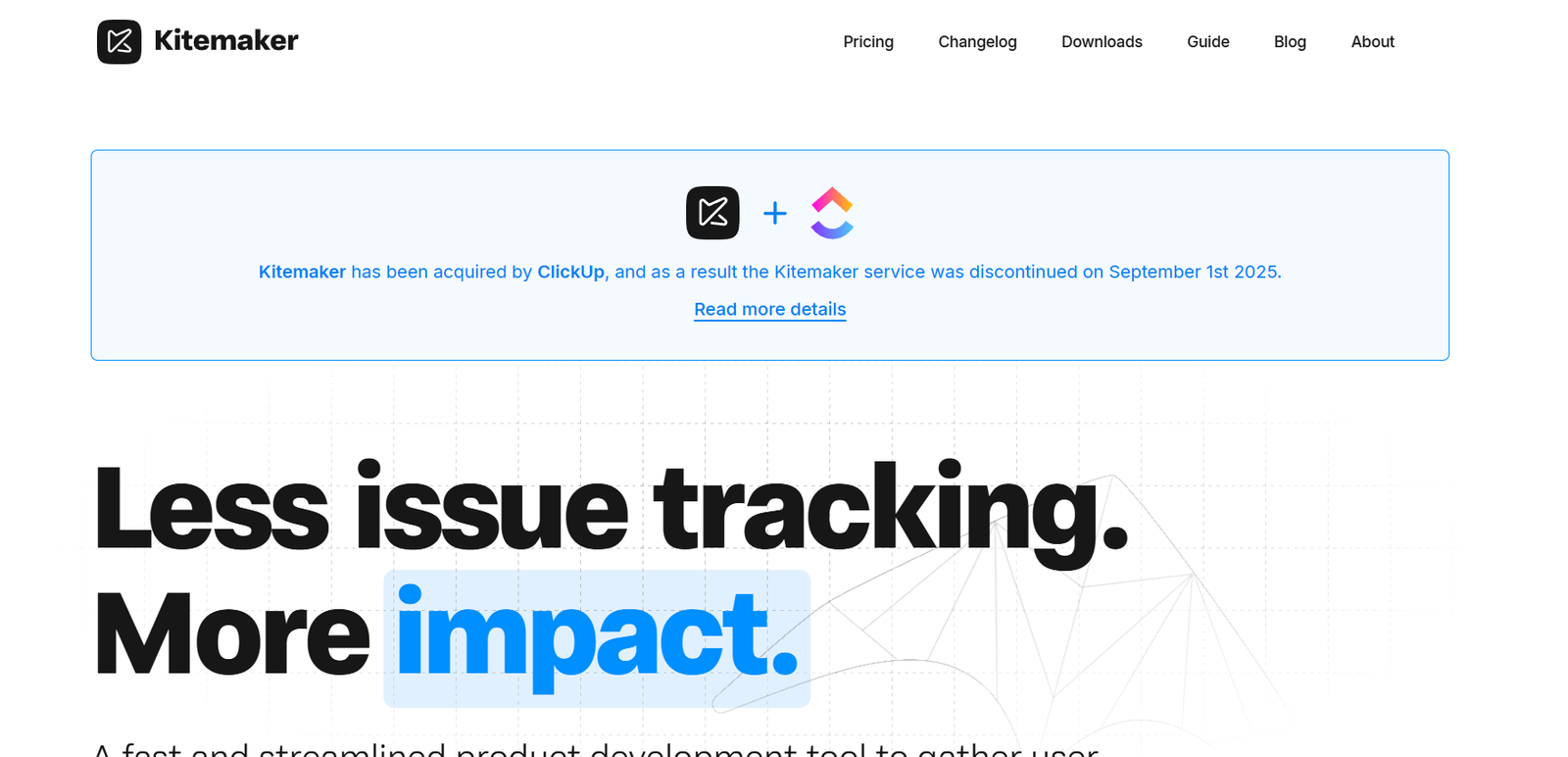
Kitemaker is a modern product management platform built to help software teams move fast without losing focus or collaboration. Designed specifically for product managers, developers, and designers, Kitemaker blends speed, structure, and communication into a single tool. It offers a lightning-fast interface, flexible workflows, and deep integrations with tools your team already uses.
Unlike traditional project management tools that can feel bloated and slow, Kitemaker emphasizes simplicity and real-time collaboration. It’s ideal for fast-paced product teams that need to plan features, track issues, align on roadmaps, and stay connected—without switching between multiple apps. From ideation to execution, Kitemaker streamlines the product development process.
Features
Kitemaker provides a rich set of features focused on speed, collaboration, and visibility:
Fast Interface
Optimized for speed, every action is keyboard-first and built for power users. Quickly navigate, edit, and manage work without touching the mouse.
Work Items
Organize features, bugs, and improvements into customizable work items with statuses, labels, and priorities.
Nested Work Items
Break down large features into sub-items for better tracking and hierarchy.
Real-Time Collaboration
Edit and comment on items live with your teammates, similar to Google Docs-style collaboration.
Integrated Discussions
Each work item includes rich comment threads with mentions, reactions, and formatting to keep conversations focused and contextual.
Custom Workflows
Create and adapt workflows with custom columns, statuses, and fields tailored to your team’s processes.
Roadmaps
Visualize your product roadmap with flexible views that help communicate what’s planned, in progress, and completed.
GitHub & GitLab Integration
Link work items with pull requests, commits, and branches to keep product and engineering work in sync.
Slack and Discord Integration
Stay updated on activity through instant notifications in the tools your team uses for communication.
AI-Powered Summaries
Automatically generate summaries of work items using built-in AI tools for faster onboarding and documentation.
Shortcut Commands
Use slash commands and keyboard shortcuts to navigate and update your workspace quickly.
Multiple Workspaces
Support for multiple teams or projects under one account with isolated workspaces.
Analytics and Progress Tracking
Track work across teams and sprints with built-in reporting and velocity charts.
How It Works
Kitemaker is built around work items—the core unit for organizing tasks, features, bugs, or anything else your team tracks. Users can create work items using simple keyboard shortcuts or markdown-based editing. Each item can include descriptions, attachments, comments, labels, and status updates.
You can organize items into boards that represent workflows or categories. Boards are highly customizable, allowing your team to define its own stages, columns, and priorities. As work progresses, team members can update statuses, assign ownership, and collaborate in real time directly within the item’s activity feed.
Kitemaker integrates with GitHub and GitLab, so development progress is automatically reflected on linked items. Pull requests and commits are visible in the item thread, giving product teams and developers full visibility into what’s happening.
The roadmap view offers a high-level picture of what’s planned and helps communicate updates to stakeholders. All of this is managed through a fast, responsive interface that prioritizes usability and team flow.
Use Cases
Kitemaker supports a range of use cases for modern product and software teams:
Product Planning
Break down features and initiatives into actionable items, prioritize work, and build a roadmap that reflects real progress.
Agile Development
Manage sprints, track velocity, and iterate on features using flexible workflows and progress reports.
Bug Tracking
Log and assign bugs with clear descriptions, labels, and linked development work.
Design Collaboration
Designers and developers can share files, add context, and track design-to-dev handoffs in one shared item.
Sprint Planning
Plan and track team sprints using custom boards, capacity planning, and real-time updates.
Cross-Team Projects
Collaborate across product, engineering, and design teams with shared visibility and communication features.
User Feedback Management
Turn customer feedback into actionable tasks and track their status through development.
Internal Tools Development
Use Kitemaker to manage development of internal tools with minimal setup and maximum visibility.
Pricing
According to the official Kitemaker website, Kitemaker currently offers its core platform for free:
Free Plan
Unlimited workspaces
Unlimited users
All core features included
GitHub and GitLab integration
Slack and Discord integration
Real-time collaboration
AI-powered summaries
Roadmaps and analytics
Priority email support
Kitemaker is free for now as the team focuses on improving the product and onboarding users. Paid plans are planned for the future but have not yet been announced.
This generous free tier makes Kitemaker ideal for startups, small teams, and fast-moving companies who want to optimize product development without upfront costs.
Strengths
Kitemaker is optimized for teams that value speed, clarity, and collaboration. Key strengths include:
Lightning-fast and keyboard-first interface
Real-time collaboration built into every workflow
Deep GitHub and GitLab integration
Minimalist design with powerful customization
Built-in AI features for summaries and notes
Excellent Slack and Discord integrations
Transparent pricing with generous free tier
High usability and low learning curve
Great for cross-functional product teams
Roadmaps, sprints, and boards all in one platform
Drawbacks
While Kitemaker is a powerful tool, it has some limitations that may affect certain teams:
No mobile apps as of now (web-first experience)
Limited third-party integrations beyond Git and Slack
Currently lacks built-in time tracking or billing tools
No advanced automation or rule-based workflows
Not suitable for teams needing waterfall project structures
May lack complex reporting for enterprise needs
Still evolving, with some features under development
These drawbacks are minor for most agile teams, but enterprise users or those requiring broad integrations may need to supplement with other tools.
Comparison with Other Tools
Kitemaker vs Jira
Jira is highly customizable but often seen as complex and slow. Kitemaker offers a faster, simpler, and more modern interface with better collaboration.
Kitemaker vs Linear
Both tools focus on speed and developer productivity. Linear is more established with broader integrations, but Kitemaker emphasizes flexibility and team communication.
Kitemaker vs Trello
Trello is simpler but lacks Git integrations and real-time collaboration. Kitemaker offers more power for software development teams.
Kitemaker vs Asana
Asana has broad appeal across industries. Kitemaker is built specifically for software teams and offers deeper Git-based workflows.
Kitemaker vs ClickUp
ClickUp has many features but can feel bloated. Kitemaker is streamlined and purpose-built for product-focused teams that value speed and clarity.
Customer Reviews and Testimonials
Kitemaker is gaining strong feedback from modern software teams. Users praise its speed, simplicity, and focus on developer-friendly features.
“Finally, a product tool that feels like it was made for real teams.”
“Kitemaker is fast, clean, and makes Jira look ancient.”
“We moved our entire roadmap into Kitemaker and love the simplicity.”
“The GitHub integration is seamless. Developers actually enjoy using it.”
“Kitemaker has changed how our product and engineering teams collaborate.”
On Product Hunt, Kitemaker has received positive reviews for its innovative design, real-time editing, and focus on developer-friendly workflows.
Conclusion
Kitemaker is a fast, modern product management platform purpose-built for cross-functional software teams. With its real-time collaboration, keyboard-first interface, and powerful Git integration, it helps teams ship better products, faster. Whether you’re managing a sprint, planning features, or aligning with stakeholders, Kitemaker brings clarity and structure to your workflow.
Its generous free plan and emphasis on speed make it especially attractive to startups and fast-moving teams. While it’s still evolving, Kitemaker already offers a compelling alternative to traditional tools like Jira or Trello—without the bloat or complexity.
For teams seeking a focused, collaborative, and developer-friendly way to manage product development, Kitemaker is a tool worth trying.