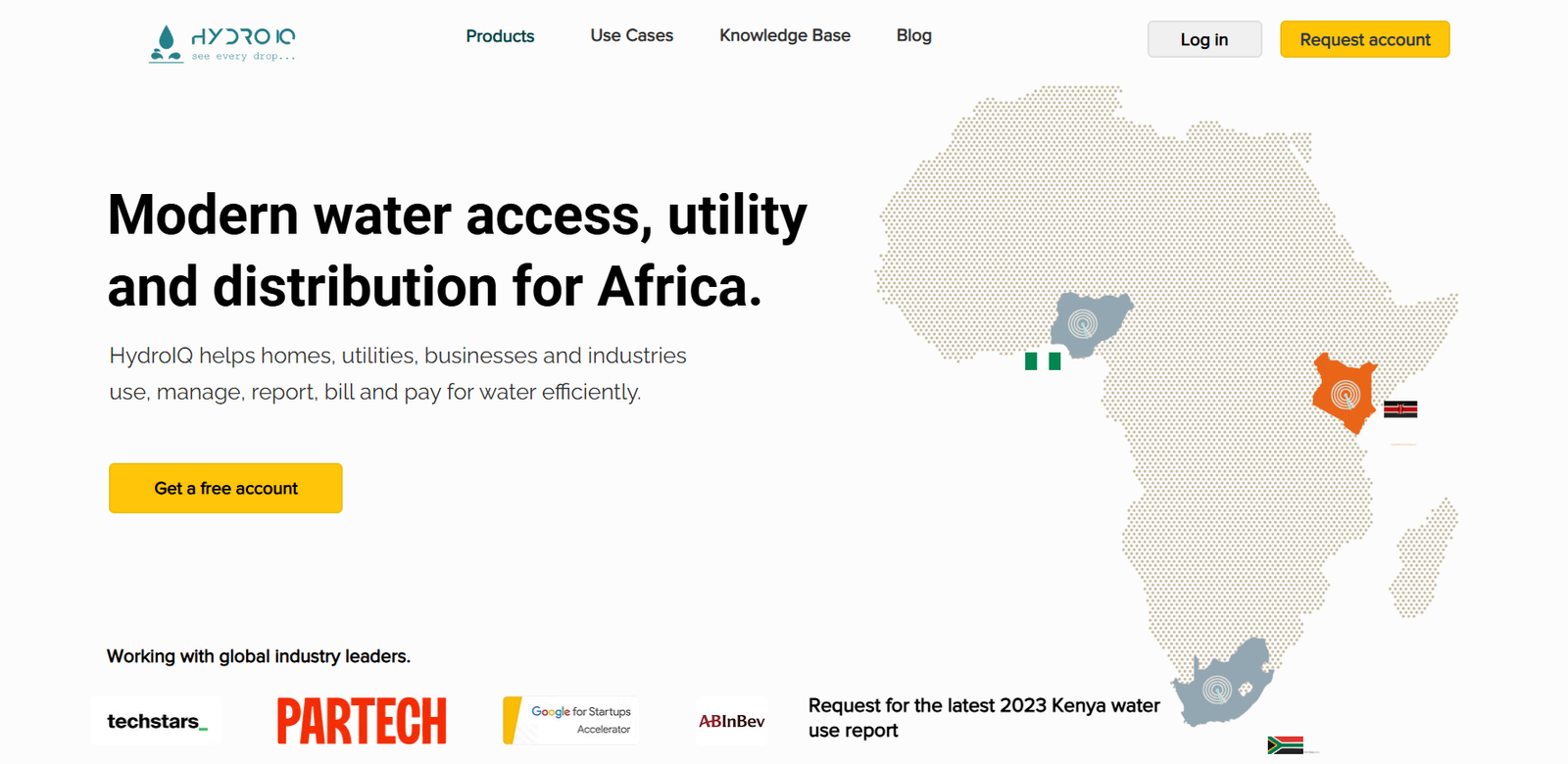
HydroIQ is a Kenyan-based smart water technology company that offers intelligent water management solutions for utilities, property managers, and households across Africa. By combining Internet of Things (IoT) devices and data analytics, HydroIQ provides real-time monitoring, automatic billing, and remote control of water distribution systems.
The platform addresses critical challenges in Africa’s water sector, including water theft, leakage, non-revenue water, and poor billing accuracy. HydroIQ aims to increase operational efficiency for utilities, ensure transparency, and improve water access for underserved communities. Its plug-and-play SmartGrid™ system integrates with existing water infrastructure without requiring major upgrades.
Founded in 2017, HydroIQ is at the forefront of digital water transformation in Africa, helping to build a more sustainable and accountable water ecosystem.
Features:
Smart Water Meters
HydroIQ provides IoT-enabled meters that track water consumption in real-time and transmit data to a centralized platform for monitoring and billing.Remote Monitoring and Control
Users can view water flow, pressure, and usage patterns remotely, and utilities can detect leaks, tampering, or unauthorized access instantly.Automated Billing System
The system automatically calculates bills based on actual consumption and sends invoices via SMS, email, or app, enabling mobile payments.Plug-and-Play Installation
HydroIQ devices can be installed on existing water infrastructure without extensive retrofitting, reducing deployment time and cost.Data Analytics Dashboard
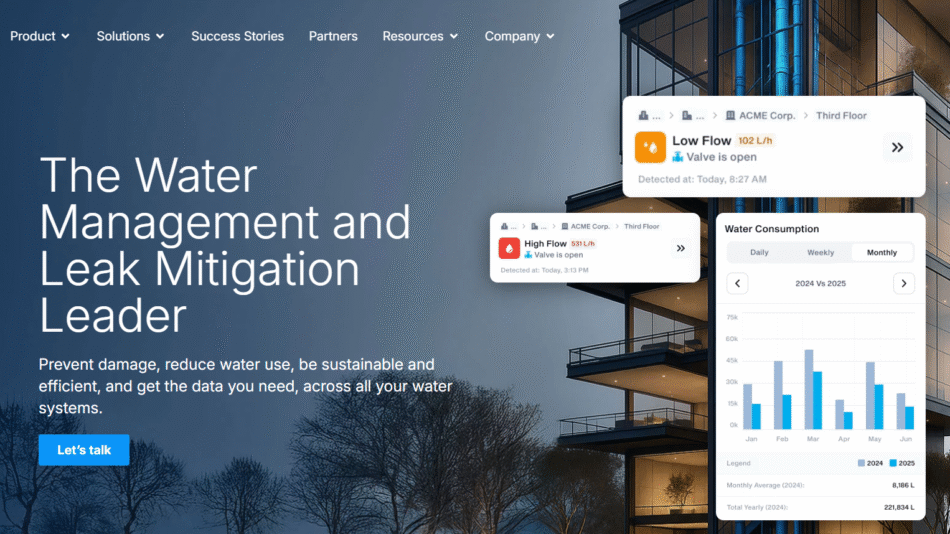
Utility managers and landlords can visualize usage trends, revenue reports, and system health through a user-friendly web dashboard.Consumer Mobile App
End users can track their water usage, view bills, and make payments using a mobile app, improving transparency and accountability.Leak and Loss Detection
The system identifies unusual patterns in water flow and pressure, helping utilities quickly respond to leaks or losses.API Integration
HydroIQ can integrate with external ERP, CRM, and mobile money platforms, ensuring seamless operations for businesses and governments.
How It Works:
Device Installation
Smart meters and sensors are installed at water inlets or distribution points (e.g., tanks, utility pipelines, residential compounds).Data Transmission
Devices transmit data wirelessly to the HydroIQ cloud using GSM or IoT networks, even in remote areas.Real-Time Monitoring
The platform continuously monitors parameters like flow rate, volume, pressure, and detects anomalies such as leaks or bursts.Automated Billing and Alerts
Bills are calculated automatically based on consumption and sent to users. System alerts notify users and administrators of issues in real time.User Interaction
Consumers use a mobile app or USSD code to check balances, receive alerts, and make payments using mobile money or bank transfers.Data Analytics and Reports
Utilities and property managers access insights on water usage trends, revenue collection, and network performance through dashboards.
Use Cases:
Municipal Water Utilities
Utilities use HydroIQ to monitor pipeline networks, reduce non-revenue water, and automate customer billing.Property Managers and Landlords
HydroIQ enables multi-tenant water usage tracking, fair billing, and leak detection in rental properties.Commercial Buildings
Businesses track water usage across departments or buildings to improve efficiency and manage costs.Rural and Community Water Projects
HydroIQ supports community-based water points with prepaid metering, enabling sustainable management and reducing misuse.Schools, Hospitals, and Institutions
Large institutions use HydroIQ to detect wastage, monitor infrastructure health, and manage water budgets.Water Service Providers (WSPs)
Enables WSPs to manage distribution, monitor revenue, and detect issues in real time across decentralized networks.
Pricing:
HydroIQ does not list standard pricing publicly on its website. Pricing depends on project size, location, and customization needs. However, its revenue model typically includes:
Hardware Costs: One-time purchase or leasing of smart meters and IoT sensors.
Software Subscription: Monthly or annual fees for access to the analytics platform and mobile app features.
Installation and Maintenance: Setup, training, and support costs, which may vary depending on complexity and region.
Transaction Fees: Charges for mobile payments or integrations with billing systems (where applicable).
Strengths:
Real-Time Water Monitoring: Provides accurate, up-to-the-minute data on consumption and system performance.
Improved Billing Accuracy: Eliminates manual meter reading and billing errors.
Reduces Non-Revenue Water: Detects leaks and unauthorized usage, improving utility revenue.
User-Friendly Interfaces: Accessible dashboards and mobile apps for both utilities and consumers.
Plug-and-Play: Works with existing water systems with minimal disruption.
Mobile Payment Integration: Supports MPesa and other mobile money platforms, increasing payment convenience.
Designed for African Contexts: Optimized for infrastructure limitations and connectivity issues common in emerging markets.
Drawbacks:
No Public Pricing: Lack of transparent pricing may deter small users or NGOs from planning budgets in advance.
Dependence on Connectivity: Remote areas without GSM or internet coverage may face challenges in data transmission.
Hardware Costs: Initial investment in smart meters may be high for small-scale users.
Limited Public Documentation: Detailed technical specifications and case studies are not easily accessible online.
Scaling Challenges: Custom deployments may require longer timelines depending on region and infrastructure readiness.
Comparison with Other Tools:
CityTaps: Similar smart water metering solution focused on prepaid models; HydroIQ offers broader integration and analytics capabilities.
Wonderkid Smart Water Systems: Another Kenyan company working on utility digitalization; HydroIQ has stronger IoT sensor integration and mobile user interaction features.
Samsara or Flowless: These international platforms offer smart utility monitoring but are not tailored specifically for African infrastructure or mobile money systems.
SmartThings or IoT Smart Home Tools: These focus on domestic water control and lack utility-scale applications, unlike HydroIQ’s industrial and community focus.
HydroIQ stands out for its deep integration with African mobile ecosystems, utility infrastructure, and water governance challenges.
Customer Reviews and Testimonials:
HydroIQ has gained recognition and awards from global organizations, including:
World Bank’s XL Africa Program
HydroIQ was selected as one of the top African tech startups.UNDP and African Union
Acknowledged for contributions to sustainable development and water access.Village Capital Accelerator
HydroIQ has received funding and mentorship through several startup accelerator programs.
Although the website does not currently list individual testimonials, news features and interviews have highlighted customer satisfaction in areas such as:
Improved revenue collection for utilities
Faster response to leaks and system failures
Increased transparency in tenant billing
Reduced water losses in urban pipeline systems
Case studies from Kenya and Ghana show significant reductions in water loss and improved billing efficiencies using HydroIQ’s solutions.
Conclusion:
HydroIQ is a game-changer in Africa’s water management landscape, offering smart, data-driven solutions that address critical issues like water loss, inefficient billing, and lack of transparency. By leveraging IoT, real-time analytics, and mobile payments, HydroIQ is creating a smarter, more efficient, and more accountable water system.
Its scalable and cost-effective solutions make it ideal for utilities, landlords, commercial buildings, and community water projects. With a strong focus on localized needs and emerging markets, HydroIQ demonstrates how innovation can bridge infrastructure gaps and support sustainable development.
For governments, organizations, or property managers looking to optimize water usage and revenue, HydroIQ offers a forward-thinking and practical solution.