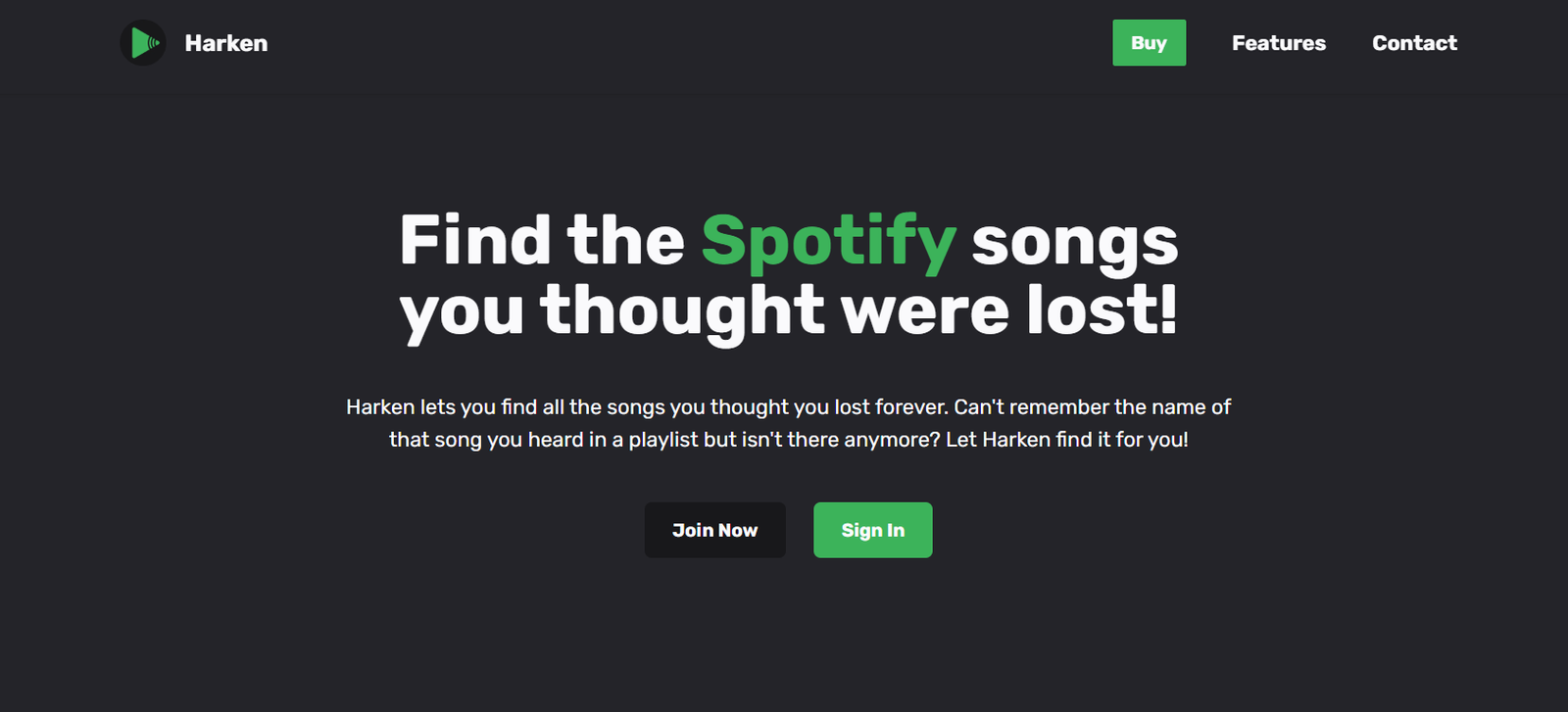
Harken is an AI-powered platform designed to help product teams, researchers, and user experience professionals extract valuable insights from user interviews. By automating the tedious process of transcription, tagging, and analysis, Harken enables teams to spend less time managing data and more time acting on insights that drive product decisions.
The tool is built to streamline the feedback-to-insight pipeline. Instead of combing through hours of interview recordings manually, users can upload conversations directly into Harken. The platform then uses artificial intelligence to transcribe the audio, identify themes, and organize key findings.
Harken’s core mission is to remove the friction from user research so that teams can consistently make user-informed decisions, even at scale.
Features
Harken is equipped with features that address the common pain points of qualitative research and user interview analysis.
The first major feature is AI transcription. Harken automatically converts audio interviews into text with high accuracy. This provides a fast and reliable foundation for analysis.
Once transcribed, the platform uses AI to detect themes, sentiments, and recurring topics across multiple interviews. This automatic tagging system helps researchers quickly identify trends and understand what users care about most.
The tool offers a collaborative research workspace where teams can centralize their interview recordings, notes, and findings. Users can highlight key quotes, group them into themes, and build reports that are easily shareable with stakeholders.
Harken also provides insight libraries, allowing users to store reusable insights and reference them in future projects.
All data in Harken is securely stored, with privacy and compliance considerations built in, making it suitable for teams handling sensitive user feedback.
Additionally, integrations with tools like Zoom and Google Meet streamline the upload and processing of interviews conducted on popular platforms.
How It Works
Harken simplifies the process of turning raw user feedback into actionable insights through a structured workflow.
Users begin by uploading or syncing their recorded user interviews. This can be done manually or through integrations with video conferencing tools like Zoom.
Once uploaded, Harken automatically transcribes the audio into searchable text. The AI then scans the transcript to identify recurring themes, user pain points, and emotional tones.
Users can further annotate the transcripts by highlighting quotes or adding custom tags. These annotations can be grouped into higher-level insights using Harken’s workspace features.
Teams can collaborate in real time or asynchronously by commenting, organizing findings, and building insight reports.
The final insights can be exported or shared internally, making it easier to drive product decisions and inform cross-functional stakeholders.
The process is fully automated, yet offers enough flexibility for researchers to maintain control over interpretation and tagging.
Use Cases
Harken is purpose-built for product teams, UX researchers, and customer experience professionals who rely on qualitative feedback.
Product managers can use Harken to gather and synthesize customer pain points from interviews to inform roadmap planning.
UX researchers benefit by reducing the time it takes to analyze interviews, allowing them to deliver insights more quickly and at scale.
Startups and smaller teams without dedicated research resources can use Harken to run lean user testing cycles without compromising on research quality.
Customer success teams can review customer feedback to better understand friction points in the user journey.
Agencies and consultants conducting user research for clients can streamline their reporting and deliver insights faster with less manual effort.
Harken is also well-suited for internal teams conducting employee interviews or stakeholder discussions, offering a structured way to capture and reflect on qualitative input.
Pricing
Harken follows a transparent pricing structure that caters to both small teams and larger organizations.
The platform offers a 7-day free trial with full access to its features, allowing teams to evaluate its capabilities before committing.
As of the latest update, Harken’s paid plan is priced at $30 per seat per month when billed annually.
This plan includes unlimited transcription, full access to AI tagging and insights, workspace collaboration, and all integrations.
The pricing is designed to be accessible to startups, agencies, and growing teams while delivering enterprise-grade functionality.
For larger teams or organizations requiring tailored solutions, Harken also offers custom pricing on request.
Full pricing details can be found directly on the official website at https://harken.so.
Strengths
Harken’s biggest strength is its automation of time-consuming tasks in the research process. By leveraging AI, it drastically reduces the manual labor involved in transcribing and analyzing interviews.
Its accuracy in transcription and relevance in theme detection allows teams to find real insights without combing through hours of data.
The intuitive interface makes it easy for teams to collaborate, tag findings, and present insights in a way that’s digestible and stakeholder-ready.
Another key strength is its integrations with popular meeting tools, which remove friction from the data collection process.
Its pricing is also competitive, making advanced research workflows accessible even to smaller teams.
The platform’s focus on actionable insights, rather than just storage and transcription, sets it apart from simple voice-to-text tools.
Drawbacks
Despite its advantages, Harken has a few limitations.
While the AI tagging is useful, it may not capture nuanced themes without human input, especially in complex or highly specific domains.
Currently, Harken is focused on user interviews, so it may not support broader qualitative data types such as survey text analysis or social media mining.
The platform requires a steady internet connection and is primarily browser-based, which could be limiting in offline or restricted environments.
Smaller teams may find the per-seat pricing restrictive if only occasional research is conducted.
The platform is still growing, and some users may find that advanced features—like custom taxonomies or deep integrations—are not yet available.
Comparison with Other Tools
Compared to legacy research tools like Dovetail or EnjoyHQ, Harken offers a more focused and streamlined experience.
Dovetail is a more comprehensive research repository platform, offering tagging, video storage, and repository-level management. However, its interface can be more complex and pricing higher.
EnjoyHQ offers strong repository and analytics features but may be overkill for teams that just want to streamline interview analysis.
Compared to transcription services like Otter.ai or Rev, Harken delivers deeper insights, not just raw transcripts.
It stands out by combining transcription, AI tagging, collaboration, and insight reporting in one platform without requiring separate tools.
This balance of simplicity and power makes Harken a compelling choice for modern product and UX teams.
Customer Reviews and Testimonials
Users who have adopted Harken report a significant improvement in how quickly they can analyze and share user insights.
Many reviewers note that what used to take hours of manual tagging and summarizing can now be done in minutes.
Product teams say they’re able to make faster, data-driven decisions thanks to the organized and shareable insights.
UX researchers praise the accuracy of the transcriptions and the helpfulness of AI-powered theme recognition.
Early adopters especially appreciate how lightweight and intuitive the tool is, with minimal training required.
Feedback also highlights the support team’s responsiveness and openness to feature requests.
While still relatively new, Harken has built a strong reputation among research-driven teams for its practicality and focus.
Conclusion
Harken is a modern, AI-driven research tool that helps product and UX teams convert user interviews into actionable insights with minimal effort. Its automatic transcription, smart theme detection, and collaborative workspace make it a powerful solution for qualitative research workflows.
The platform removes the bottlenecks typically associated with analyzing user interviews, empowering teams to act on feedback quickly and consistently.
While it’s best suited for teams focused on interview-based research, its affordability and ease of use make it accessible to a wide range of professionals.
Harken successfully bridges the gap between raw user feedback and product strategy, making it an essential tool for insight-driven teams.