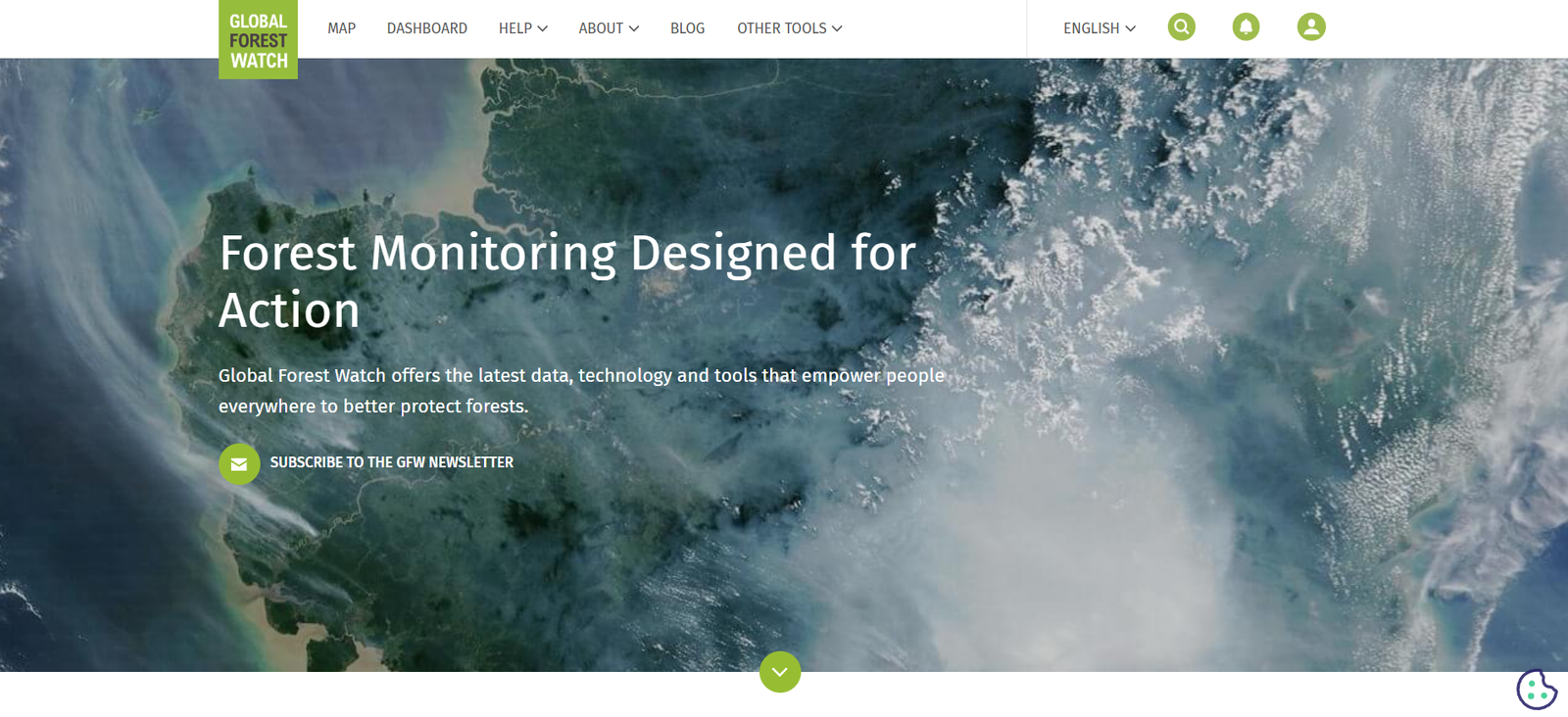
Global Forest Watch is an advanced open-source forest monitoring platform that uses satellite technology, AI, and open data to track changes in forest cover worldwide. It is developed and maintained by the World Resources Institute (WRI) and provides real-time, reliable data about global forests, deforestation, fire alerts, and land use trends.
With a mission to increase transparency and accountability in forest management, Global Forest Watch empowers governments, businesses, NGOs, journalists, and concerned citizens to act on forest loss using credible and timely data. The platform combines remote sensing, machine learning, and geospatial analysis to offer tools that are both scientifically accurate and user-friendly.
The platform is web-based and free to access. It supports various levels of users—from environmental activists and local communities to policy-makers and researchers—offering everything from simple map views to customizable datasets and downloadable reports.
Features
Global Forest Watch is packed with a wide range of features that make it one of the most reliable and widely used forest monitoring platforms.
Forest Change Monitoring
It provides near real-time data on forest gain and loss, allowing users to monitor how forest areas evolve over time.
Satellite-Based Fire Alerts
Global Forest Watch integrates NASA’s MODIS and VIIRS satellite data to send instant alerts about forest fires. Users can subscribe to receive email alerts for specific regions.
Interactive Forest Maps
Users can access dynamic and customizable maps that visualize forest change, land use, biodiversity, and protected areas across the globe.
Country and Regional Dashboards
The platform offers dashboards for individual countries or regions that display forest statistics, policy data, and legal protections.
Custom Report Generation
Global Forest Watch allows users to generate custom reports for specific regions. These reports include information on forest loss, fires, land use, and more.
Open Data Access
The platform supports open data initiatives by allowing users to download geospatial data in multiple formats (CSV, SHP, GeoJSON).
Forest Watcher Mobile App
For offline forest monitoring, the Forest Watcher mobile app enables on-the-ground users to access satellite data in remote locations.
Community and Indigenous Lands Data
It includes maps showing the boundaries of lands managed by Indigenous peoples and local communities, highlighting the importance of these areas in forest conservation.
Tree Cover and Biomass Layers
The map includes visual data layers such as tree cover density, tree height, and carbon biomass estimates.
How It Works
Global Forest Watch operates by combining satellite imagery, artificial intelligence, and crowd-sourced data to provide a transparent view of the world’s forests.
First, satellite imagery from NASA and other agencies is processed using advanced machine learning algorithms. These algorithms detect changes in forest cover, identify burned areas, and calculate deforestation risks.
Next, the platform integrates this satellite data with geospatial layers, such as protected areas, land ownership, and biodiversity zones. These layers provide context to the raw data, helping users understand the causes and impacts of forest change.
Users can then access this information through the Global Forest Watch web platform. They can view interactive maps, filter data by region or timeframe, generate reports, or set up custom alerts.
For users on the ground, especially in remote areas, the Forest Watcher mobile app brings much of the same data to smartphones and tablets. This makes it easier for local communities and forest rangers to detect and verify deforestation events.
Use Cases
Forest Conservation
NGOs and environmental organizations use Global Forest Watch to detect illegal logging and take timely action to protect vulnerable forests.
Government Monitoring
Governments and forest departments rely on the platform to track deforestation trends, manage national forests, and enforce environmental laws.
Corporate Sustainability
Companies in industries like agriculture, forestry, and retail use the platform to ensure their supply chains do not contribute to illegal deforestation.
Academic Research
Researchers and students use GFW data to study forest ecosystems, carbon storage, biodiversity, and climate change impacts.
Community Protection
Indigenous communities and local groups use GFW and the Forest Watcher app to protect their ancestral lands from encroachment.
Media and Journalism
Journalists and media outlets use the platform’s data to report on environmental issues, uncover illegal logging, and raise awareness about forest loss.
Pricing
Global Forest Watch is a completely free platform. All features, data access, and reporting tools are available at no cost. Users can sign up for alerts and download datasets without any subscription or licensing fee. The platform is funded by a variety of donors including philanthropic organizations and government agencies, which allows it to remain accessible to everyone.
Strengths
Real-Time Data
Global Forest Watch offers near real-time updates, helping users act quickly in response to forest change events.
Open Access
All data and tools are freely available to the public, ensuring transparency and wide accessibility.
Scientific Accuracy
The platform is built using reliable data sources and rigorous analytical methods, making it trustworthy for policy and research use.
Global Coverage
GFW provides forest monitoring tools for every country, covering both tropical and temperate forest regions.
Custom Alerts and Reports
Users can tailor the platform to their needs by setting alerts, downloading specific datasets, or generating region-specific reports.
Mobile Support
The Forest Watcher mobile app brings the power of satellite monitoring to field workers and remote communities.
Drawbacks
Internet Dependency
The main platform requires an internet connection, which may limit use in remote forest regions without connectivity.
Data Lag for Some Regions
While many alerts are near real-time, some datasets (such as biomass estimates) are updated annually, which might not reflect immediate changes.
Learning Curve
Though user-friendly, the platform’s wide range of features and datasets can be overwhelming for beginners or non-technical users.
Limited Predictive Tools
Global Forest Watch primarily focuses on monitoring and alerting, rather than predictive modeling or AI forecasting of future trends.
Comparison with Other Tools
Compared to other forest monitoring tools like Terra-i or the FAO’s SEPAL, Global Forest Watch stands out due to its ease of use, broader data access, and real-time alerts.
Unlike Terra-i, which has slower update frequencies, Global Forest Watch uses high-resolution and frequently updated satellite imagery. While SEPAL offers more in-depth analysis tools for experts, Global Forest Watch is designed for both technical and non-technical audiences.
Platforms like MapBiomas are focused more on regional coverage (e.g., Brazil), whereas Global Forest Watch is truly global. The combination of accessible UI, robust data, and mobile integration makes GFW a preferred choice for many user groups.
Customer Reviews and Testimonials
Global Forest Watch is widely praised across environmental communities, government agencies, and educational institutions. Users appreciate its intuitive interface and the reliability of its data.
Environmental NGOs have highlighted its impact on detecting illegal logging in real time. Many government departments, especially in tropical countries, credit GFW with improving transparency and helping enforce forestry laws.
Researchers find the open data model valuable for academic studies. Journalists have used GFW data in award-winning reports on deforestation and environmental crime.
User testimonials on platforms like Product Hunt and reviews from conservation blogs often describe the tool as “essential,” “user-friendly,” and “revolutionary” for forest protection.
Conclusion
Global Forest Watch is a powerful, accessible, and completely free platform that transforms how the world monitors and protects forests. By combining satellite imagery, artificial intelligence, and open data, it provides timely and accurate information for a wide range of users—from local communities and NGOs to corporations and governments.
Its strengths in real-time monitoring, open access, and mobile support make it a standout among global forest tracking tools. While there are minor limitations related to connectivity and advanced analytics, the platform’s benefits far outweigh these drawbacks.
Whether you’re a researcher, policymaker, or a concerned global citizen, Global Forest Watch offers the tools and data needed to take informed action for the planet’s forests.