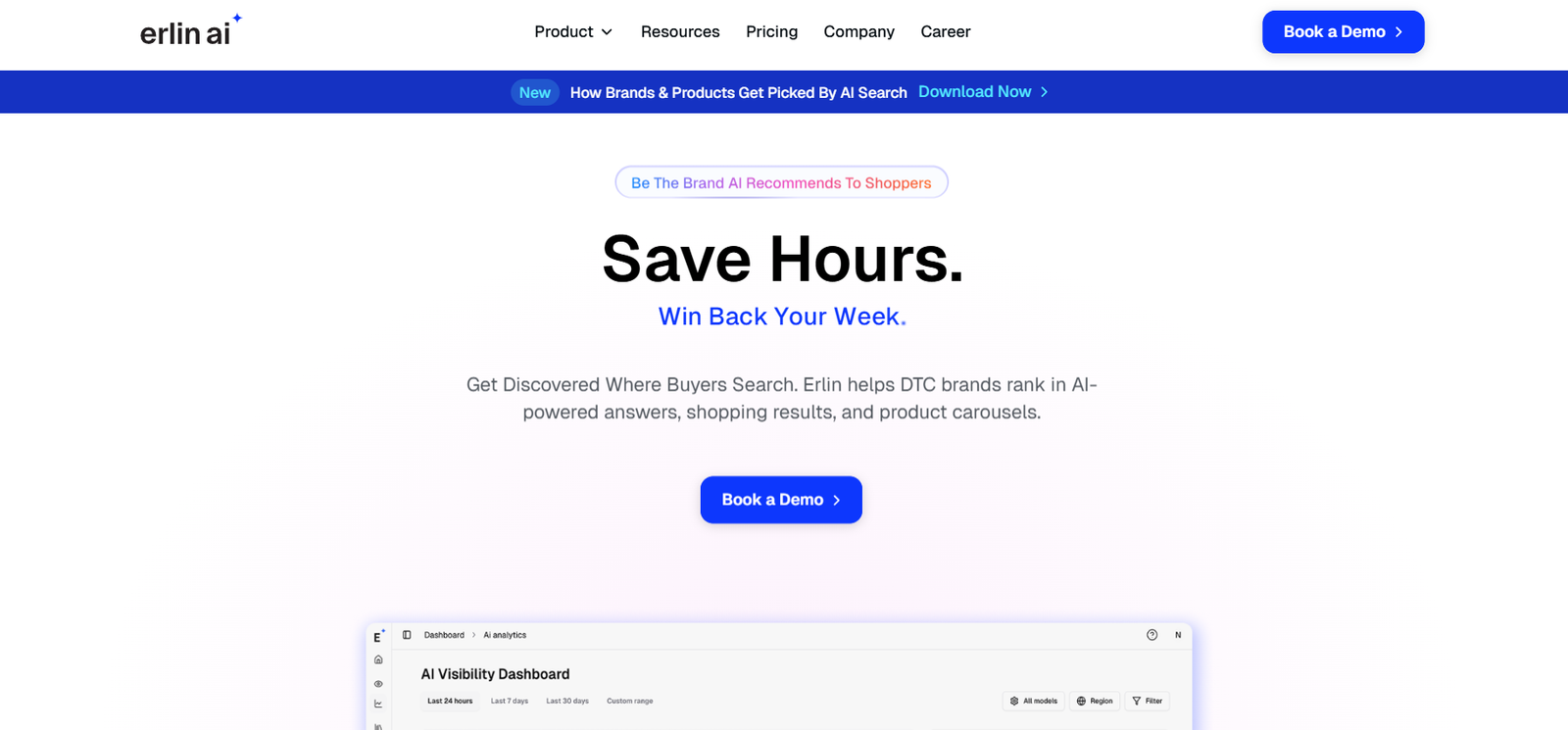
Erlin AI is a secure, privacy-first AI assistant designed for internal company use. It allows organizations to deploy a private AI chat assistant trained on internal knowledge without exposing sensitive data to third-party AI providers. Erlin empowers teams to collaborate, search company documents, and improve productivity using AI — all within a secure, controlled environment.
Built with enterprise-grade privacy and compliance in mind, Erlin is ideal for teams handling confidential or proprietary information. The platform helps companies benefit from the capabilities of large language models (LLMs) while maintaining full control over their data.
Unlike public AI chat tools, Erlin is purpose-built for organizations that value trust, data sovereignty, and integration with internal systems.
Features
Erlin AI offers a focused set of features that support secure, intelligent, and efficient internal communication. Its main feature is the private AI assistant, which can be trained on internal company documents, wikis, knowledge bases, and SOPs to provide accurate, contextual responses to employee queries.
The assistant supports natural language search, enabling users to find relevant documents, policies, or answers quickly by simply typing questions in plain English. The AI interprets the intent and fetches the most relevant content from the company’s internal knowledge sources.
Erlin provides fine-grained access controls, allowing administrators to define which users or teams can access specific documents or chat features. This ensures sensitive information stays protected across departments.
The platform includes document upload and syncing, enabling continuous learning from internal resources like PDFs, Word docs, Google Docs, and Notion pages. Erlin automatically indexes the content, making it searchable through AI chat.
Erlin supports conversation memory and context retention, allowing for more coherent and useful interactions across sessions. The assistant remembers previous messages and can handle follow-up questions within the same context.
The system is designed with privacy and compliance in mind. Erlin offers on-premise deployment or private cloud hosting to ensure that no data is shared with public AI services.
How It Works
Erlin AI works by enabling companies to set up a private AI assistant that learns from internal documentation and resources. After onboarding, teams upload files or connect Erlin to content sources like internal wikis, shared folders, or document repositories.
Once the data is ingested, Erlin indexes the content and makes it accessible through its secure AI chat interface. Employees can then interact with the assistant by asking questions such as “What is our onboarding process?” or “Where is the latest marketing plan?”
The AI processes the query, retrieves relevant information, and responds with summaries or direct answers, often linking back to the original source for verification. Erlin ensures that the assistant only references content users are authorized to access.
Administrators can monitor usage, set permissions, and update sources at any time. If content changes or new files are added, Erlin refreshes its index automatically to reflect the most recent version of the knowledge base.
All conversations and data processing happen within the company’s secure environment, ensuring full compliance with internal and regulatory requirements.
Use Cases
Erlin AI is useful for any organization looking to enhance internal knowledge access while maintaining strict control over data. One common use case is employee onboarding. New hires can use Erlin to quickly learn about policies, tools, and workflows without waiting for human assistance.
In HR and operations, Erlin helps answer repetitive employee questions about benefits, holidays, or procedures — reducing workload for internal teams and ensuring consistent answers.
Product and engineering teams use Erlin to retrieve documentation, internal APIs, and system architecture details. Developers can ask Erlin for explanations or file references, saving time spent searching through folders or asking colleagues.
Customer support and success teams leverage Erlin to find answers in internal knowledge bases during live chats or tickets, reducing response time and ensuring accurate support.
Leadership teams use Erlin to access strategic documents or summaries of internal reports, improving decision-making without digging through files.
Organizations in regulated industries such as finance, legal, or healthcare benefit from Erlin’s privacy-first design, allowing them to adopt AI without compromising compliance.
Pricing
As of the latest information available on the Erlin AI website, specific pricing plans are not publicly listed. Erlin offers custom pricing based on factors such as company size, deployment method, data volume, and integration requirements.
Organizations interested in Erlin are encouraged to request a demo or contact the sales team for a tailored quote. This approach allows Erlin to accommodate a variety of business needs — from startups seeking secure knowledge access to enterprises needing large-scale deployment with strict data governance.
Erlin also provides onboarding support, technical setup assistance, and deployment guidance as part of its enterprise offering.
Strengths
Erlin AI’s biggest strength is its privacy-by-design architecture, which ensures that company data stays within the organization’s control. Unlike consumer AI chatbots, Erlin does not share or store prompts in public systems, making it suitable for sensitive environments.
Its plain-language interface makes it accessible to all employees, regardless of technical ability. This democratizes access to internal knowledge and reduces dependence on documentation gatekeepers.
The ability to custom-train the assistant on specific internal content ensures that responses are accurate, relevant, and aligned with company policies and tone.
Erlin’s fine-grained access control and deployment flexibility give organizations confidence that users only access what they are permitted to see, which is essential for security-conscious businesses.
Its easy integration with existing knowledge sources and document formats allows for fast setup and immediate value without requiring major content restructuring.
Drawbacks
One limitation of Erlin AI is the lack of public pricing information, which may delay evaluation for companies looking for quick comparisons or immediate sign-up options.
Because Erlin is focused on internal knowledge use cases, it may not be suitable for businesses seeking AI tools for customer-facing applications such as sales or support chatbots.
The platform currently emphasizes document-based knowledge, so companies looking to integrate with structured databases or perform analytics queries may require custom configuration or additional tools.
As a privacy-focused platform, third-party integrations may be limited to preserve data integrity, which could be a constraint for teams seeking broader automation across public cloud tools.
Teams without clearly structured internal documentation may need to invest time organizing content before seeing full value from Erlin’s assistant.
Comparison with Other Tools
Compared to public AI assistants like ChatGPT or Google Bard, Erlin provides private, secure deployment, ensuring that no data leaves the organization. This makes it a better choice for companies with strict security or compliance needs.
Against internal knowledge tools like Guru, Slite, or Confluence, Erlin differentiates itself with AI-powered chat access, enabling faster, conversational knowledge retrieval rather than static browsing.
Versus enterprise search solutions like Glean or Sinequa, Erlin focuses on a chat-first interface powered by AI rather than advanced indexing or search metrics.
Unlike AI enablement tools such as Notion AI or Microsoft Copilot, which extend AI into content creation, Erlin focuses on retrieving and applying internal knowledge, making it ideal for real-time answers and internal support.
Its focus on secure hosting and on-premise options also sets it apart from SaaS-based AI chat tools that may not meet enterprise privacy standards.
Customer Reviews and Testimonials
As of now, Erlin AI does not display detailed third-party reviews on platforms like G2 or Capterra. However, early feedback on its official website and marketing materials highlights strong interest from companies in regulated industries and privacy-sensitive sectors.
Initial user testimonials emphasize Erlin’s ease of use, fast setup, and secure architecture. IT and operations leaders note that Erlin helps reduce internal support queries and improves knowledge accessibility for remote teams.
Early adopters also appreciate the white-labeling and branding capabilities, which allow the assistant to feel like a native part of the company’s digital workspace.
Erlin encourages prospective users to request a demo and explore real-life use cases tailored to their team’s specific workflows and data requirements.
Conclusion
Erlin AI is a secure, intelligent internal assistant designed to help companies unlock the power of AI without compromising data privacy. By combining conversational AI with custom document training, fine-grained access control, and on-premise hosting, Erlin offers a smart and compliant way to access internal knowledge.
Whether you’re scaling a remote team, operating in a regulated industry, or simply looking to improve how employees interact with documentation, Erlin provides a practical and safe alternative to public AI tools.
Its intuitive interface, enterprise-grade security, and flexible deployment options make it a strong choice for organizations prioritizing trust, transparency, and productivity.