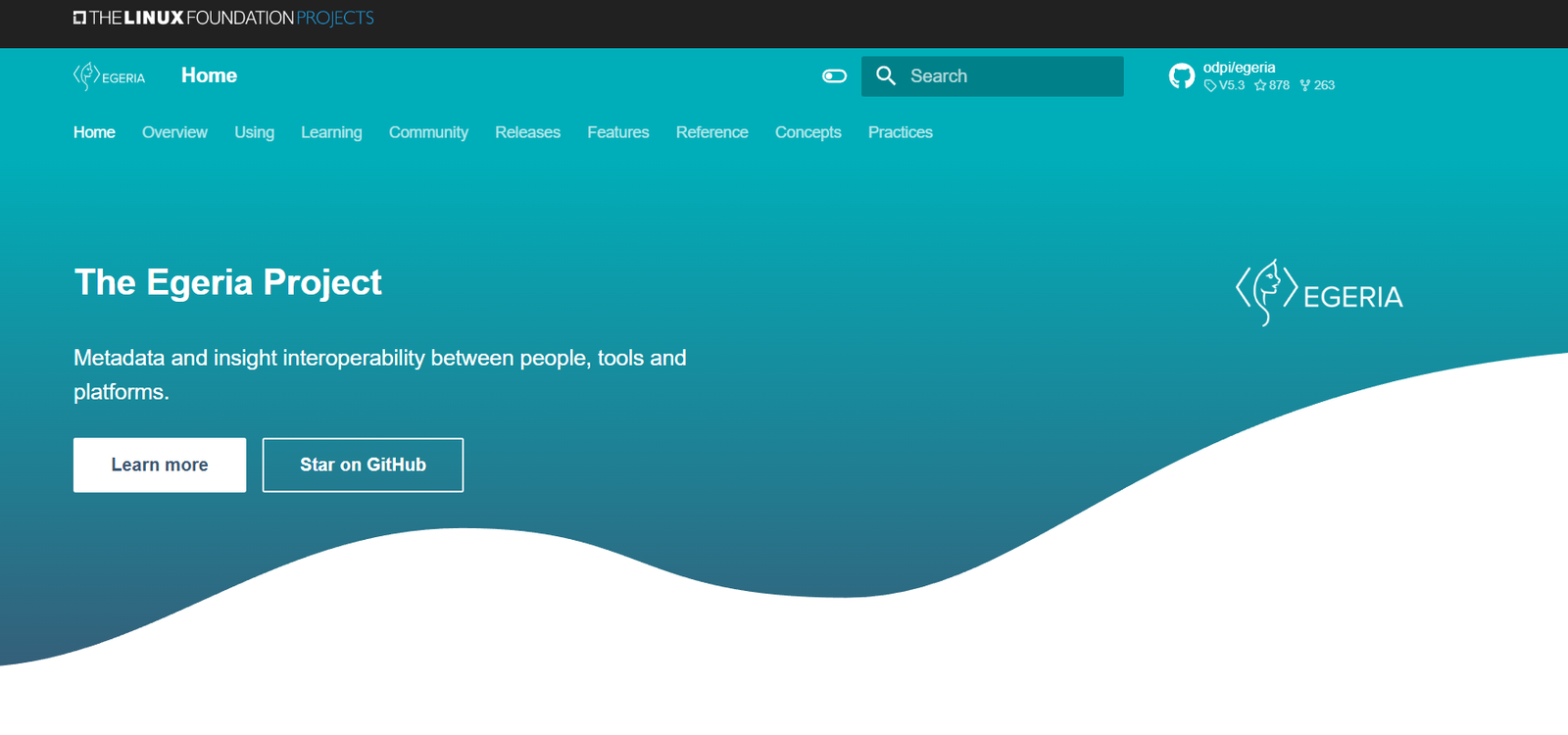
Egeria is an open-source metadata management and data governance platform that helps organizations understand, manage, and govern their data across diverse systems. Originally initiated by The Linux Foundation and now part of the ODPi (Open Data Platform initiative), Egeria provides a vendor-neutral framework for automating data governance activities. It enables integration across multiple tools, systems, and platforms by using open standards to share metadata and support policy-driven data governance.
Features
Egeria is equipped with a wide range of capabilities for metadata management and enterprise-scale data governance:
Open Metadata Standards: Supports open standards to ensure interoperability between systems and metadata repositories.
Metadata Exchange: Enables seamless metadata sharing across tools such as data catalogs, ETL platforms, and BI tools.
Governance Engine: Automates the execution of governance actions such as classification, validation, and lineage tracking.
Data Lineage Tracking: Maps how data moves through systems to support traceability and impact analysis.
Glossary Management: Maintains business glossaries to ensure consistent understanding of data definitions.
Security and Privacy Controls: Classifies data based on sensitivity and applies appropriate handling rules.
REST APIs and Connectors: Offers extensive APIs and out-of-the-box connectors to integrate with various enterprise data tools.
Integration with Apache Atlas and Other Tools: Compatible with industry tools to promote metadata federation and collaboration.
These features make Egeria suitable for enterprises seeking to establish centralized and automated data governance across hybrid environments.
How It Works
Egeria works by integrating with existing data systems—such as data lakes, analytics platforms, databases, and business tools—to capture and exchange metadata in real time. Through its open metadata repository services and REST APIs, Egeria allows metadata to flow bidirectionally across systems. The platform’s governance engine automates policy enforcement, data classification, and lineage tracing. Developers and architects can use the software’s modular components and connectors to tailor implementations for specific enterprise data architectures.
Use Cases
Egeria supports a wide range of enterprise data management use cases:
Enterprise Data Governance: Unify governance across departments and platforms with standardized metadata policies.
Data Catalog Integration: Enrich and federate metadata between different catalog tools using open standards.
Regulatory Compliance: Track data lineage and classify sensitive data to meet GDPR, CCPA, HIPAA, and other regulations.
Digital Transformation Projects: Enable faster onboarding and integration of data assets across cloud and on-prem environments.
Mergers and Acquisitions: Harmonize metadata and governance policies across newly combined data landscapes.
These use cases are especially relevant for large organizations managing data across siloed systems and regulatory frameworks.
Pricing
Egeria is an open-source project and is freely available under the Apache 2.0 license. This means there are no licensing fees or subscription costs. Organizations can download, install, and customize the software according to their needs. While the core software is free, enterprises may incur costs for implementation, configuration, maintenance, and support services—especially if they choose to engage third-party consultants or vendors to assist with deployment.
Strengths
Egeria’s key strength lies in its open, community-driven approach to metadata management. It avoids vendor lock-in by supporting open standards and offering wide interoperability across different platforms. Its modular architecture allows for scalable deployment, and its governance engine supports automated policy enforcement. The platform is supported by an active open-source community, which regularly contributes connectors, updates, and documentation. Egeria’s compatibility with tools like Apache Atlas and IBM offerings enhances its adaptability in enterprise environments.
Drawbacks
Being an open-source platform, Egeria requires technical expertise for successful deployment, integration, and management. Organizations without in-house development or data architecture teams may find implementation challenging. There is no official commercial support by default, though some vendors offer paid services. Compared to proprietary tools, Egeria may also lack pre-built user interfaces or dashboards for non-technical users, requiring additional development for customization and visual reporting.
Comparison with Other Tools
Compared to commercial metadata tools like Collibra, Alation, or Informatica, Egeria provides a more open and flexible framework for organizations that want full control over their data governance infrastructure. While Collibra and Alation offer polished UIs and out-of-the-box features, they are proprietary and often expensive. Egeria, on the other hand, allows deeper customization and integration but may require more technical resources. Its compatibility with other open-source tools like Apache Atlas also makes it suitable for enterprises focused on open data ecosystems.
Customer Reviews and Testimonials
As an open-source project, Egeria does not feature conventional customer testimonials. However, it is actively adopted and supported by a community of contributors from major organizations, including IBM, ING, and others. Industry feedback highlights its role in driving data governance innovation through open collaboration and shared development. Case studies from contributors emphasize the platform’s effectiveness in standardizing metadata practices and improving enterprise-wide data visibility.
Conclusion
Egeria is a powerful open-source metadata management and data governance platform that enables enterprises to standardize, automate, and scale their governance initiatives. Built with interoperability, transparency, and scalability in mind, Egeria provides the infrastructure to integrate data governance across diverse tools and environments. For organizations seeking to break down data silos, comply with regulations, and build a sustainable governance strategy—without vendor lock-in—Egeria offers a flexible, community-driven, and future-proof solution.