
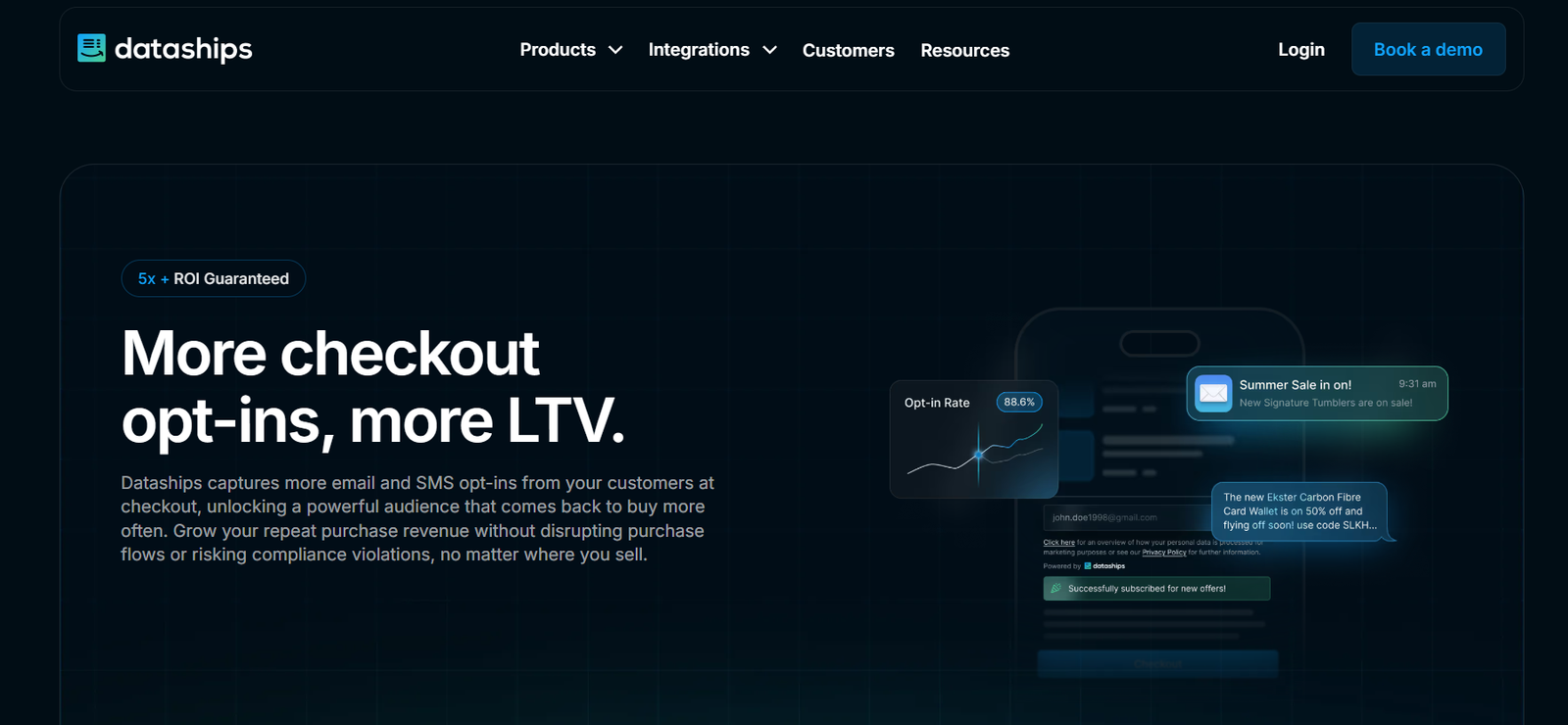
Dataships is a privacy compliance and consent management platform designed specifically for ecommerce businesses. As online privacy regulations tighten and customer expectations evolve, brands are under increasing pressure to handle personal data responsibly. Dataships simplifies this complex challenge by helping online stores collect, manage, and use customer data in a way that is compliant with global privacy laws like GDPR, CCPA, and others, while also improving user trust and transparency.
Based in Dublin, Ireland, Dataships serves thousands of ecommerce businesses, helping them grow in a privacy-first world. The platform integrates directly with major ecommerce platforms like Shopify, enabling online retailers to deploy compliant data capture methods, provide personalized privacy experiences, and maintain transparent communication with their customers.
Features
Dataships focuses on making privacy compliance both easy and customer-friendly. One of the platform’s main features is its automated consent management system. This tool ensures that websites only collect and use data after obtaining valid, compliant consent from visitors. Whether it’s for email marketing, tracking cookies, or analytics, Dataships ensures users are fully informed and in control of how their data is handled.
Another key feature is the customizable privacy center. Brands using Dataships can offer customers a self-service dashboard where they can review their consent history, change preferences, or request data deletion. This transparency builds trust while helping businesses meet legal requirements.
Dataships also simplifies the process of keeping policies and practices up to date. The platform automatically adjusts compliance configurations based on the latest regulatory changes in the visitor’s location, which helps ecommerce businesses avoid the legal risk of outdated privacy notices or improperly configured cookie banners.
The solution also supports integrations with email marketing platforms like Klaviyo, so that brands only send marketing emails to customers who have provided the correct type of consent. This avoids the risk of non-compliant outreach while improving deliverability and engagement rates.
How It Works
Dataships integrates directly into ecommerce stores, often through a plugin or code snippet added to the website. Once installed, it begins managing visitor consent automatically. When a customer lands on a site, Dataships detects their geographic location and presents the appropriate cookie and consent banner, in line with the applicable privacy law.
As visitors interact with the site, their consent decisions are tracked and stored securely. If a user opts in to email marketing, that permission is recorded and synced with the brand’s CRM or email marketing platform. If the user declines certain data uses, Dataships ensures the relevant tracking tools or marketing actions are disabled for that session.
The platform also provides a user-facing privacy center that acts as a control panel for each visitor. From here, customers can review what consents they’ve given, update their preferences, and request access to or deletion of their data. All of these actions are logged, helping businesses remain fully compliant with privacy laws.
Behind the scenes, Dataships constantly monitors privacy regulations and automatically adjusts regional compliance rules. This ensures that ecommerce brands are always using legally up-to-date consent forms and privacy notices, without having to manually track changes across jurisdictions.
Use Cases
Dataships is most commonly used by ecommerce brands that rely on collecting and processing customer data for marketing and personalization. With new rules making privacy enforcement stricter, online stores use Dataships to ensure that all data collection—especially for email marketing and analytics—is legally compliant.
For example, Shopify merchants who use Klaviyo for email campaigns can use Dataships to ensure that only customers who have opted in with valid consent are added to marketing lists. This prevents potential fines and improves deliverability by avoiding sending unwanted messages.
International ecommerce businesses benefit from Dataships’ geolocation-based compliance. A customer in California will see CCPA-compliant options, while one in Europe receives GDPR-compliant notices. This localization helps global brands operate confidently without building complex, custom compliance infrastructure.
Another major use case is managing data subject requests. Customers have the right to access or delete their personal data, and Dataships automates the request process. This saves brands time, reduces legal risk, and delivers a more professional and trustworthy customer experience.
Pricing
Dataships offers flexible pricing plans based on the number of monthly website visitors. The platform provides a free plan with basic compliance tools for smaller brands or those just getting started. Paid plans unlock more advanced features, such as a fully branded privacy center, deep email marketing integrations, and automatic updates based on evolving regulations.
Exact pricing is available upon request or by signing up directly through the platform’s website. Larger ecommerce businesses can also get custom quotes based on traffic volume and specific compliance needs. Dataships emphasizes affordability and accessibility, making privacy compliance achievable even for growing startups and small online stores.
Strengths
Dataships stands out for its deep focus on ecommerce and its ability to turn privacy compliance into a business advantage. Instead of treating privacy as a legal burden, the platform helps brands use it as a trust-building tool. The customizable privacy center and transparent consent collection process help businesses build credibility with their customers, which can translate into higher engagement and brand loyalty.
Its seamless integration with platforms like Shopify and Klaviyo makes implementation fast and effective. Unlike general-purpose compliance platforms that require heavy configuration, Dataships is purpose-built for ecommerce workflows, which makes it easier to set up and maintain.
Another major strength is the platform’s automation. Dataships automatically adapts to regional laws, reducing the need for manual legal oversight or constant review of evolving privacy requirements. This is particularly valuable for brands operating in multiple countries or scaling quickly across borders.
The user-friendly dashboard and visual reporting tools also make it easy for marketing, legal, and customer support teams to stay aligned on compliance efforts without needing technical expertise.
Drawbacks
While Dataships is highly tailored for ecommerce, it may not be the best fit for companies operating outside of online retail. Businesses in sectors like SaaS, finance, or healthcare may require more specialized compliance features not covered by the platform.
Another limitation is that the full power of Dataships is best realized when connected with platforms like Klaviyo or Shopify. Businesses using custom tech stacks may need to evaluate whether the integrations meet their needs or require additional configuration.
Although the platform automates much of the legal compliance, some businesses may still need legal review or support when setting up privacy policies or handling sensitive data requests. Dataships provides tools, but does not replace legal counsel.
For companies with advanced data operations or deep customization needs, the platform’s pre-built modules may not offer the granularity required, especially if they are looking to enforce internal data governance policies beyond consent and privacy notices.
Comparison with Other Tools
Compared to broader privacy platforms like OneTrust or TrustArc, Dataships is simpler, more focused, and easier to deploy for ecommerce businesses. While OneTrust offers a comprehensive suite of enterprise-level compliance tools, Dataships is designed to help small to mid-sized ecommerce brands get compliant quickly, without enterprise-level complexity.
In contrast to cookie banner plugins or basic consent tools, Dataships offers a more holistic solution. It not only manages cookie consent but also connects that consent to email marketing platforms and provides a customer-facing privacy center. This end-to-end approach makes it more powerful than most standalone consent widgets.
Unlike generic tools, Dataships automatically adjusts to global privacy laws using real-time geolocation, which makes it more practical for brands selling internationally. Its native integrations with ecommerce platforms also give it a unique edge in usability and speed of implementation.
Customer Reviews and Testimonials
Ecommerce brands using Dataships often highlight the platform’s ease of use, clean user interface, and how it helps them stay compliant without constant oversight. Many users say the tool gave them confidence to scale their marketing campaigns internationally while remaining within legal limits.
Customers appreciate the automation behind consent collection and how the integration with email platforms improves targeting accuracy and avoids marketing to unconsented contacts. Store owners also mention how the privacy center adds a layer of professionalism and builds customer trust.
Small business owners and marketing teams often mention that Dataships made privacy compliance something they could handle themselves without relying entirely on legal experts or third-party developers.
Conclusion
Dataships delivers a smart and practical solution for ecommerce brands looking to navigate the complex world of privacy compliance. With its focus on automation, user trust, and seamless integrations, it empowers online retailers to meet legal requirements while enhancing the customer experience.
By helping businesses collect valid consent, localize compliance by region, and give customers control over their data, Dataships turns privacy from a risk into an opportunity. Whether you’re a new store or a fast-growing global brand, Dataships provides the tools you need to protect your business and your customers in a privacy-first digital economy.


