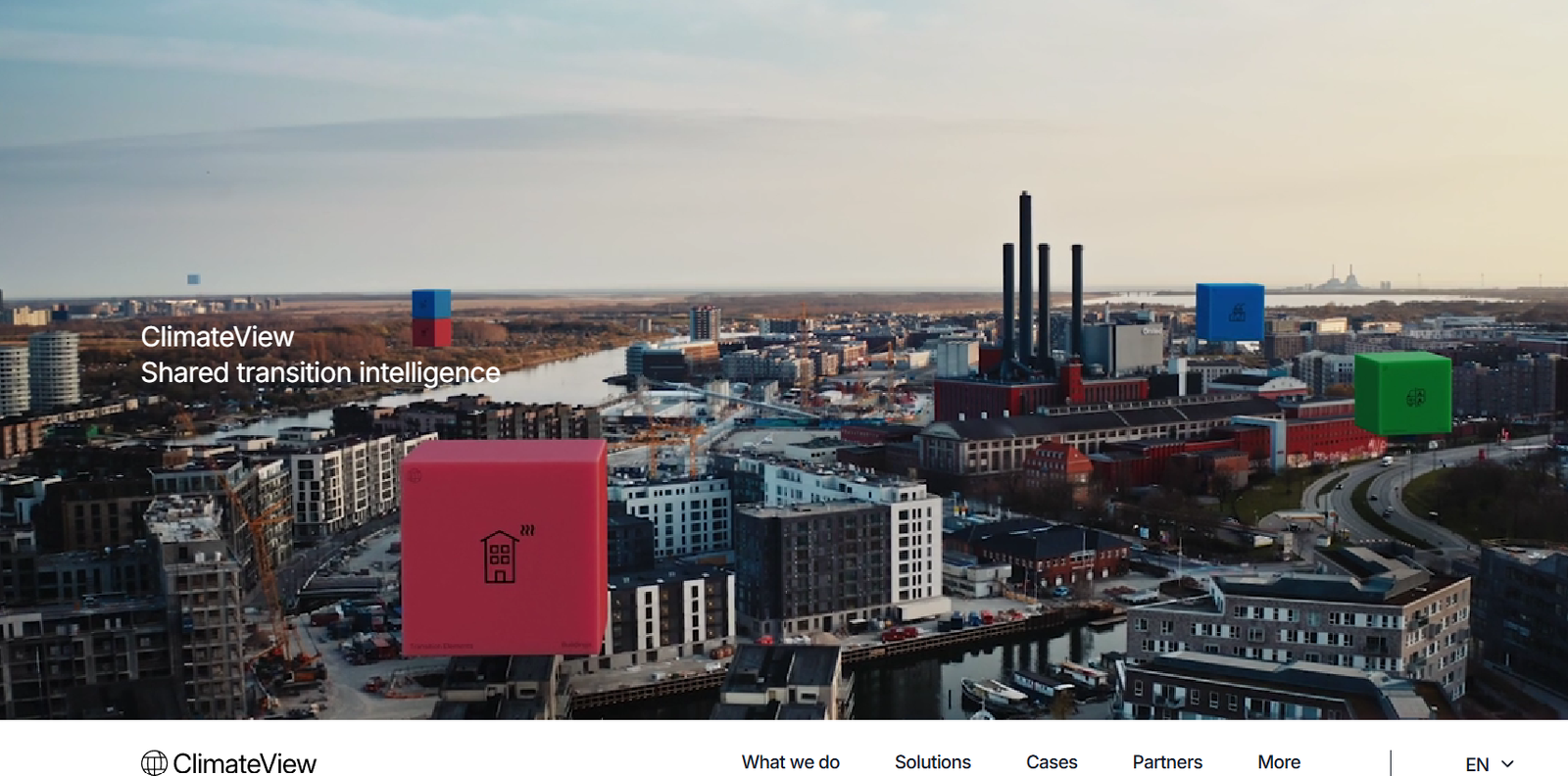
ClimateView is a science-based climate action platform that empowers cities and local governments to plan, execute, and track their transition to net-zero emissions. Headquartered in Sweden, ClimateView combines data modeling, scenario planning, and stakeholder collaboration tools to help municipalities understand the impact of policy decisions and align with climate goals.
Cities are critical to solving the climate crisis, but they often lack the tools to turn ambition into action. ClimateView addresses this gap by transforming static climate plans into dynamic, visual, and data-driven roadmaps. The platform enables cities to model their emissions across sectors, simulate the impact of proposed policies, and monitor progress toward decarbonization in real-time.
Currently used by over 60 cities globally—including Heidelberg, Dortmund, and Newcastle—ClimateView is designed to foster collaboration, transparency, and accountability in local climate governance.
Features:
Dynamic Climate Action Modeling
Visualizes how different sectors contribute to emissions and how mitigation actions reduce them over time.Transition Elements Framework
Breaks down a city’s net-zero pathway into measurable components across transport, energy, buildings, waste, and more.Data-Driven Policy Simulation
Allows cities to test the impact of different policy scenarios and prioritize high-impact measures.Integrated Progress Tracking
Monitors KPIs, emissions reductions, and action implementation status with real-time dashboards.Stakeholder Collaboration Tools
Enables different departments, partners, and citizens to contribute to and align with the climate strategy.Financial Impact Estimation
Provides insight into investment needs, cost savings, and socio-economic effects of climate actions.Science-Based Methodology
Aligned with IPCC standards and climate modeling best practices to ensure credible planning.Public Transparency Features
Offers communication modules that allow cities to share progress and climate data with residents and stakeholders.
How It Works:
Baseline Assessment
The city inputs data about current emissions across key sectors (transport, energy, buildings, waste, etc.).Transition Modeling
ClimateView structures the city’s climate strategy into “Transition Elements” that map how emissions reductions will occur.Scenario Planning
Policymakers simulate different actions and timelines to understand which measures deliver the best results and ROI.Tracking & Reporting
Real-time dashboards track progress toward climate goals, including sector-specific KPIs and overall emissions reductions.Stakeholder Engagement
Cities can share the platform internally or externally to foster collaboration and increase accountability.
Use Cases:
City Climate Action Planning
Develop dynamic, science-based climate strategies that are easier to manage, adjust, and communicate.Net-Zero Roadmap Development
Build actionable net-zero pathways with clear emissions baselines, targets, and transition steps.Policy Scenario Testing
Evaluate how different decisions will affect emissions reductions, costs, and feasibility.Internal Coordination
Align cross-departmental actions and track contributions of various city offices and teams.Public Communication
Share goals, actions, and results with residents and stakeholders through data-rich visualizations.
Pricing:
ClimateView offers customized enterprise pricing based on:
City size and emissions complexity
Number of users and departments involved
Level of onboarding and training support
Public sharing and transparency features
To receive a quote or book a demo, cities can contact ClimateView directly via:
https://www.climateview.global/en/contact
Strengths:
Tailored for Cities
Designed specifically for local governments, with sector-specific modeling aligned with urban data.Visual and Intuitive Interface
Allows users to easily understand emissions profiles and transition strategies.Science-Backed Planning
Based on climate science, ensuring that plans are aligned with global carbon budgets and targets.Collaboration-Driven
Encourages transparency and interdepartmental cooperation within city administration.Real-Time Adjustability
Cities can adapt plans over time as new data, funding, or political decisions emerge.Globally Adopted
Used by a growing number of cities across Europe and beyond, showing international credibility.
Drawbacks:
Enterprise Focused
Not suited for individuals or small organizations; designed for municipal-level deployment.Data Dependency
Requires accurate and comprehensive city-level emissions data, which may be limited in some regions.Learning Curve
While intuitive, full use of scenario modeling and data dashboards may require initial training.No Self-Service Trial
Access requires a demo and consultation—there’s no open trial version for public use.Limited Outside the Public Sector
Currently targeted specifically at cities and local governments, not private sector climate planning.
Comparison with Other Tools:
ICLEI’s ClearPath: Also helps cities plan and track emissions, but ClimateView adds a stronger visual and scenario-based approach.
FutureproofedCities: Offers emissions tracking and reporting; ClimateView focuses more on planning and modeling transitions.
ClimateOS by ClimateView: The software platform that powers ClimateView, delivering the technical infrastructure behind the solution.
EnergyPathways (UK): National-level modeling tool, less suitable for municipal use; ClimateView is tailored for city operations.
Customer Reviews and Testimonials:
Cities currently using ClimateView have praised its impact and usability:
“ClimateView has helped us turn our ambitious climate targets into a manageable, visual plan.” – City of Heidelberg
“The scenario modeling is critical for deciding which actions deliver the best results for our climate goals.” – City of Newcastle
“A tool that finally brings clarity and structure to the complexity of climate governance.” – City of Malmö
ClimateView has also received recognition from the World Economic Forum, BloombergNEF, and Smart City Expo World Congress for its innovation in city-level climate action.
Conclusion:
As cities play an increasingly vital role in addressing the climate crisis, ClimateView provides them with the strategic, science-backed tools needed to take decisive action. With dynamic modeling, policy simulation, and real-time progress tracking, the platform transforms complex climate data into actionable transition plans.
Whether managing a large urban center or a mid-sized municipality, ClimateView equips local governments with the visibility, flexibility, and credibility required to reach net-zero. For any city serious about sustainability, transparency, and impact, ClimateView is an essential platform for 21st-century climate leadership.