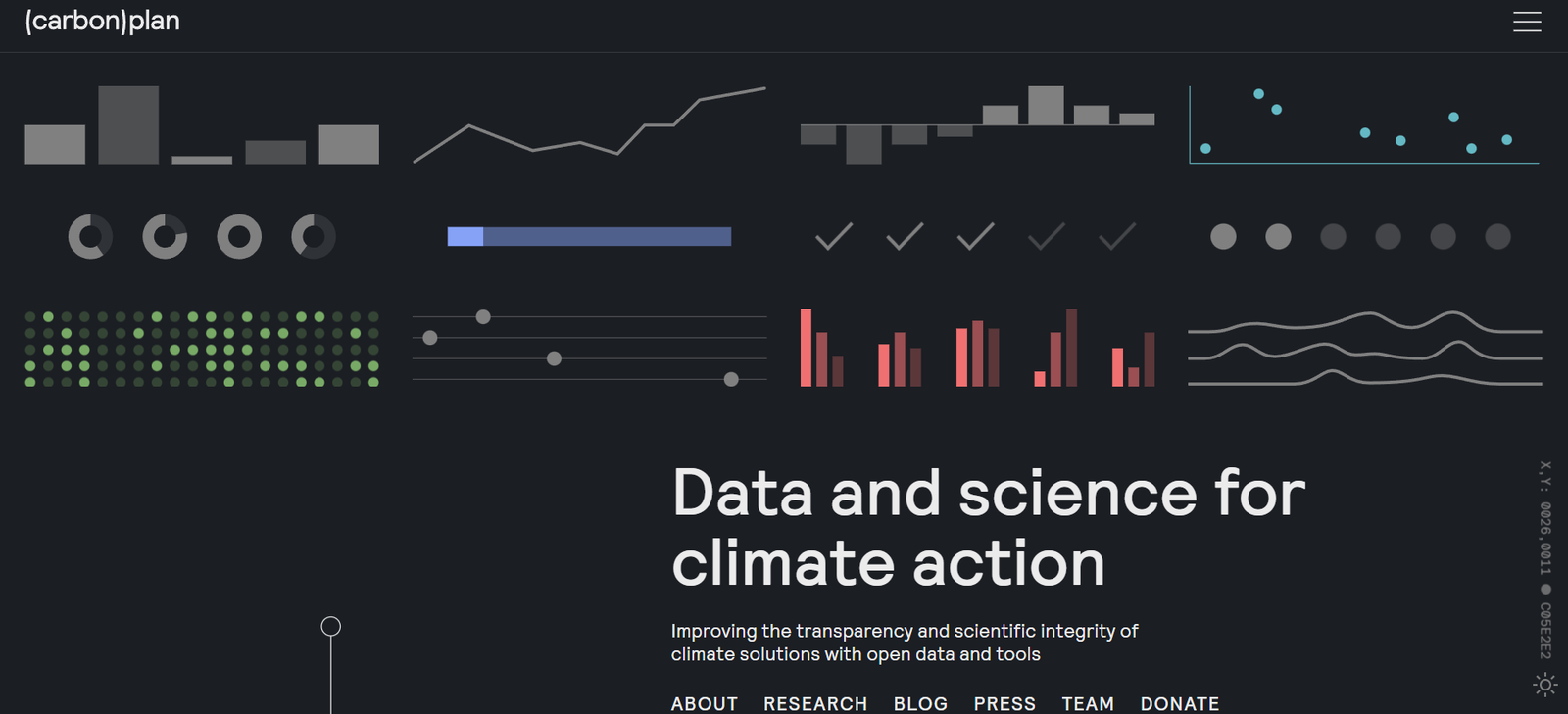
CarbonPlan is a nonprofit organization that focuses on improving the transparency, scientific rigor, and accountability of climate solutions through open-source tools, research, and data. With a strong commitment to public access and reproducibility, CarbonPlan builds digital infrastructure to support better climate decisions by policymakers, companies, researchers, and the public.
Founded by scientists, engineers, and policy experts, CarbonPlan is best known for its detailed evaluations of carbon removal projects, its open databases on carbon offsets and forest risk, and its contributions to modeling climate impacts. The organization operates independently and does not sell carbon credits or represent any market actors, allowing it to maintain a high standard of impartiality.
CarbonPlan’s mission is to bring clarity and transparency to climate solutions—especially in areas like carbon dioxide removal (CDR), carbon offsets, and forest-based mitigation strategies—by applying open science and sharing everything it builds.
Features
Open-Source Climate Tools
CarbonPlan develops and maintains publicly accessible, open-source tools that model carbon removal, forest risks, and climate impacts.
Carbon Removal Evaluations
The organization provides scientific assessments of CDR methods and projects, evaluating their durability, scalability, and cost-effectiveness using transparent criteria.
Offset Project Analysis
CarbonPlan offers in-depth reviews of forest carbon offset projects, highlighting issues such as over-crediting and reversal risks.
Climate Data Platforms
CarbonPlan publishes climate datasets and maps, including models for wildfire risk, forest carbon baselines, and soil carbon scenarios.
Interactive Visualization Tools
Users can explore complex climate datasets through interactive maps, dashboards, and visual explainers available on the CarbonPlan website.
Research Publications
CarbonPlan authors scientific research papers and policy briefs that inform debates on net-zero targets, permanence, additionality, and market-based climate solutions.
Project Databases
The site includes structured, downloadable databases such as the Offset Project Dataset, which tracks and evaluates carbon offset projects in the U.S.
Independent and Non-Commercial
As a nonprofit not involved in credit sales or consulting, CarbonPlan provides independent insights free from commercial influence.
Technical Reviews of Market Claims
CarbonPlan investigates claims made by carbon credit providers or corporate sustainability reports to assess their scientific validity.
Collaborations and Partnerships
The organization collaborates with academic institutions, government agencies, and nonprofits to strengthen the scientific basis of climate action.
How It Works
CarbonPlan works by applying open science principles—transparency, reproducibility, and public access—to critical areas of climate technology and policy. The team combines scientific research, data analysis, and software development to produce tools and assessments that anyone can access, use, and audit.
For example, when evaluating carbon offset projects, CarbonPlan examines public registry documents, project baselines, crediting methodologies, and climate risk data. Their analysis identifies potential problems like overestimation of climate benefits, lack of additionality, or risks of carbon loss due to fire or pests.
In the field of carbon dioxide removal, CarbonPlan publishes databases and decision tools that compare different approaches—such as direct air capture, biochar, or enhanced weathering—based on cost, durability, and scalability.
All code, data, and analysis behind CarbonPlan’s work are published on GitHub and linked from the main website. This allows anyone to replicate the findings or use the tools in their own work, supporting transparency and continuous improvement in climate science and policy.
Use Cases
Climate Policy Analysis
Policy makers use CarbonPlan tools and data to evaluate the environmental integrity of carbon removal and offset strategies.
Academic Research
Researchers in climate science and economics use CarbonPlan’s open datasets and tools to conduct independent studies.
ESG and Corporate Sustainability Teams
Corporations aiming to assess or validate the quality of carbon offsets and removal technologies use CarbonPlan resources as an independent reference.
Environmental Advocacy
Nonprofits and environmental watchdog groups rely on CarbonPlan to assess claims made in carbon markets and challenge low-quality projects.
Media and Investigative Reporting
Journalists use CarbonPlan’s analysis to report on greenwashing, carbon credit markets, and forest-based climate risks.
Carbon Removal Developers
Project developers use the organization’s assessment frameworks to improve transparency and credibility of new climate solutions.
Public Education
Educators and students access CarbonPlan’s visualizations and databases to better understand how carbon removal and climate mitigation work.
Foundation and Philanthropy
Grant-making organizations use CarbonPlan tools to inform funding decisions for climate technology and natural climate solutions.
Pricing
CarbonPlan is a nonprofit organization and offers its tools, data, and research free of charge to the public. There is no subscription model, and no fees are required to access any of its online platforms, code repositories, or data visualizations.
Key access details include:
All interactive tools and datasets are available on the official website
Code and models are hosted on CarbonPlan’s GitHub
Research and whitepapers are published openly and accessible without a paywall
The organization is funded by philanthropic support from foundations and climate-focused donors
While CarbonPlan does not charge for services, they occasionally partner with academic institutions, nonprofits, or government agencies on research or development projects, often under grant funding.
Strengths
Scientific Integrity
CarbonPlan adheres to the highest standards of scientific rigor and publishes all methods, code, and data used in its work.
Open Access Model
All tools and insights are freely available, supporting transparency and reducing barriers to information.
Independent and Neutral
Unlike consulting firms or credit registries, CarbonPlan does not participate in commercial offset transactions, avoiding conflicts of interest.
Critical Evaluation of Climate Solutions
The platform is known for its honest and evidence-based assessments, even when findings are controversial or challenge industry norms.
Wide Range of Tools
From forest carbon maps to CDR assessments, CarbonPlan offers tools that support decision-making across multiple climate mitigation pathways.
Reproducible Research
All findings can be replicated and built upon by others, supporting peer review and continuous improvement.
Active Community and Collaboration
CarbonPlan maintains close ties with researchers, NGOs, and institutions, building credibility and scientific consensus.
Effective Visual Communication
Their interactive maps and dashboards make complex data accessible to non-experts, improving climate literacy.
Drawbacks
Not a Commercial Solution Provider
CarbonPlan does not offer direct services such as carbon procurement, project development, or emissions reporting tools for corporations.
No Custom Integrations
Unlike enterprise platforms, CarbonPlan does not provide APIs or customizable data services for private use.
Limited Regional Focus
Most data and tools are U.S.-centric, particularly regarding forest carbon projects and policy analysis.
Requires Technical Understanding
Some tools may require familiarity with scientific methods or programming to use fully, especially for advanced modeling.
No Financial or Market Services
CarbonPlan does not broker credits, verify projects, or advise on investment decisions, focusing instead on analysis and transparency.
Comparison with Other Tools
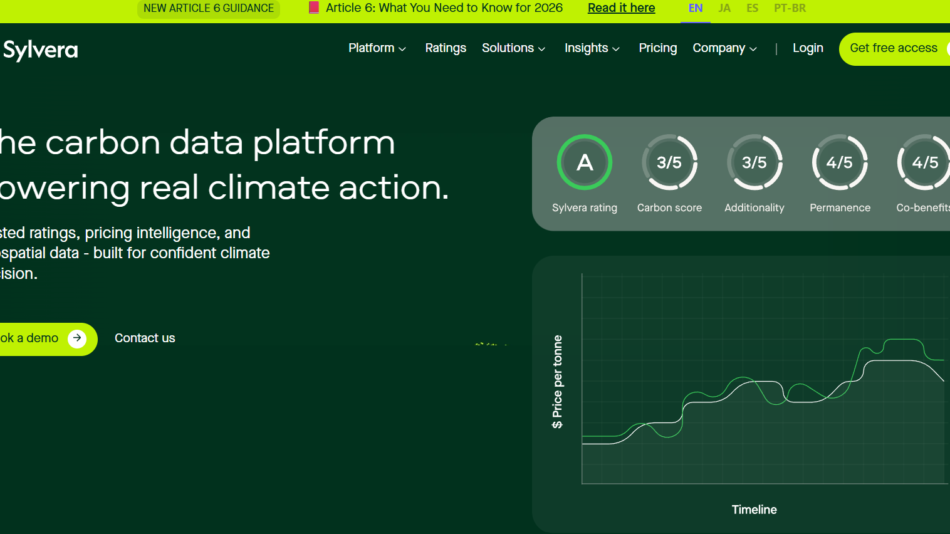
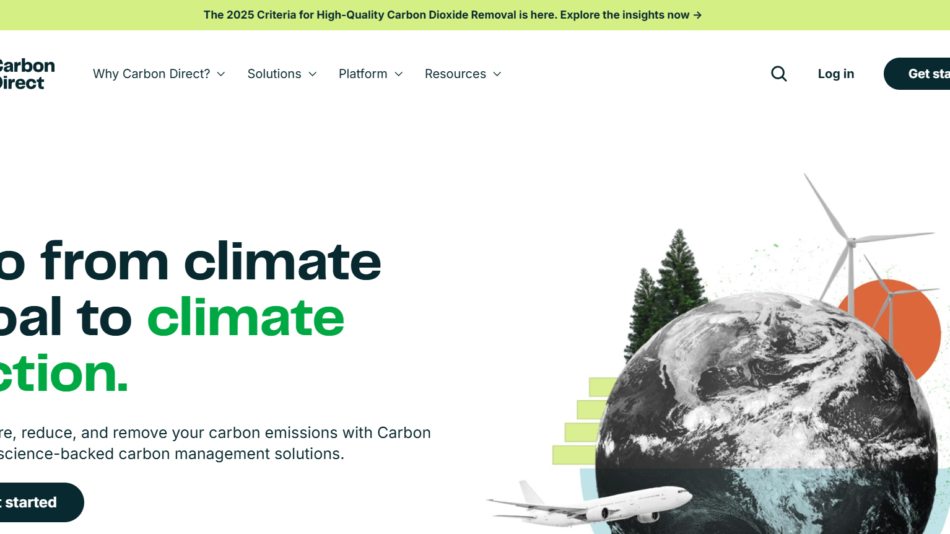
CarbonPlan is often compared to platforms like BeZero Carbon, Sylvera, and Carbon Direct, all of which focus on evaluating carbon projects and removal technologies. However, unlike these platforms, CarbonPlan does not operate commercially, does not rate credits for buyers, and does not sell access to its tools.
Compared to WattTime or Cleartrace, which offer real-time carbon tracking and energy data for operational decisions, CarbonPlan focuses more on policy analysis, project integrity, and science-based evaluation of climate interventions.
While Nori, Pachama, and other marketplaces aim to scale carbon removal by enabling transactions, CarbonPlan focuses on assessing whether those transactions are valid, effective, and scientifically sound.
This unique positioning makes CarbonPlan an essential resource for independent verification, transparency, and accountability in the rapidly evolving carbon removal and offset sectors.
Customer Reviews and Testimonials
As an independent nonprofit, CarbonPlan does not feature traditional customer reviews. However, its work has been widely recognized in academic literature, policy discussions, and media reports. The organization has been cited by the New York Times, MIT Technology Review, Bloomberg, and other reputable outlets for its investigative work and data-driven critiques of carbon markets.
Researchers, NGOs, and policymakers often reference CarbonPlan’s tools in reports and whitepapers. Its influence is especially strong in discussions around forest carbon offsets, permanence, and the science of carbon removal.
The climate community values CarbonPlan’s transparency, technical depth, and willingness to challenge assumptions in the carbon credit and removal sectors.
Conclusion
CarbonPlan is a vital force in ensuring that climate solutions are based on science, not speculation. With its open-source tools, transparent research, and deep analysis of carbon removal and offset practices, CarbonPlan helps bring accountability and credibility to climate action.
Whether you’re a policymaker evaluating net-zero claims, a researcher modeling climate impacts, or an organization trying to understand the real-world effectiveness of carbon credits, CarbonPlan offers the tools and insights to guide better decisions.
In a time when carbon markets and climate solutions are expanding rapidly, CarbonPlan ensures that integrity, transparency, and science remain at the heart of the climate response.