
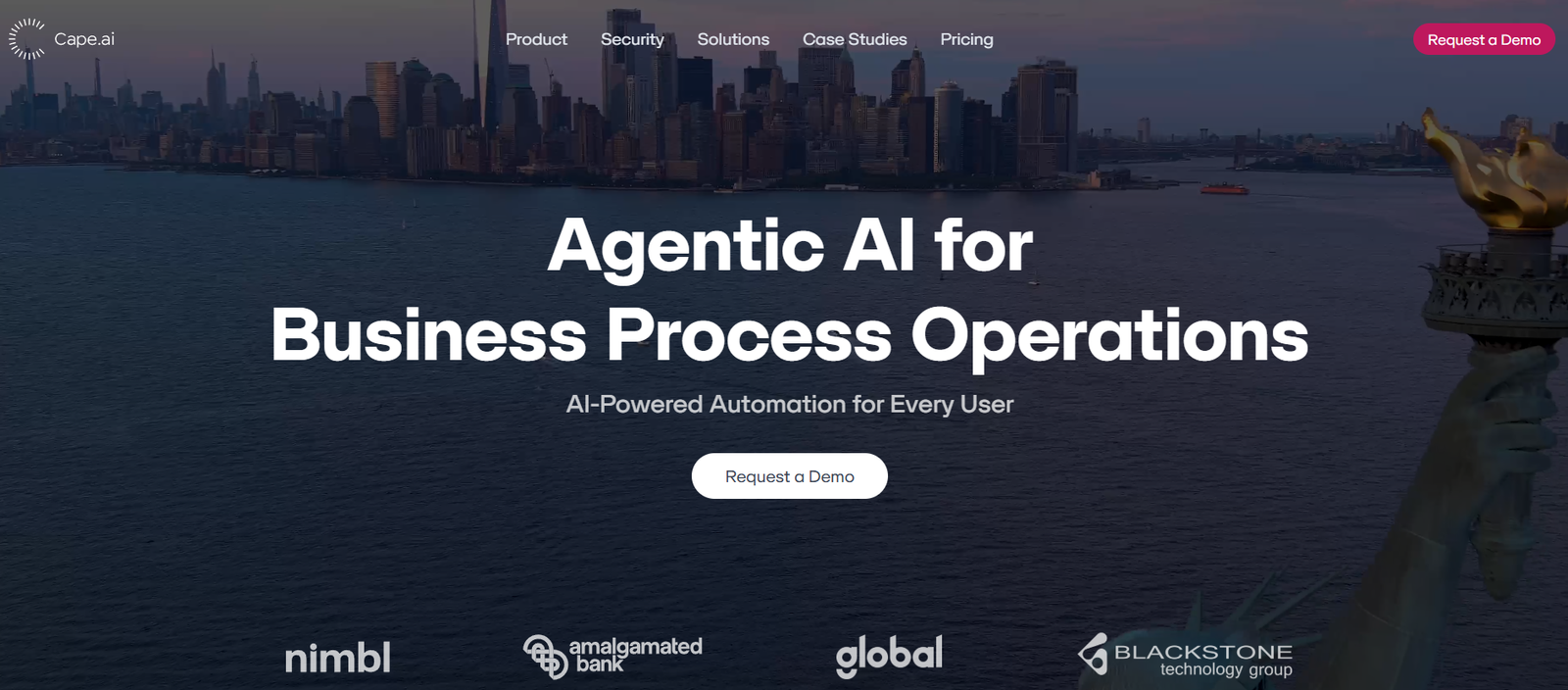
Cape AI is a voice of customer (VoC) intelligence platform that uses artificial intelligence to help businesses make sense of unstructured customer feedback. By applying advanced natural language processing to sources like surveys, support tickets, and reviews, Cape AI turns raw comments into meaningful, real-time insights. This allows companies to understand customer pain points, identify emerging trends, and make smarter, faster decisions based on what their customers are really saying.
Founded in South Africa and now serving clients globally, Cape AI supports organizations that want to become more customer-centric by bridging the gap between feedback collection and data-driven action. Their platform is designed to simplify the analysis of large volumes of text, enabling marketing, product, and customer experience teams to uncover opportunities without manually reading through thousands of responses.
Features
Cape AI’s core strength lies in its ability to process and interpret natural language at scale. The platform is built around state-of-the-art NLP models that classify and cluster customer feedback into meaningful themes. Whether the input comes from NPS comments, open-ended survey questions, product reviews, or support tickets, Cape AI’s engine automatically detects what customers are talking about and how they feel.
One of the platform’s key features is its sentiment analysis engine, which identifies whether feedback is positive, negative, or neutral—and to what degree. This helps companies track changes in customer perception over time and pinpoint where satisfaction is rising or falling.
Cape AI also includes dynamic dashboards and reporting tools that visualize the most talked-about themes and allow teams to filter insights by product, location, customer segment, or time frame. This enables data-driven prioritization of customer issues and opportunities.
Another important capability is its customizable taxonomy feature. Cape AI works with businesses to tailor the NLP models to their industry and brand-specific vocabulary, ensuring that the analysis captures nuances that generic models might miss. This leads to more accurate insights and better alignment with company goals.
Because Cape AI is designed for easy integration, it supports direct connections with existing customer feedback systems, including survey tools, CRM platforms, and customer support software. This makes it easy for companies to plug into their current workflows and start seeing insights immediately.
How It Works
Cape AI begins by ingesting unstructured text data from multiple customer feedback channels. Once the data is uploaded or connected through APIs, the platform applies natural language processing to clean, standardize, and tokenize the text. From there, machine learning models classify feedback into predefined or dynamically generated themes and apply sentiment scoring to each comment.
As data flows through the system, Cape AI continuously updates dashboards and analytics views, enabling real-time monitoring of customer sentiment and topic frequency. Users can drill down into specific segments or comments to see exactly what’s driving feedback trends.
Customization plays a key role in how Cape AI works. Businesses can define categories that reflect their product offerings, internal KPIs, or strategic focus areas. The AI models are trained to understand industry-specific terminology, product names, or customer jargon, making the analysis highly relevant.
Once insights are available, teams can share dashboards, export reports, or integrate insights into other analytics platforms. This makes it easier for different departments—whether customer support, product, or leadership—to act on the feedback and close the loop with customers.
Use Cases
Cape AI is used across a variety of industries where customer feedback is vital to performance. In retail and e-commerce, companies use the platform to analyze product reviews and support interactions, identifying patterns that can guide product development or optimize online experiences.
In the financial sector, banks and insurance providers apply Cape AI to customer service transcripts and survey responses to improve operational efficiency and customer retention. By understanding common friction points in digital channels or contact centers, they can resolve issues proactively.
SaaS companies rely on Cape AI to sift through user feedback and NPS comments to find usability issues, feature requests, or emerging bugs. This allows product teams to prioritize development based on real user input rather than assumptions.
Cape AI is also valuable in public services and utilities, where agencies use it to understand citizen concerns, improve service delivery, and track public sentiment around new initiatives.
In every case, the platform helps businesses scale their ability to listen to customers and respond with precision and speed.
Pricing
Cape AI does not publicly list standardized pricing on its website. Instead, pricing is tailored based on the size of the organization, the volume of customer feedback being processed, and the level of customization and support required.
The company offers different service tiers to accommodate businesses of varying sizes and feedback complexity. Prospective clients can schedule a demo through the Cape AI website to explore the platform’s capabilities and receive a custom quote based on their needs.
Flexible engagement models are available, including one-time analysis projects, ongoing feedback monitoring, or deeper enterprise integrations. This ensures that businesses can scale their use of Cape AI over time without committing to more than they need at the start.
Strengths
Cape AI’s main strength is its ability to bring structure and clarity to the chaos of unstructured customer feedback. Its advanced natural language processing models go beyond keyword counting to understand context, sentiment, and thematic relationships. This leads to more accurate insights and a richer understanding of what customers are trying to say.
Another key advantage is the platform’s customization capabilities. Generic text analytics tools often miss critical insights due to poor fit with industry-specific language. Cape AI solves this by allowing tailored taxonomies and model training that reflect the reality of each business.
The ease of integration and fast time-to-insight make Cape AI a strong option for teams that want results quickly. Once connected to feedback systems, the platform begins delivering value almost immediately—eliminating the time-consuming manual work of analyzing comments one by one.
The visual dashboards and intuitive interface also stand out. Teams across departments can easily access, understand, and share findings without needing data science expertise, making customer insight a collaborative asset.
Drawbacks
While Cape AI offers impressive capabilities, its effectiveness depends on the quality and volume of customer feedback available. Organizations with limited open-ended data may not see the full value of the platform unless they expand feedback collection efforts.
Another consideration is the need for customization during onboarding. To get the most accurate insights, companies may need to work with Cape AI to fine-tune taxonomies and train the models on industry-specific terms. While this results in better outcomes, it can require time and input during setup.
The lack of publicly available pricing may also be a hurdle for businesses seeking to evaluate ROI upfront. Interested companies must engage with the sales team to understand the cost structure and determine alignment with their budget.
Lastly, while the platform excels at feedback analysis, it is not a full customer experience management suite. It is best used in combination with tools for survey distribution, ticketing, or CRM systems.
Comparison with Other Tools
Compared to basic sentiment analysis tools or survey analytics software, Cape AI delivers far more depth and intelligence. Where many platforms rely on basic keyword tagging, Cape AI uses full-scale natural language understanding to capture nuances and themes that might otherwise be missed.
Against enterprise VoC platforms like Medallia or Qualtrics, Cape AI positions itself as a more agile, customizable, and developer-friendly solution. While those platforms offer broader experience management capabilities, they often come with steeper costs and complex implementation processes.
In contrast, Cape AI focuses specifically on unlocking insights from unstructured text, doing one thing exceptionally well. Its ability to tailor taxonomies and models makes it especially suitable for companies with specialized product lines or customer profiles.
Cape AI also integrates well with existing workflows, unlike all-in-one systems that require teams to adopt new tools or processes. This flexibility allows businesses to enhance their current customer experience strategy without a complete overhaul.
Customer Reviews and Testimonials
Cape AI has received positive feedback from organizations across multiple industries. Users consistently highlight how the platform helps surface insights that were previously buried in long-form survey responses, support chats, or product reviews. Teams often discover recurring themes or hidden issues they were unaware of, leading to more informed decisions and faster resolution of customer problems.
Product managers report that Cape AI improves how they prioritize feature development, while customer support leaders appreciate the ability to track service quality over time through sentiment analysis. Marketing teams use the platform to understand brand perception and message resonance more clearly.
Many users also appreciate the speed at which Cape AI delivers value. From integration to actionable insights, companies often see results within days, not weeks or months. This responsiveness has made Cape AI a trusted partner for both one-time analysis projects and long-term VoC strategies.
Conclusion
Cape AI helps businesses listen to their customers in a smarter, more scalable way. By transforming open-ended feedback into clear, actionable insights, the platform makes it possible to move beyond generic survey metrics and truly understand what drives customer satisfaction or frustration.
With advanced NLP, flexible customization, and user-friendly dashboards, Cape AI empowers teams to close the gap between listening and acting. Whether improving products, refining messaging, or enhancing service quality, companies using Cape AI can make customer-centric decisions with confidence.


