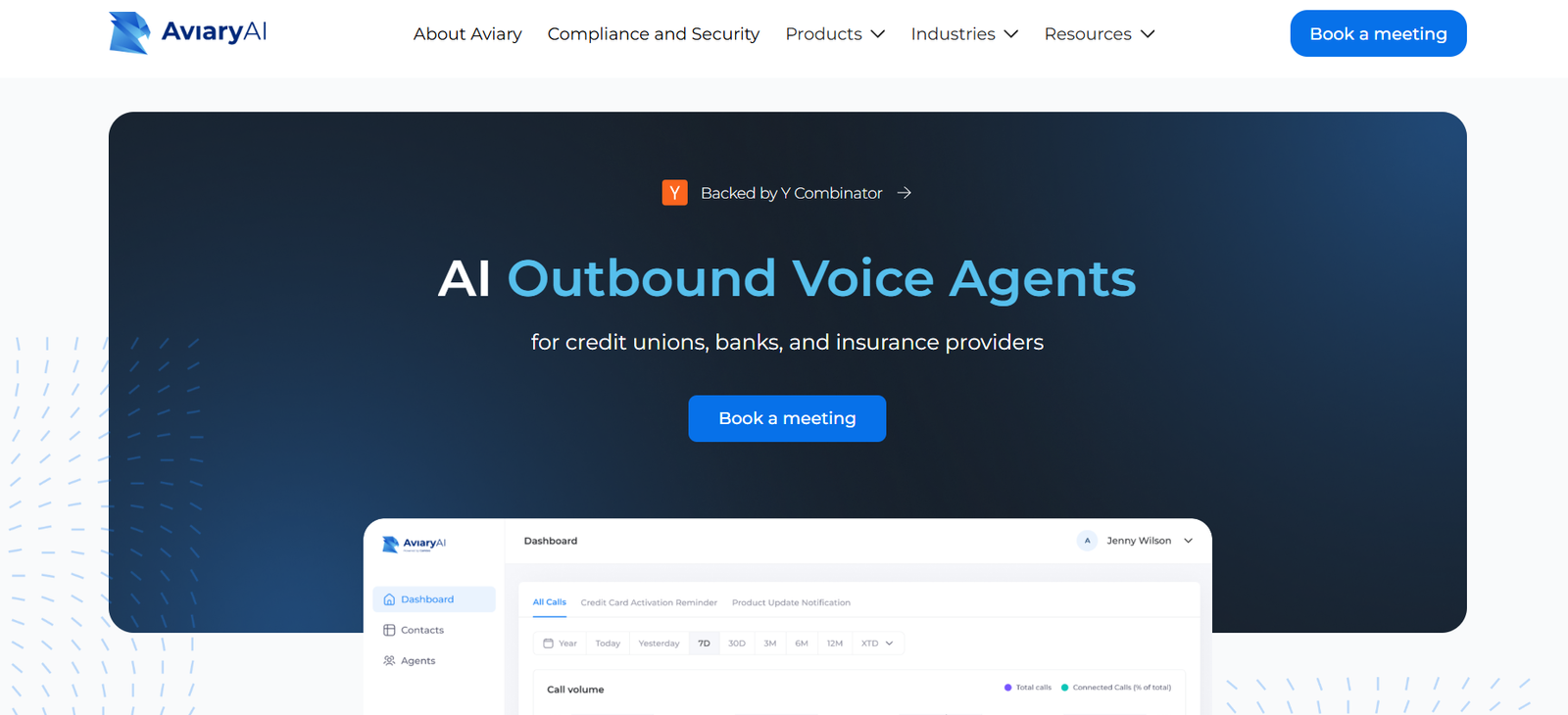
Aviary is a developer-focused Voice AI platform that provides fast, scalable APIs for integrating cutting-edge voice capabilities into applications. Built by AssemblyAI, Aviary simplifies the deployment of speech models like voice cloning, speech-to-text, and audio transcription by offering a cloud-hosted model hub that handles the complexities of model hosting, scaling, and optimization.
The platform is tailored for teams building audio-intensive products such as AI-powered content tools, customer support apps, podcast tools, virtual assistants, and accessibility software. Aviary allows developers to access leading open-source voice models through one unified API—significantly reducing the overhead associated with running and maintaining these models independently.
Aviary’s infrastructure removes the friction of working with large AI models by managing inference, scaling, and low-latency response times, allowing developers to focus on building user-facing features.
Features
Aviary provides a comprehensive suite of features for deploying and managing voice AI models.
The platform supports instant access to top open-source speech models like Whisper (OpenAI), Meta’s MMS, Bark, and more. These models can be used for transcription, translation, voice cloning, and generative speech applications.
Through Aviary’s API, developers can process audio in multiple formats, extract transcripts, clone voices, or generate speech—all with minimal setup. The models are optimized to deliver fast responses even with high concurrency.
Aviary handles autoscaling, GPU infrastructure, and endpoint routing, ensuring seamless performance even under heavy workloads. This makes it ideal for production use at scale.
It includes real-time usage tracking, logging, and analytics, so teams can monitor their audio pipelines and optimize application performance.
All models are accessible through a single REST API, making integration straightforward for any development stack.
Aviary is designed with reliability and developer experience in mind, offering detailed documentation, SDKs, and CLI tools to speed up onboarding.
How It Works
Aviary allows developers to call voice AI models via an API hosted in the cloud.
To start, users select a model from Aviary’s model hub. Models include transcription (like Whisper), translation (MMS), and text-to-speech (like Bark or Tortoise). Each model is deployed on managed GPU infrastructure.
Using the API, developers send audio data along with configuration parameters such as language, task type, or output format. The API processes the audio and returns results such as transcripts or generated audio.
Developers don’t need to worry about provisioning GPUs, scaling infrastructure, or updating models. Aviary takes care of all backend operations, offering fast responses and predictable performance.
The platform also supports streaming and batch processing, depending on application needs.
Use Cases
Aviary serves a wide range of use cases where speech processing and audio generation are core components.
Product teams building AI voice assistants use Aviary to power real-time voice recognition, speech synthesis, and custom voice features without investing in their own ML infrastructure.
Podcasting tools leverage voice cloning and audio transcription models to edit or summarize audio content automatically.
Customer service platforms can integrate real-time transcription to transcribe calls, analyze sentiment, or assist agents during conversations.
Language learning and accessibility apps use Aviary to convert audio to text or generate natural-sounding speech in multiple languages and voices.
Developers experimenting with generative voice experiences, such as character narration or AI storytelling, use Aviary to create lifelike voice outputs using cutting-edge TTS models.
Pricing
Aviary offers a pay-as-you-go pricing model with no upfront infrastructure costs. Pricing is based on usage (measured in seconds or minutes of processed audio) and varies depending on the model used.
As of the latest available information, Aviary offers:
Free Tier: Includes limited usage each month to test the API
Usage-Based Billing: Charges apply per second or per minute of processed audio, depending on model complexity
Custom Plans: Available for enterprise customers requiring high-volume usage, SLAs, or dedicated support
Detailed pricing is not publicly listed on the main site, so developers are encouraged to contact Aviary for a custom quote or access their API dashboard for usage-based rates.
Strengths
Aviary removes infrastructure barriers for deploying voice AI models. Developers can instantly use top-tier speech models without needing ML engineering expertise or GPU management.
Its scalability is one of its biggest strengths. Whether processing one file or thousands, Aviary adjusts dynamically to handle the load.
It is model-agnostic, giving teams the flexibility to choose the best open-source speech model for their needs, from transcription to voice synthesis.
The platform offers low-latency inference, which is essential for real-time applications such as live transcription or AI assistants.
Its developer tools, detailed API documentation, and CLI support streamline the onboarding and integration process, allowing teams to move quickly from prototype to production.
Drawbacks
Because Aviary relies on open-source models, some use cases may be limited by the accuracy or voice quality of the underlying model compared to proprietary alternatives.
Fine-tuning models directly through Aviary is currently not supported, meaning that teams with highly specific needs may have to explore external training pipelines.
For applications that require absolute control over the model or infrastructure, a fully self-hosted solution might still be preferred.
Pricing is not transparently listed, which can slow down budget planning for teams evaluating multiple providers.
Comparison with Other Tools
Compared to tools like AssemblyAI’s core APIs or Deepgram, Aviary provides more flexibility in choosing open-source models and supports a broader range of generative speech capabilities.
Unlike ElevenLabs, which specializes in high-quality proprietary voice cloning and TTS, Aviary focuses on open models and developer accessibility, offering more transparency and customization potential.
Versus running models like Whisper on your own servers, Aviary removes the setup, scaling, and performance tuning headaches, while still maintaining the flexibility to choose your model.
It’s a strong option for teams that want the benefits of open-source voice AI without the infrastructure burden of running models locally or on custom cloud setups.
Customer Reviews and Testimonials
As a newer product from AssemblyAI, Aviary is gaining traction among developers building voice-first apps. Users praise its ease of use, fast inference times, and the ability to experiment with different speech models without managing back-end complexity.
In early developer feedback from GitHub and community forums, users highlight Aviary’s plug-and-play experience and the time saved on deploying open-source models.
One early user noted that Aviary reduced their audio pipeline deployment time from weeks to hours, allowing them to focus on product features instead of infrastructure.
Others mentioned that the unified API structure made it easy to test various models for tasks like transcription and text-to-speech with minimal changes to their codebase.
Conclusion
Aviary is a developer-first voice AI platform that makes it simple to integrate powerful audio models into real-world applications. By offering hosted access to high-performance open-source models through a scalable API, Aviary removes the friction of managing GPU infrastructure and keeps developers focused on building user-facing features.
Whether you’re building a voice assistant, transcription tool, language app, or creative audio product, Aviary gives you access to industry-leading speech models in a flexible and reliable environment.
Backed by AssemblyAI’s infrastructure and research expertise, Aviary offers a modern approach to voice AI that blends open-source flexibility with production-grade performance.