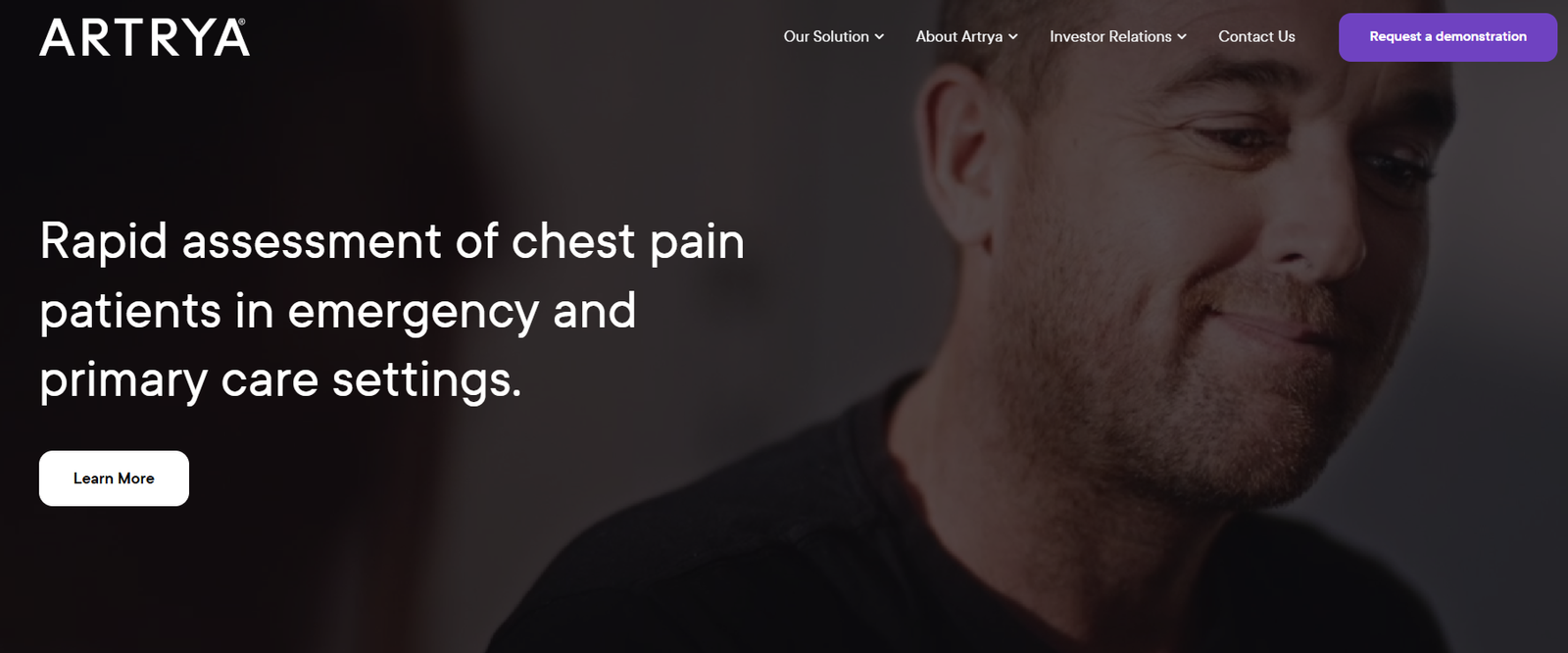
Artrya is a medical technology company specializing in artificial intelligence solutions for the diagnosis and management of coronary artery disease (CAD). Founded in Australia, Artrya has developed an advanced imaging platform designed to assist clinicians in identifying vulnerable plaque and other indicators of heart disease that are often missed using traditional diagnostic methods.
At the core of Artrya’s offering is its proprietary AI-based software called Salix. This platform analyzes coronary CT angiography (CCTA) images and provides fast, non-invasive detection of atherosclerotic plaque and other signs of coronary artery disease. The goal is to reduce diagnostic delays, improve clinical workflow efficiency, and ultimately prevent heart attacks and other cardiovascular events.
Artrya’s mission is to transform how heart disease is diagnosed by replacing outdated, time-consuming diagnostic procedures with rapid, AI-assisted interpretation that delivers accurate, actionable insights directly to clinicians.
Features
AI-Powered Image Analysis: Artrya’s software uses deep learning algorithms to analyze CCTA scans and automatically detect both calcified and non-calcified plaque. This supports earlier and more accurate identification of heart disease.
Salix Coronary Anatomy: The platform reconstructs 3D models of coronary arteries and segments them automatically. It provides detailed maps of arterial structure, which are essential for visualizing lesion severity and plaque burden.
Detection of Vulnerable Plaque: Artrya focuses on identifying high-risk plaques such as low attenuation plaque and positive remodeling, which are known to be precursors to heart attacks.
Rapid Reporting: The AI system generates a structured, standardized report within minutes, providing clinicians with a consistent summary of findings including CAD-RADS score and plaque classification.
Non-Invasive Diagnosis: Unlike stress tests or invasive angiograms, Artrya enables accurate diagnosis using non-invasive imaging techniques, reducing patient risk and diagnostic delay.
PACS Integration: The system integrates seamlessly with existing picture archiving and communication systems (PACS), allowing hospitals and clinics to adopt Artrya without overhauling infrastructure.
Cloud-Based Architecture: Artrya is designed for both on-premise and cloud deployment, enabling scalability and remote access for healthcare organizations of varying sizes.
Clinical Decision Support: By presenting risk profiles and visualizations, the platform aids cardiologists in planning treatment strategies based on objective, AI-derived evidence.
How It Works
Artrya operates through its proprietary Salix platform, which interfaces with CCTA data captured from imaging equipment. After a patient undergoes a coronary CT scan, the images are securely transmitted to Artrya’s software for analysis.
The AI system uses a trained deep learning model to automatically identify and segment coronary arteries. It then detects the presence, type, and severity of plaque deposits. Importantly, the platform can identify high-risk plaque features that are not always visible in traditional image interpretation.
Once the analysis is complete, Salix generates a report summarizing the findings. The report includes a detailed assessment of arterial blockages, CAD-RADS classification, and a clear visual representation of plaque burden and distribution.
This process, which typically takes minutes, replaces the traditional manual reading workflow that can take hours or even days, depending on radiologist availability. As a result, clinicians can make timely decisions about patient care and initiate early interventions if necessary.
Use Cases
Artrya is primarily used in cardiology and radiology departments within hospitals and imaging centers that perform CCTA studies.
One of the main use cases is the rapid, non-invasive diagnosis of coronary artery disease. Many patients presenting with chest pain undergo extensive testing that may miss early signs of heart disease. Artrya helps streamline this process by quickly identifying at-risk individuals through AI analysis.
In emergency departments, the platform can be used to rapidly evaluate patients with suspected cardiac symptoms, potentially reducing unnecessary admissions or invasive procedures.
Cardiologists use the system for treatment planning by visualizing plaque location and severity, which supports decision-making for interventions such as stenting, medication, or lifestyle management.
The platform is also valuable in preventive cardiology, identifying early signs of atherosclerosis in asymptomatic individuals undergoing screening. This proactive approach helps catch disease progression before critical events occur.
Pricing
Artrya does not publicly list its pricing on its website. The cost of implementing the Salix platform typically depends on various factors including the scale of deployment, imaging volume, and integration needs of the healthcare provider.
Hospitals and clinics interested in adopting Artrya’s technology are encouraged to contact the company directly to receive a customized quote based on specific operational and technical requirements. Artrya may offer options for pilot programs or scalable pricing models depending on organizational size and deployment model.
Strengths
One of Artrya’s core strengths is its ability to detect high-risk plaque features that are often missed by traditional diagnostic methods. This enables earlier intervention and improves the quality of cardiovascular care.
The platform delivers reports in minutes, dramatically accelerating the diagnostic timeline compared to manual interpretation, which can take significantly longer depending on radiologist workload.
Its seamless integration with existing imaging workflows through PACS and DICOM compatibility means hospitals do not need to invest in new infrastructure.
Another strength is Artrya’s non-invasive approach. By leveraging CCTA imaging, the platform avoids the need for more invasive and expensive diagnostic procedures like catheter-based angiography.
Its cloud-based, scalable architecture also supports deployment across a range of healthcare environments, from large hospitals to outpatient clinics.
Drawbacks
One drawback of Artrya is its current focus on coronary CT angiography, which means the platform is limited to use cases involving cardiovascular imaging. It may not be suitable for organizations looking for a broader AI imaging solution across multiple medical specialties.
The software’s performance is dependent on the quality of input CCTA scans. Inconsistent image acquisition or artifacts may affect the accuracy of the AI’s analysis.
Artrya’s technology also requires clinical validation and regulatory approval in every market it operates in. Although the platform is approved for use in several regions, it may still be undergoing approval processes in others, potentially limiting adoption.
Finally, since pricing is not transparent, smaller facilities may find it challenging to evaluate the investment without engaging in a formal consultation.
Comparison with Other Tools
Compared to other AI platforms in cardiology such as HeartFlow and Cleerly, Artrya sets itself apart with its focus on rapid plaque detection and characterization using CCTA images.
HeartFlow focuses on fractional flow reserve (FFR) derived from CCTA to assess functional significance of lesions, while Cleerly specializes in coronary plaque quantification and risk scoring.
Artrya’s competitive advantage lies in its ability to detect vulnerable plaques quickly using AI, enabling it to act as a clinical triage and decision support tool. It’s also uniquely positioned as an end-to-end solution that delivers diagnostic reports within minutes of image acquisition.
While Cleerly provides extensive risk stratification tools, and HeartFlow offers physiological assessment, Artrya emphasizes visual analysis of plaque morphology, offering a complementary toolset that fits seamlessly into existing diagnostic workflows.
Customer Reviews and Testimonials
While Artrya’s website does not include detailed public customer reviews, the company has announced successful partnerships with leading healthcare providers and academic institutions. It has been involved in clinical deployments across Australia and is expanding internationally, including the United States and the United Kingdom.
The company’s technology has been featured in press releases and case studies demonstrating its effectiveness in real-world settings. These early deployments show significant promise in improving diagnostic timelines and clinical accuracy.
Artrya is also publicly listed on the Australian Securities Exchange (ASX), providing transparency into its operations and partnerships through investor reports and updates.
Healthcare providers interested in learning more are encouraged to request a demo or reference from the Artrya team for firsthand insights into clinical performance and workflow integration.
Conclusion
Artrya is a pioneering AI platform that brings powerful diagnostic capabilities to the detection and management of coronary artery disease. With its AI-driven analysis of CCTA images, it empowers clinicians to identify life-threatening plaque and vascular conditions quickly and non-invasively.
By delivering accurate, structured diagnostic reports within minutes, Artrya helps reduce diagnostic delays, streamline clinical workflows, and support early, life-saving interventions. Its focus on vulnerable plaque detection addresses a critical gap in traditional cardiology imaging workflows.
While its specialization limits it to cardiovascular use cases, Artrya offers unmatched value in that niche. For hospitals, imaging centers, and cardiology departments aiming to modernize heart disease diagnostics, Artrya represents a powerful, future-ready solution.