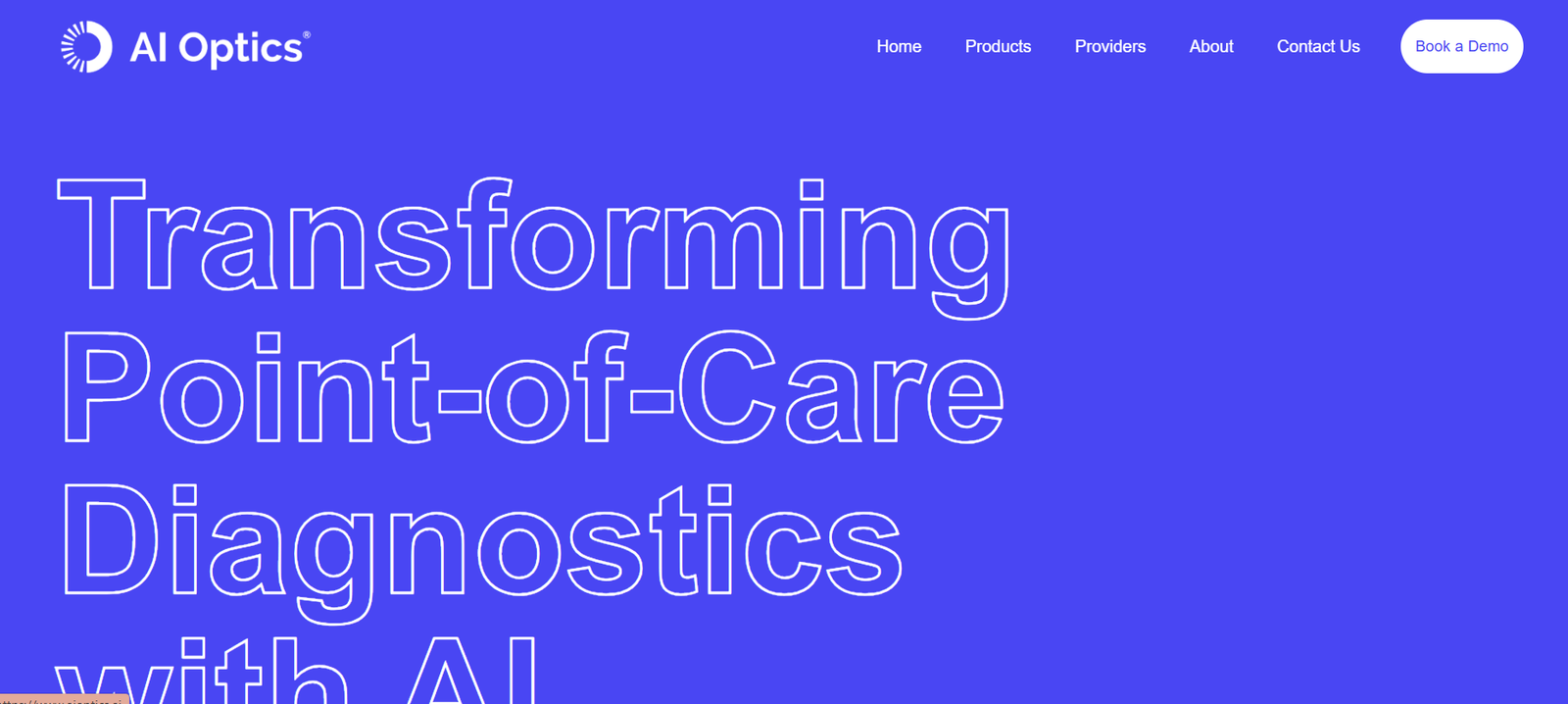
AI Optics is an AI-powered medical technology company focused on democratizing eye screening through rapid, non-invasive detection of vision-threatening diseases. The platform provides accurate, automated eye exams using advanced machine learning models that analyze retinal images to detect conditions such as diabetic retinopathy, glaucoma, and macular degeneration.
Designed for clinics, pharmacies, optometrists, and primary care providers, AI Optics offers an easy-to-use solution that requires no specialized equipment or clinical expertise. It helps address the growing global challenge of preventable blindness by making early detection more accessible, faster, and affordable—particularly in underserved or remote communities.
With AI Optics, healthcare professionals can perform eye screenings in minutes and receive diagnostic insights backed by clinical-grade accuracy.
Features
AI Optics combines hardware simplicity with software sophistication, delivering comprehensive eye screening capabilities.
AI-Based Retinal Analysis: Uses deep learning models to analyze fundus images for signs of eye disease.
Diabetic Retinopathy Detection: Screens for early and advanced stages of diabetic eye damage.
Glaucoma Risk Assessment: Identifies optic nerve changes associated with glaucoma.
Macular Degeneration Screening: Detects common indicators of age-related macular degeneration (AMD).
Instant Results: Delivers a diagnostic report within minutes of image capture.
No Specialist Needed: Enables screening in primary care, pharmacy, or remote settings without an ophthalmologist.
Portable Hardware Compatibility: Works with compact, fundus cameras for point-of-care deployment.
Cloud-Based Platform: Stores and processes data securely through a cloud infrastructure.
Regulatory Compliance: Built with data privacy and clinical validation in mind, supporting regulatory readiness.
Clinical Decision Support: Offers guidance to healthcare professionals on when to refer patients to specialists.
How It Works
AI Optics begins with a simple retinal photograph taken using a fundus camera. The image is uploaded to the AI Optics cloud platform, where deep learning algorithms analyze it for signs of common vision-threatening diseases.
The AI identifies anomalies such as microaneurysms, hemorrhages, or optic nerve damage. It then generates a diagnostic report that includes risk levels, suggested next steps, and whether a referral to an eye specialist is recommended.
This entire process—from image capture to report generation—takes just a few minutes. The system is designed to be intuitive for non-specialist users, enabling broader access to screening in pharmacies, general practices, and mobile health units.
AI Optics also provides training materials and integration support to help clinics onboard the system quickly and efficiently.
Use Cases
AI Optics has a wide range of applications across healthcare and community settings.
Primary Care Clinics: Enable general practitioners to screen for eye disease during routine check-ups.
Pharmacies: Offer walk-in eye screening services to increase early detection in local communities.
Diabetes Care Centers: Integrate retinal screening into diabetes management programs for preventive care.
Telemedicine: Extend ophthalmic screening capabilities to rural or low-resource areas.
Corporate Health Programs: Include eye screening in wellness initiatives to support employee health.
Public Health Campaigns: Support government or NGO programs targeting preventable blindness.
Elder Care Facilities: Provide age-related vision screenings to reduce risk of undiagnosed macular degeneration.
Pricing
AI Optics does not publish fixed pricing plans on its website. Pricing is customized based on factors such as deployment scale, hardware compatibility, image processing volume, and integration needs.
The company works with clinics, providers, and health systems to develop cost-effective screening programs that fit operational requirements. Interested organizations are encouraged to contact AI Optics directly via the official website to request a demo and receive a personalized quote.
In many regions, AI Optics may also partner with governments or public health agencies to offer subsidized screening solutions.
Strengths
Delivers accurate, AI-based screening results in real time.
Reduces dependency on specialists for early detection.
Can be deployed in non-clinical or low-resource settings.
Scales easily for large population health initiatives.
Backed by clinical validation and developed with regulatory compliance in mind.
Improves access to preventative eye care, especially in underserved areas.
Reduces the cost and time associated with traditional ophthalmology visits.
Cloud-based platform ensures easy access, updates, and scalability.
Drawbacks
Requires compatible fundus camera hardware for operation.
Not a replacement for full ophthalmologic diagnosis or treatment.
Clinical oversight still needed for referrals and follow-up.
Limited to conditions detectable via fundus photography.
As a newer company, may face regulatory hurdles depending on local health authorities.
Data privacy considerations require robust security protocols, especially in public sector use.
Comparison with Other Tools
AI Optics can be compared to platforms like Eyenuk and IDx-DR, which also focus on AI-based eye screening. While IDx-DR is FDA-approved specifically for diabetic retinopathy and Eyenuk offers AI screening for multiple conditions, AI Optics differentiates itself with broader disease focus and flexibility in deployment settings.
Unlike larger diagnostic systems that require in-clinic setups, AI Optics emphasizes portability, ease of use, and scalability for diverse care environments including pharmacies and rural clinics. It offers a balanced solution that bridges clinical accuracy with field accessibility.
AI Optics also provides more customizable deployment models, allowing for local partnerships and adaptability to various healthcare infrastructures.
Customer Reviews and Testimonials
While the website does not feature extensive user testimonials, AI Optics highlights its partnerships with health providers and technology integrators. Early adopters have noted the system’s ease of use, fast onboarding process, and positive impact on patient care in settings where access to specialists is limited.
Healthcare professionals have reported increased patient engagement and a better ability to catch conditions early, particularly in diabetic populations. In pilot programs and screenings, AI Optics has been instrumental in identifying cases that otherwise would have gone undetected.
Organizations interested in case studies or references can request more information directly from AI Optics via its contact portal.
Conclusion
AI Optics is a forward-looking medical AI platform that brings high-quality eye screening to the point of care. By automating the detection of vision-threatening conditions like diabetic retinopathy, glaucoma, and macular degeneration, it empowers healthcare providers to catch diseases early and refer patients for timely intervention.
With its portable setup, cloud-based processing, and real-time results, AI Optics is an ideal solution for pharmacies, primary care clinics, and telehealth programs seeking to expand their preventive care services. While it does not replace ophthalmologists, it significantly lowers the barrier to essential screening, especially in underserved regions.