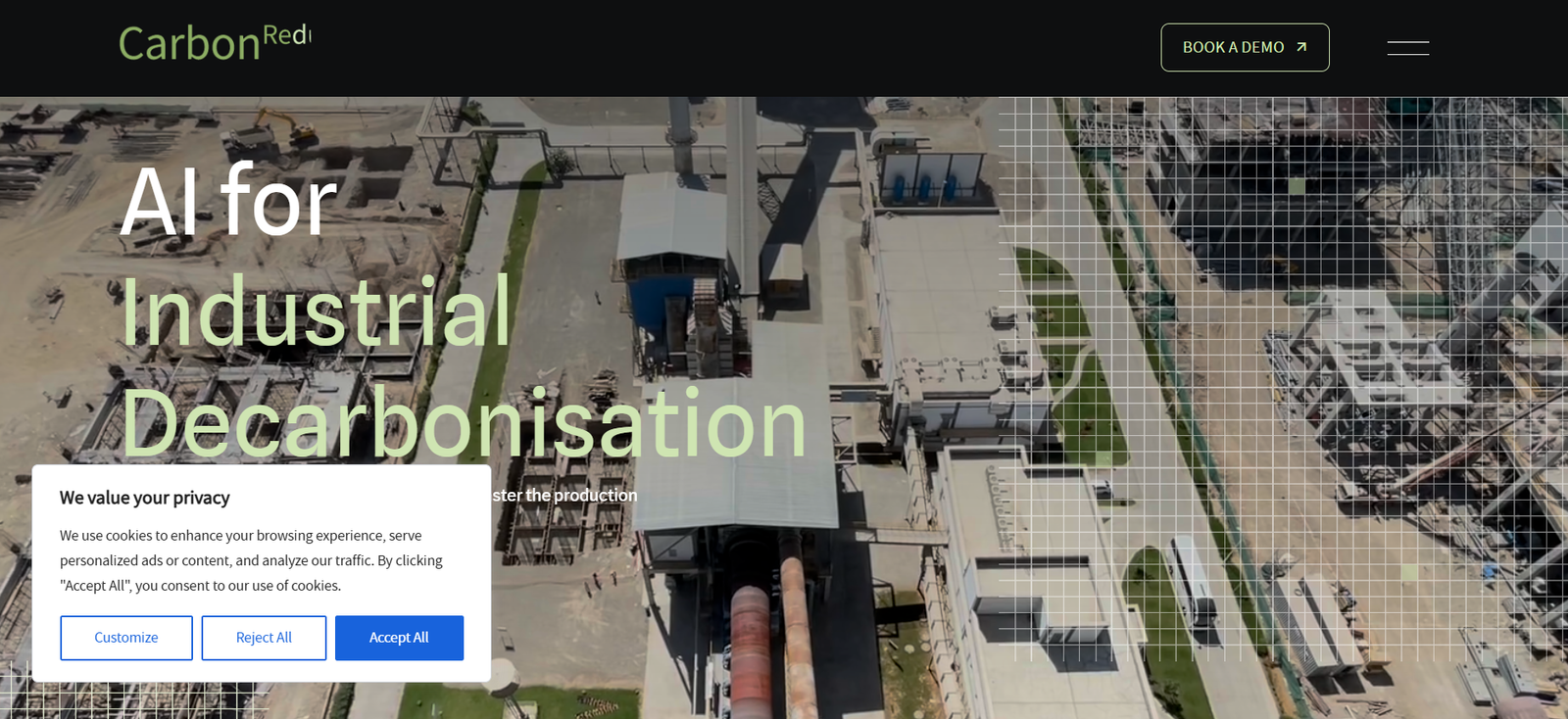
Carbon Re is a deep-tech climate company that leverages artificial intelligence (AI) to reduce carbon emissions in energy-intensive industries, particularly cement, steel, and glass manufacturing. Based in the UK and spun out from University College London and the Alan Turing Institute, Carbon Re is addressing the urgent challenge of industrial decarbonization by optimizing production processes for greater energy efficiency and lower emissions.
Carbon Re’s flagship platform, Delta Zero, uses real-time data, advanced machine learning, and digital twin technology to identify process inefficiencies and recommend changes that lower energy use, reduce emissions, and cut fuel costs—without requiring capital-intensive hardware upgrades.
Features:
Delta Zero AI Platform
AI-powered software that models and continuously optimizes industrial processes to reduce emissions and improve energy efficiency.Real-Time Process Optimization
Continuously monitors live factory data to suggest operational changes that save energy and reduce CO₂ output.Digital Twin Technology
Creates a virtual replica of the production process to simulate and test optimization strategies before applying them.Carbon and Fuel Reduction
Helps manufacturers cut fuel use and emissions by up to 10% without changing physical infrastructure.Cement and Steel Sector Focus
Specializes in high-emitting sectors that are difficult to decarbonize using conventional methods.Rapid Deployment
Integrates into existing systems with minimal disruption, allowing manufacturers to see results quickly.Data-Driven Insights
Uses plant data—like temperature, feedstock quality, and energy consumption—to identify optimization opportunities.Scalable Cloud-Based Platform
Offers secure, remote access to analytics and dashboards for performance monitoring and benchmarking.
How It Works:
Integration with Plant Systems
Delta Zero connects to existing sensors and data sources in the plant (e.g., SCADA systems).Digital Twin Creation
A virtual model of the production process is built using historical and live data.AI Model Training
Machine learning models analyze operations to detect patterns, inefficiencies, and emissions hotspots.Optimization Recommendations
The platform provides actionable suggestions to improve combustion efficiency, feedstock mix, and other variables.Performance Tracking
Dashboards and reports allow plant managers to monitor energy savings, emission reductions, and process stability.
Use Cases:
Cement Manufacturing
Optimize kiln performance and fuel usage to reduce emissions and save on energy costs.Steel Production
Improve furnace efficiency and lower the carbon footprint of high-temperature processes.Glass and Ceramics
Apply real-time process optimization in other high-heat, energy-intensive manufacturing sectors.Sustainability Reporting
Provide accurate, measurable data for ESG disclosures and regulatory compliance.Operational Cost Reduction
Cut fuel bills and improve yield quality with smarter AI-driven operations.
Pricing:
Carbon Re offers custom pricing based on:
Type and size of the plant
Volume of data integration required
Emissions reduction targets
Duration and scope of the deployment
Strengths:
AI-Driven Emission Reduction
Targets the 30% of global emissions that come from heavy industry.No Capital Investment Needed
Delivers energy savings without requiring new equipment or plant modifications.Scientifically Backed
Developed through partnerships with UCL and the Alan Turing Institute.Fast Return on Investment
Offers rapid deployment and immediate operational cost savings.Supports Net-Zero Goals
Helps companies meet sustainability targets and comply with climate regulations.Scalable Solution
Can be deployed across multiple plants or regions for broader impact.
Drawbacks:
Limited Industry Focus
Primarily designed for cement, steel, and similar high-heat industries.Data Dependency
Requires high-quality, consistent operational data for effective optimization.Enterprise-Only Solution
Not suitable for SMEs or facilities without advanced digital infrastructure.Not a Standalone Emissions Solution
Must be used in conjunction with broader decarbonization strategies (e.g., carbon capture, fuel switching).
Comparison with Other Tools:
Carbon Clean: Focuses on carbon capture solutions; Carbon Re targets efficiency improvements before emissions occur.
BrainBox AI: Optimizes HVAC systems in buildings; Carbon Re is designed for industrial-scale manufacturing environments.
C3.ai: Offers broad enterprise AI solutions; Carbon Re is highly specialized in decarbonizing heavy industry.
Microsoft Sustainability Manager: Focuses on ESG reporting; Carbon Re delivers real-time, operational emissions reductions.
Customer Reviews and Testimonials:
While specific customer testimonials are limited due to the industrial nature of the projects, Carbon Re has been recognized by:
World Economic Forum
CleanTech Group
UK Research and Innovation (UKRI)
The Ellen MacArthur Foundation
Key statements from public materials:
“Carbon Re’s software allows us to reduce our carbon footprint and fuel costs simultaneously—without compromising performance.”
“The AI recommendations have enabled our team to make informed operational decisions in real time.”
Conclusion:
Carbon Re is at the forefront of industrial decarbonization, offering an AI-powered platform that helps manufacturers reduce emissions and energy use with zero capital investment. With a sharp focus on high-emission sectors like cement and steel, Carbon Re delivers immediate impact through digital optimization.
As heavy industry seeks viable paths to net zero, tools like Delta Zero from Carbon Re offer a scalable, practical solution that complements long-term decarbonization strategies. It’s an ideal choice for manufacturers ready to cut costs and carbon today—without waiting for future technologies.