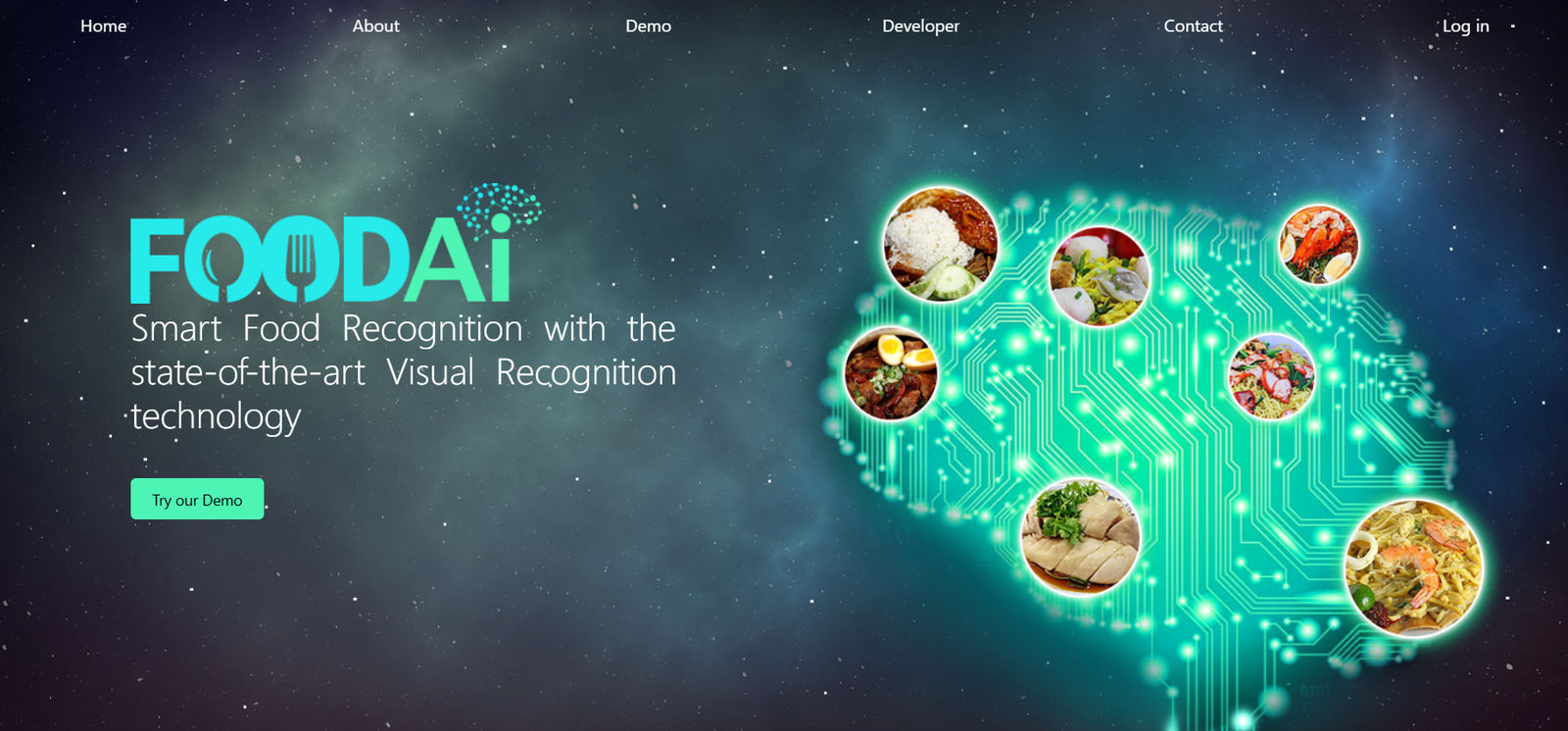
FoodAI is a research-driven artificial intelligence platform developed by Singapore-based company Red Dot Analytics, designed to identify food items through images and analyze their nutritional content. Targeted primarily at researchers, developers, healthcare professionals, and businesses, FoodAI leverages deep learning and computer vision to recognize over 750 types of food items with a high degree of accuracy.
By turning food photos into nutritional insights, FoodAI bridges the gap between everyday eating habits and health-conscious decision-making. Whether it’s for meal tracking, dietary monitoring, or intelligent food recommendations, the platform offers reliable image recognition capabilities for diverse food types across Asian and global cuisines.
FoodAI is positioned as an advanced backend technology rather than a direct-to-consumer app. It enables developers and businesses to integrate food image recognition into their own applications, services, and research projects.
Features
FoodAI’s core feature is its powerful image recognition engine that identifies food items from photographs. Trained on tens of thousands of images, the AI model can detect and classify multiple dishes or ingredients in a single photo. It recognizes over 750 distinct food items, with a strong emphasis on local and regional Asian cuisines, which are often underrepresented in other datasets.
Another key feature is real-time nutrition estimation. Once food items are identified, FoodAI can estimate their caloric content, macronutrient breakdown, and serving size. This feature is useful for applications in nutrition tracking, health monitoring, and personalized diet planning.
The system supports multi-label recognition, meaning it can analyze a dish with multiple components—such as rice, chicken, and vegetables—rather than identifying only a single item. This makes it more accurate for real-world eating scenarios where meals are often combinations of various ingredients.
FoodAI also provides an API that allows developers to integrate its capabilities into third-party mobile apps, web platforms, or IoT devices. The API delivers image recognition results and nutritional analysis in a developer-friendly format.
The platform includes a demo interface for testing and academic use, showcasing how the technology processes images and returns food names with confidence scores.
How It Works
FoodAI operates through a convolutional neural network (CNN) architecture trained on a large, curated dataset of food images. When an image is uploaded or sent via API, the system preprocesses the image to isolate food elements, then runs it through a multi-label classification model.
The AI identifies individual food items, applies confidence scores to each prediction, and maps them to a nutrition database. The nutrition information is derived from standard food composition datasets, which allows for calorie and macronutrient estimates.
Developers and businesses can access FoodAI through its RESTful API. The image file or URL is submitted via an HTTP request, and the response includes identified food items, their respective confidence levels, and nutritional values. This makes the tool scalable for integration into health apps, smart fridges, dietary planning software, and more.
The platform supports both single-image processing and batch recognition, making it adaptable for high-volume commercial use as well as personal health applications.
Use Cases
FoodAI has a wide range of use cases across health, nutrition, and technology sectors.
Healthcare providers and dietitians can use FoodAI to help patients log meals more accurately. By taking photos of their meals, patients can automatically generate nutrition logs, supporting better health monitoring and dietary compliance.
Fitness and wellness apps integrate FoodAI to offer users a frictionless way to track calories and nutrients without manual data entry. The platform enhances user experience by simplifying meal logging and increasing engagement.
In smart kitchens and IoT devices, FoodAI powers automated food recognition. Devices like smart fridges or meal planners can use image inputs to track inventory or suggest recipes based on identified ingredients.
Food delivery platforms and restaurant aggregators can use FoodAI to tag and categorize dishes, improving search functionality and user recommendations. It can also help generate nutritional information for menu items, enhancing transparency and compliance.
Researchers in food science and AI use FoodAI’s capabilities for projects related to food recognition, health informatics, and sustainable consumption.
Pricing
FoodAI does not list standard pricing publicly on its website. As a research-focused platform and AI backend service, access to its full API and commercial use is likely subject to licensing agreements or enterprise arrangements.
Developers and researchers interested in using FoodAI are encouraged to contact the team directly for collaboration, research partnerships, or API access. The platform provides a demo version for testing purposes, which is accessible through the official site for non-commercial exploration.
Custom pricing is expected depending on the scope of use, API volume, and deployment scale. Organizations looking to embed FoodAI in their products or services will need to engage with Red Dot Analytics for customized quotes and integration support.
Strengths
One of FoodAI’s strongest features is its deep focus on food items from Asian cuisines. Many food recognition datasets are biased toward Western dishes, making FoodAI particularly valuable in multicultural or global applications where local dishes need to be accurately recognized.
The platform offers high accuracy with multi-label detection, which is more realistic for complex meals. It can recognize composite dishes rather than limiting recognition to a single item per image.
Another strength is its integration flexibility. Through its API, FoodAI can be embedded into a wide range of digital applications, enabling personalized nutrition, meal tracking, and food tech innovations without requiring businesses to build their own recognition models.
FoodAI’s academic roots and emphasis on research ensure methodological rigor and transparency, making it a trusted partner for health and scientific institutions.
Drawbacks
While FoodAI is powerful, it is not a consumer-facing application. Users cannot download a mobile app for direct meal tracking or calorie counting. Instead, the platform is aimed at developers and organizations, which may limit accessibility for individuals seeking immediate use.
The lack of public pricing or self-serve onboarding makes it less suitable for small developers or startups without resources to negotiate enterprise contracts.
Another limitation is the dependency on image quality. Low-resolution or poorly lit photos may reduce recognition accuracy. In cases where food presentation varies significantly from training data, results may be less reliable.
Additionally, while the platform estimates nutrition values, it may not account for portion sizes or cooking methods accurately, which can affect precision in certain use cases.
Comparison with Other Tools
Compared to broader food-tracking apps like MyFitnessPal or Lose It!, FoodAI is not designed as a standalone consumer tool. Instead, it offers foundational technology that those apps could integrate to improve their image recognition capabilities.
When compared to other AI-based food recognition tools like CalorieMama or Bite.ai, FoodAI stands out for its focus on research-grade accuracy and support for Asian and multicultural dishes. Most other tools prioritize user convenience but may lack detailed recognition for diverse food types.
In terms of API services, FoodAI competes with platforms like Google Cloud Vision or Clarifai, but those services offer general image recognition rather than food-specific models. FoodAI’s domain expertise gives it an edge for food tech, health, and nutrition applications.
Customer Reviews and Testimonials
FoodAI is primarily used in academic and enterprise contexts, so public reviews and testimonials are limited. However, it has been featured in research publications and food technology forums for its contributions to food recognition and AI nutrition analysis.
Institutions and companies that have used FoodAI in trials have noted its strength in recognizing complex dishes and local cuisines, which is often lacking in generic AI tools.
Collaborators in healthcare and nutrition research have praised the platform’s potential to improve dietary tracking and health interventions through automation and increased accuracy.
Although formal customer reviews are scarce, its use in academic and enterprise-level projects suggests strong credibility and technical reliability.
Conclusion
FoodAI is a specialized, AI-powered platform designed to recognize food from images and analyze their nutritional content with precision. Aimed at developers, researchers, and health organizations, it enables automated food logging, dietary monitoring, and enhanced food-related applications through a robust API.
With strengths in multicultural food recognition, real-time nutrition analysis, and integration flexibility, FoodAI plays a valuable role in the evolving intersection of technology, health, and food science.
While not a consumer-facing product, its backend capabilities are shaping the future of food tech by powering smarter applications and enabling more personalized, data-driven dietary experiences.
For organizations looking to embed reliable food recognition into their platforms, FoodAI offers a research-backed, high-accuracy solution ready to scale with the next generation of health and nutrition technologies.