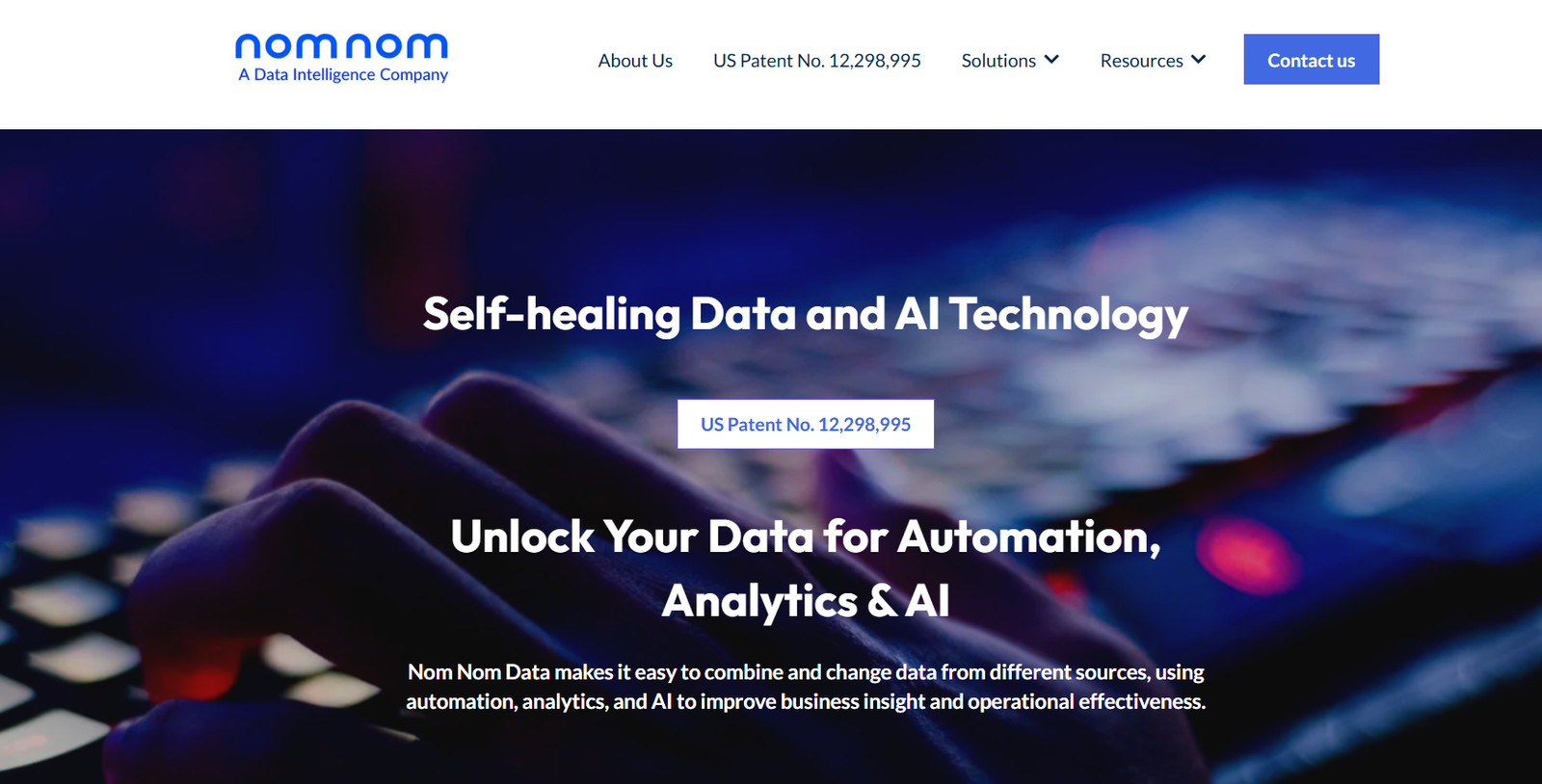
NomNom Data is a cloud-native data operations platform designed to streamline and automate data workflows. It acts as a centralized hub for connecting, managing, and transforming data from multiple systems and sources. Whether an organization is integrating APIs, building ingestion pipelines, or automating internal data processes, NomNom Data simplifies the task through a modern, no-code/low-code interface.
The platform eliminates the need for maintaining infrastructure or writing extensive custom scripts. Instead, it offers a seamless experience for teams to build, execute, and monitor workflows that would otherwise require significant engineering effort.
Features of NomNom Data
NomNom Data includes a range of capabilities tailored for data teams seeking efficiency and flexibility. One of its core features is workflow orchestration, which allows users to design data processes visually. Teams can define triggers and actions that automatically run workflows across various systems.
The platform provides a no-code interface, making it accessible to users who may not have advanced programming skills. At the same time, low-code scripting options are available for more complex requirements, offering flexibility for technical users.
Another major strength of NomNom Data is its extensive library of prebuilt connectors. These connectors make it easy to integrate with tools like Snowflake, BigQuery, Salesforce, AWS S3, and many others. This reduces the need for custom development and speeds up deployment times.
Monitoring and observability are built into the platform. Teams can track the health of their data pipelines, receive alerts for failures, and investigate issues through detailed logs and dashboards.
NomNom Data follows an API-first architecture, enabling advanced users to manage workflows programmatically and build custom integrations. It also includes features like version control and audit logging, helping teams maintain transparency and regulatory compliance.
The platform supports team collaboration with role-based access control, ensuring the right stakeholders have the right level of access to workflows and configurations.
How NomNom Data Works
Using NomNom Data starts with designing workflows in its intuitive interface. Users can set up workflows by defining triggers, such as scheduled events or data changes, and then assigning a series of actions for the platform to perform.
Next, data sources are connected using the prebuilt connectors or custom API integrations. The user selects the source and destination systems, configures authentication, and defines the transformation logic if needed.
Once a workflow is configured, it can be deployed with one click. Execution can be triggered on a schedule, in response to events, or manually. Throughout this process, users benefit from real-time monitoring that displays the status and performance of each workflow.
As workflows run, teams can identify issues, drill down into logs, and make adjustments as necessary. NomNom Data also allows users to update workflows, roll back to previous versions, and scale operations without touching infrastructure.
Use Cases for NomNom Data
NomNom Data is well-suited for a variety of use cases across different industries. In marketing analytics, for example, it can be used to integrate data from ad platforms like Google Ads and social media accounts into a centralized dashboard, making campaign performance easier to track.
Sales teams can use the platform to automate data syncs between Salesforce and their company’s data warehouse, enabling real-time reporting and insights without manual entry.
In eCommerce, NomNom Data supports inventory synchronization by linking online storefronts such as Shopify with back-end inventory systems. This ensures product availability is accurately reflected across platforms.
Organizations undergoing digital transformation can use NomNom Data for data migration. Moving data from on-premise systems to cloud-based solutions becomes more efficient with automated workflows.
In industries like logistics or utilities, the platform can aggregate data from Internet of Things (IoT) devices, process it in near real-time, and feed insights into analytics platforms for better decision-making.
Pricing of NomNom Data
NomNom Data follows a customized pricing model based on specific user needs. While it does not publicly list prices on its website, the company offers a free trial to help teams evaluate the platform.
Organizations interested in implementing NomNom Data are encouraged to contact the sales team directly to receive a quote tailored to their workflow volume, team size, and integration needs. This pricing model ensures that customers only pay for what they use, making it flexible for companies at different stages of growth.
Prospective users can visit the official website and request a demo or pricing consultation.
Strengths of NomNom Data
NomNom Data offers a user-friendly interface that supports both no-code and low-code development. This makes it accessible to a broader range of users, including analysts and non-technical team members.
Its wide range of integrations allows for quick connection to popular tools and platforms, reducing setup time and operational complexity. Being a cloud-native platform, NomNom Data scales efficiently without requiring users to manage infrastructure.
The built-in monitoring and alert system enables teams to act quickly on failures and maintain high reliability across data processes. Version control and audit logs add an additional layer of accountability and compliance.
Security features like role-based access control support collaboration while protecting sensitive data.
Drawbacks of NomNom Data
One of the main drawbacks of NomNom Data is the lack of transparent pricing information. Without upfront costs listed on the website, potential customers may find it harder to assess whether the platform fits their budget.
As a relatively new entrant in the data orchestration space, NomNom Data may also have limited third-party documentation, community resources, or forum support compared to older, more established tools.
Some users may require onboarding support to take full advantage of the platform’s capabilities, especially for advanced configurations and custom API integrations.
Comparison with Other Tools
NomNom Data distinguishes itself from traditional orchestration tools like Apache Airflow by offering a no-code interface, real-time monitoring, and built-in integrations. While Airflow is powerful, it often requires deep technical knowledge and infrastructure management, making it less accessible to broader teams.
Compared to ETL platforms like Fivetran or Hevo Data, NomNom Data provides more flexibility in workflow design and supports complex automation scenarios involving APIs and conditional logic. While those tools focus primarily on data ingestion, NomNom Data offers a more holistic approach to data operations.
This positions NomNom Data as a versatile solution for teams looking to automate both ingestion and internal data processes, rather than just move data between sources.
Customer Reviews and Testimonials
Customers have praised NomNom Data for its impact on operational efficiency and reduced engineering overhead. Many users highlight the ease with which they can build and deploy workflows that previously required weeks of development time.
Teams appreciate the real-time observability and error tracking features, which allow them to maintain high-quality data pipelines without constant manual oversight.
The platform has received positive mentions on professional platforms such as LinkedIn and Product Hunt, where users note the speed and flexibility it brings to data operations. While comprehensive review platforms like G2 or Capterra may not yet have extensive listings, early adopters express satisfaction with the product’s performance and support.
Conclusion: Is NomNom Data Worth It?
NomNom Data offers a compelling solution for companies looking to simplify their data workflows without sacrificing flexibility or scalability. With its hybrid no-code/low-code interface, strong integration capabilities, and real-time monitoring, it meets the needs of modern data teams seeking efficiency and automation.
While the lack of transparent pricing and limited community support are valid concerns, the platform’s strengths make it a solid choice for mid-sized to large organizations or teams managing complex data pipelines.
For businesses seeking to reduce engineering bottlenecks, improve pipeline reliability, and automate repetitive data tasks, NomNom Data is worth serious consideration.