Oracle is a global technology leader offering an expansive suite of cloud services, enterprise databases, AI tools, and business applications. Known for its flagship product, the Oracle Database, the company has grown to deliver full-stack cloud and infrastructure solutions tailored to the needs of large organizations, governments, and SMBs worldwide.
With offerings in IaaS (Infrastructure as a Service), PaaS (Platform as a Service), SaaS (Software as a Service), and autonomous AI solutions, Oracle enables organizations to modernize their operations, optimize decision-making, and deliver secure, scalable enterprise experiences.
Whether deploying critical ERP systems, managing high-performance computing (HPC), or integrating AI into workflows, Oracle provides the technology foundation businesses need for transformation.
Features of Oracle
1. Oracle Cloud Infrastructure (OCI)
OCI is Oracle’s next-generation IaaS offering. It delivers compute, storage, networking, and database services with high performance and lower cost compared to competitors like AWS and Azure.
2. Oracle Autonomous Database
A self-driving, self-securing, and self-repairing database powered by machine learning. Reduces manual tasks, improves uptime, and increases efficiency for DBAs.
3. Oracle Fusion Cloud Applications
A comprehensive suite of cloud-based business applications for finance, HR, supply chain, customer experience, and more. Built on a unified data model and embedded with AI.
4. AI and Machine Learning
Oracle offers AI capabilities within its cloud services, including document recognition, forecasting, digital assistants, and machine learning model training for custom apps.
5. Oracle Analytics Cloud
Delivers self-service data visualization, augmented analytics, and enterprise reporting powered by AI for better business insights.
6. Integration and Middleware
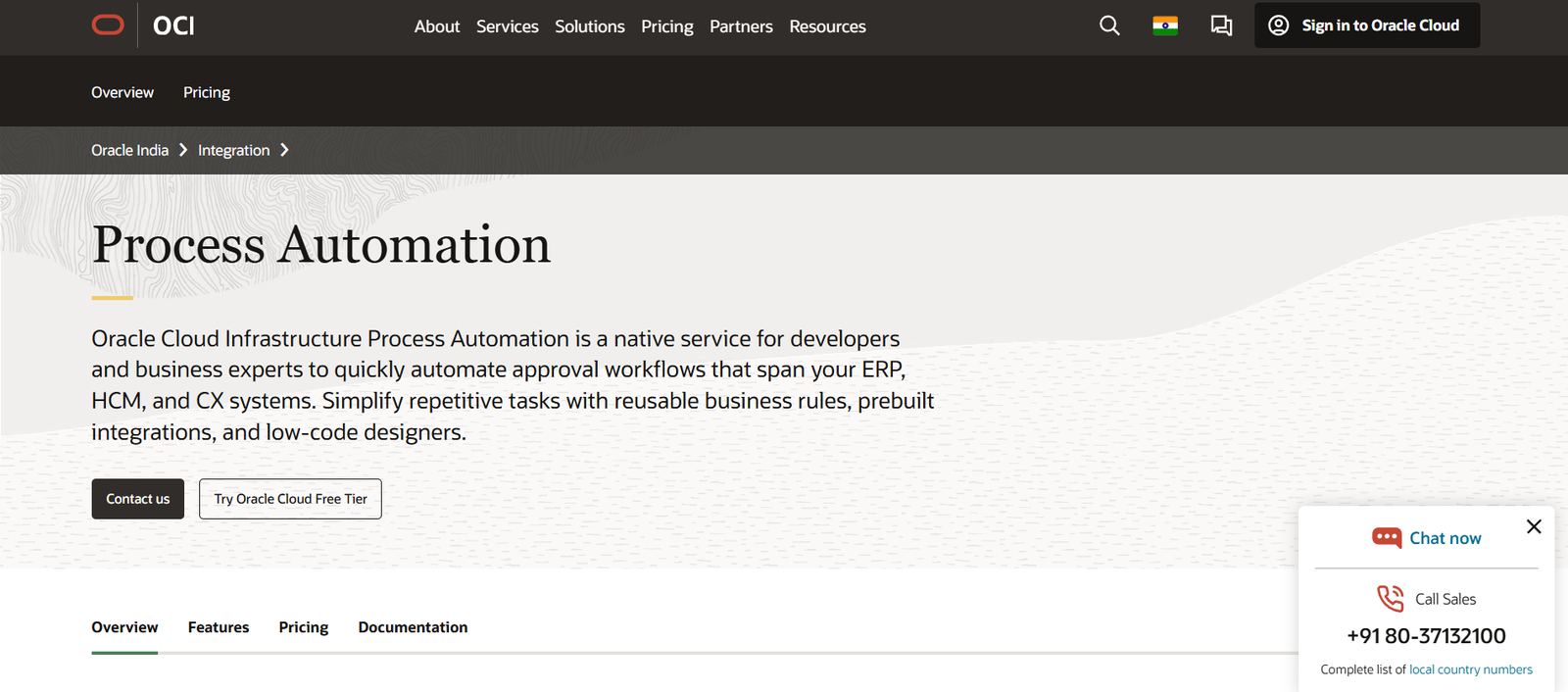
Oracle Integration Cloud connects on-premises and cloud applications with prebuilt connectors, process automation tools, and data mapping.
7. Oracle Digital Assistant
A conversational AI platform that helps organizations deploy voice and text-based interfaces into applications such as HR, CRM, and customer service.
8. Security and Compliance
Oracle includes end-to-end encryption, identity access management, threat detection, and compliance support for standards like GDPR, HIPAA, FedRAMP, and more.
9. Industry-Specific Solutions
Vertical-specific offerings for financial services, healthcare, retail, telecom, government, and manufacturing—optimized for industry regulations and challenges.
How Oracle Works
Deploy Services via Oracle Cloud
Users provision infrastructure, databases, or applications via Oracle Cloud Console or APIs. Services scale automatically with demand.Build or Integrate Applications
Developers use Oracle tools like Oracle Application Express (APEX), Visual Builder, or Java frameworks to build custom apps. APIs and integration tools connect Oracle with third-party services.Use Oracle Autonomous Services
Enable autonomous features (database, analytics, security) to reduce manual workloads and rely on AI for optimization.Manage Operations with OCI Console
The unified dashboard allows teams to monitor resources, automate provisioning, manage users, and enforce compliance.Enable AI and Analytics
Use Oracle’s prebuilt or custom AI models and dashboards to generate insights from business data and take automated actions.
Use Cases for Oracle
Enterprise Resource Planning (ERP)
Use Oracle Fusion Cloud ERP to manage finance, procurement, and project management across global enterprises with real-time data and embedded intelligence.
Database Modernization
Migrate legacy databases to Oracle Autonomous Database for reduced operational costs, improved uptime, and better performance.
Customer Experience (CX)
Deliver omnichannel customer service and marketing personalization using Oracle CX Cloud and Digital Assistant.
AI and Automation
Train machine learning models, automate document processing, or deploy AI chatbots with Oracle’s integrated AI tools.
Hybrid and Multi-Cloud
Run Oracle workloads on Oracle Cloud, on-premises, or in multi-cloud configurations using Oracle Cloud@Customer or partnerships with Microsoft Azure.
Healthcare Data Management
Support HIPAA-compliant healthcare apps and databases, enabling electronic medical record storage, analysis, and real-time patient engagement.
Pricing of Oracle
Oracle pricing varies by product category, usage volume, deployment model, and support needs. Here are some general pricing structures:
1. Oracle Cloud Infrastructure (OCI)
Pay-as-you-go or monthly flex models
Compute instances: From $0.01 to $0.08 per hour depending on VM type
Storage: Starting at $0.025 per GB/month
Data egress: First 10TB free, then tiered pricing
2. Oracle Autonomous Database
$0.1125 per OCPU hour (shared)
Dedicated infrastructure options available
Auto-scaling helps reduce costs by adjusting compute based on load
3. Oracle Fusion Cloud Apps
SaaS pricing per user/month
ERP, HCM, SCM, and CX applications range from $75 to $300+ per user/month, depending on the module and industry package
4. Oracle Digital Assistant
Starts at $0.0011 per message
Monthly active user pricing options also available
Oracle also offers a Free Tier with limited access to Always Free services and a 30-day Free Trial with $300 in cloud credits.
More pricing details: https://www.oracle.com/cloud/pricing/
Strengths of Oracle
End-to-end enterprise platform across IaaS, PaaS, and SaaS
Autonomous services reduce operational overhead
Deep industry expertise with tailored vertical solutions
Strong database leadership with Oracle DB and MySQL
Secure, scalable cloud infrastructure with compliance support
Powerful analytics and AI integrated across services
Flexible deployment options (public cloud, hybrid, on-premises)
Global presence and support network
Drawbacks of Oracle
Complex pricing and licensing can be difficult to navigate
Learning curve for some tools and services
Perception of being enterprise-heavy—less suited for early-stage startups
Costs can escalate for large workloads if not optimized
Limited open-source transparency compared to alternatives like AWS or Google Cloud
Comparison with Other Tools
Oracle vs. AWS
AWS has broader market adoption and developer tools. Oracle stands out in autonomous databases, enterprise SaaS, and hybrid deployments.
Oracle vs. Microsoft Azure
Azure integrates deeply with Microsoft ecosystems. Oracle provides better database performance and lower-cost IaaS for Oracle workloads.
Oracle vs. Google Cloud
GCP excels in data science and AI. Oracle offers stronger enterprise ERP and database solutions, plus superior on-premise-to-cloud migration options.
Oracle vs. SAP
SAP offers ERP-focused services. Oracle delivers a broader cloud stack, from infrastructure to AI to business apps.
Customer Reviews and Testimonials
Oracle is used by global enterprises and governments across more than 175 countries. Here’s what users say:
“Migrating to Oracle Autonomous Database cut our manual operations by 70% and improved uptime to 99.99%.”
— CIO, Global Retail Chain
“Oracle Fusion Cloud ERP helped us unify finance, supply chain, and HR in a single system. The ROI was visible within a year.”
— VP of Operations, Healthcare Provider
“Oracle’s hybrid cloud model let us modernize legacy systems without disrupting daily operations. Their support was unmatched.”
— IT Director, Government Agency
Oracle maintains strong ratings on Gartner Peer Insights, G2, and TrustRadius.
Conclusion
Oracle is a powerhouse in enterprise IT, offering a full suite of cloud, database, and AI services designed to meet the needs of modern businesses. From scalable cloud infrastructure to industry-leading databases and intelligent business applications, Oracle helps organizations transform operations, reduce costs, and innovate at scale.
Whether you’re moving to the cloud, automating business workflows, or building next-gen applications, Oracle provides the tools, infrastructure, and expertise to make it happen—securely and efficiently.