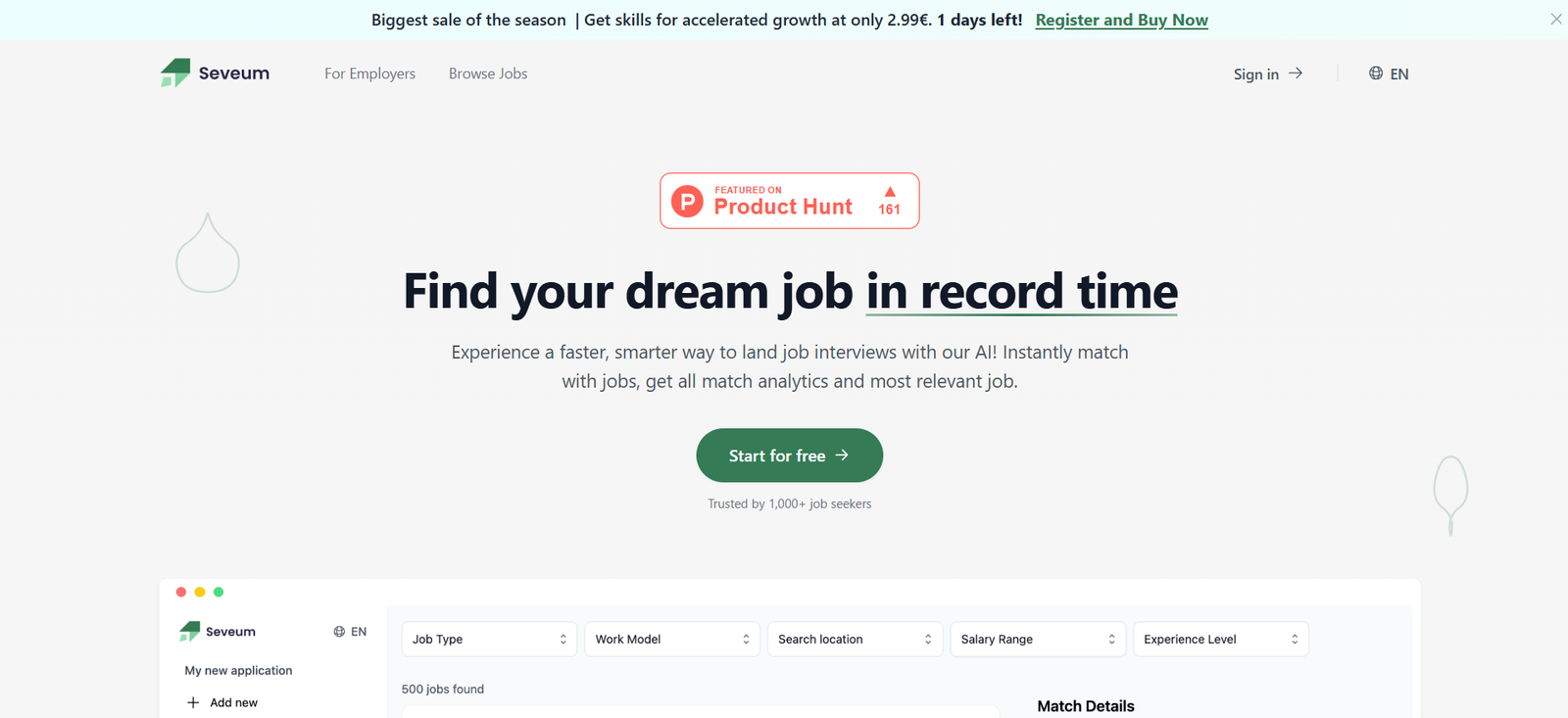
Seveum is an AI-powered business operations assistant designed to streamline internal workflows and automate decision-making processes. It allows teams to ask business questions in plain language, execute operations tasks automatically, and analyze large volumes of data without switching tools or writing code.
Unlike general-purpose AI chatbots, Seveum is purpose-built for operations teams. It integrates with internal tools and databases, enabling seamless task execution and insight retrieval from within your organization’s existing infrastructure.
From generating reports to updating CRM records, Seveum acts like a digital teammate that understands business context and delivers actionable outcomes in seconds.
Features
1. Natural Language Interface
Seveum allows users to type business questions or commands in everyday language. Whether it’s “show me last quarter’s revenue” or “update the customer status,” the AI understands and executes requests intelligently.
2. Workflow Automation
Automate routine processes like report generation, CRM updates, email follow-ups, or Slack notifications without manual intervention.
3. Multi-Tool Integration
Seveum connects with internal tools such as CRMs, data warehouses, spreadsheets, Slack, and cloud apps—consolidating access in one place.
4. Role-Based Assistance
The platform can tailor its responses based on the user’s role—whether it’s sales, customer success, operations, or finance—offering relevant answers and suggested actions.
5. Secure Data Handling
Seveum adheres to enterprise-grade security standards, respecting data permissions and ensuring only authorized users can access or manipulate sensitive information.
6. Actionable Insights
Beyond answering questions, Seveum recommends next steps or triggers automated actions based on context, helping teams move from insights to execution.
7. No-Code Customization
Operations teams can configure custom workflows and business logic without any coding, making Seveum highly accessible for non-technical users.
How It Works
Step 1: Connect Your Data and Tools
Users start by integrating Seveum with their internal systems. Supported tools include CRMs, project management software, Google Workspace, and other business applications.
Step 2: Ask or Command the AI
Once connected, users can ask questions like “Which customers have open invoices?” or command tasks such as “Send a follow-up to all leads from last week.”
Step 3: AI Processes and Executes
Seveum interprets the request using natural language processing (NLP) and performs the task or delivers insights based on the underlying data and systems.
Step 4: Review and Iterate
Users can review results, give feedback, or chain requests to build more advanced workflows over time.
Seveum continues to learn and improve based on usage patterns and organizational preferences.
Use Cases
1. Revenue Operations
Seveum can automate reporting, forecast updates, and CRM hygiene tasks for RevOps teams, saving hours of manual spreadsheet work.
2. Sales Enablement
Sales teams can retrieve deal insights, update lead statuses, or trigger follow-ups—all via simple chat commands.
3. Customer Support Operations
Ops teams can manage support ticket escalations, generate summaries, and notify teams through Slack or email without lifting a finger.
4. Finance and Invoicing Automation
Seveum can pull payment data, flag overdue invoices, and even initiate payment reminders or updates.
5. Project and Task Management
Coordinate cross-functional tasks, check project status, and assign ownership without switching between tools.
Pricing
As of the latest update on the Seveum website, pricing details are not publicly listed. The platform appears to operate on a custom pricing model based on organization size, use case complexity, and the number of integrations required.
You can request access or schedule a demo through their homepage to learn more about plans and personalized pricing.
Note: Seveum is currently onboarding early adopters, making this an ideal time for growing companies to explore the tool with flexible pricing and onboarding support.
Strengths
AI built specifically for business operations, not just general chat
Supports actionable execution, not just insights or summaries
No-code customization allows fast team adoption
Reduces reliance on dashboards, BI tools, and repetitive admin work
Secure, role-based data access for compliance and integrity
Scales across departments and functions seamlessly
Drawbacks
Pricing is not transparent, which may delay evaluation for smaller teams
Currently best suited for mid-size and enterprise teams with integration needs
As a newer platform, limited third-party reviews are available
Complex workflows may still require initial human configuration
Full list of supported integrations is not visible on the public site
Comparison with Other AI Tools
Seveum vs. ChatGPT with Plugins
While ChatGPT with plugins can fetch and summarize data, Seveum offers direct action execution (like CRM updates or Slack messages) tied to business workflows—more task-focused than content-focused.
Seveum vs. Zapier
Zapier excels in event-based automation. Seveum adds conversational intelligence and business context, enabling users to ask questions and get immediate, data-informed answers with action capabilities.
Seveum vs. Salesforce Einstein
Salesforce Einstein is tailored to Salesforce data. Seveum offers broader integrations and flexibility across tools, making it suitable for more diverse operational ecosystems.
Customer Reviews and Testimonials
As of now, Seveum does not display public customer reviews or testimonials on its website. However, based on its positioning and product design, it’s clear the platform is aimed at fast-growing teams and enterprises looking to eliminate operational bottlenecks.
Early adopters appear to be using it to save time on routine queries, automate manual tasks, and improve decision speed.
One hypothetical user quote could be:
“Seveum replaced hours of internal Slack back-and-forth with instant answers and task execution. It’s like having a dedicated operations assistant 24/7.”
More verified reviews are expected as the platform matures and expands its customer base.
Conclusion
Seveum is redefining how operations teams interact with data, systems, and tasks by introducing a smart AI assistant that acts as a central hub for execution and insight. It moves beyond dashboards and manual queries by enabling real-time task automation and natural language interactions across departments.
For any organization looking to streamline workflows, improve cross-functional collaboration, and boost productivity without adding headcount, Seveum offers a modern, AI-powered solution worth exploring.