NVIDIA Research is the R&D division of NVIDIA Corporation, dedicated to advancing the frontiers of artificial intelligence, graphics, high-performance computing, and robotics. It serves as the innovation engine behind NVIDIA’s most groundbreaking technologies, supporting both academic collaboration and industrial research at global scale.
Founded in 2006, NVIDIA Research spans over 35 locations worldwide and includes more than 300 scientists and engineers. Its mission is to explore future technologies that will drive new capabilities in AI, computer vision, simulation, rendering, and edge computing. By bridging academia and industry, NVIDIA Research contributes to open scientific knowledge while also powering NVIDIA’s product ecosystem across GPUs, AI hardware, and software platforms like CUDA, Omniverse, and DGX systems.
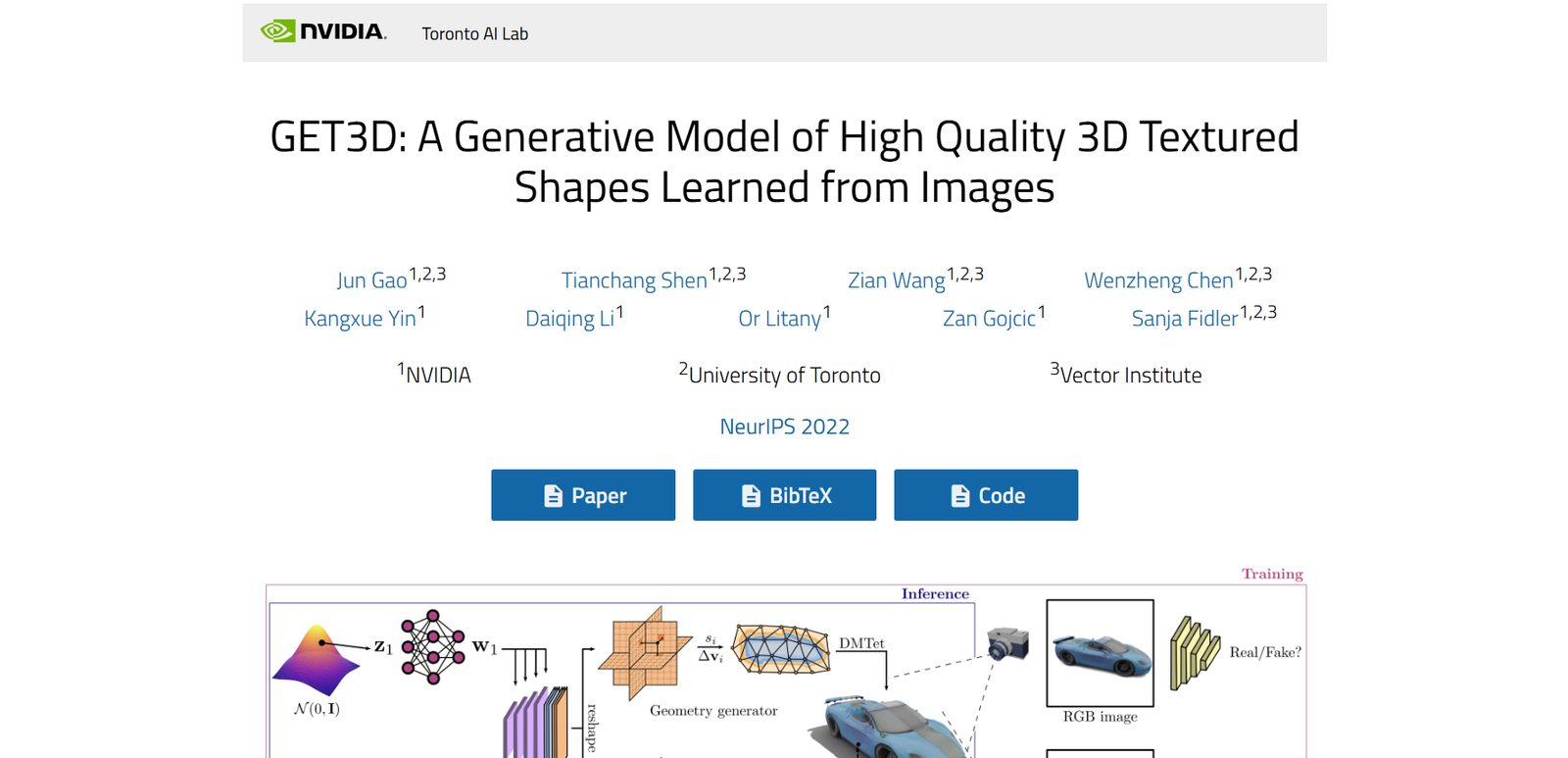
NVIDIA Research regularly publishes in top-tier conferences such as NeurIPS, CVPR, SIGGRAPH, and ICML. Their breakthroughs power developments in generative AI, neural rendering, autonomous systems, and quantum computing.
Features
NVIDIA Research is not a product platform, but rather a multi-disciplinary R&D hub. Its most prominent features and initiatives include:
Cutting-Edge AI Research: Deep work in generative models, transformers, foundation models, and large-scale training methods.
Neural Rendering and Graphics: Development of real-time path tracing, neural radiance fields (NeRF), and 3D reconstruction technologies.
Digital Humans and Avatars: Research into realistic avatars, face animation, speech synthesis, and emotion-aware agents.
Robotics and Autonomous Systems: Creation of AI policies for robot control, manipulation, and navigation using simulation and real-world testing.
Simulation and Omniverse Integration: Realistic simulation for training AI agents and digital twins in NVIDIA’s Omniverse platform.
AI for Science: Research into molecular dynamics, protein folding, weather modeling, and digital biology through accelerated computing.
Hardware Architecture and Systems: Innovation in GPU architecture, AI accelerators, high-bandwidth memory systems, and data center-scale systems.
Quantum Computing: Investigation into hybrid quantum-classical computing and quantum algorithms using NVIDIA cuQuantum.
Open Research and Collaboration: Publication of research papers, open-source tools, datasets, and academic partnerships around the globe.
How It Works
NVIDIA Research operates through a global network of specialized labs and collaborative teams focused on solving long-term, high-impact challenges. Research topics are chosen based on both theoretical importance and practical application, with projects often resulting in publications, patents, or new features in NVIDIA products.
The process generally follows a cycle:
Identify core problems in AI, graphics, or computing.
Develop novel algorithms and architectures.
Validate through rigorous experimentation and simulation.
Publish results and collaborate with academic institutions.
Integrate successful innovations into NVIDIA’s development stack or open-source them.
NVIDIA Research relies heavily on its own ecosystem of tools, such as CUDA, TensorRT, and RTX GPUs, along with external frameworks like PyTorch and JAX. Their work frequently feeds directly into enterprise products, SDKs, and developer tools used by companies, governments, and universities worldwide.
Use Cases
While NVIDIA Research does not directly produce consumer tools, its innovations power critical advancements in multiple industries.
Autonomous Vehicles: Research in sensor fusion, perception, planning, and simulation fuels NVIDIA DRIVE, the company’s autonomous driving platform.
AI-Generated Content: Generative adversarial networks (GANs), style transfer, and neural rendering techniques enable content creation tools in Omniverse and other platforms.
Healthcare and Life Sciences: Accelerated computing and AI models are applied to drug discovery, genomics, and medical imaging.
Robotics: AI policies and simulation environments contribute to physical robotics, drone navigation, and warehouse automation.
Climate Modeling: Research in AI for climate and weather predictions assists scientists in developing better forecasting models using deep learning.
Digital Twins: NVIDIA Research supports digital twin development in industrial simulations and smart cities via Omniverse technologies.
Quantum Simulation: Tools like cuQuantum and research into quantum simulation help lay the groundwork for the future of computing.
Pricing
NVIDIA Research does not offer commercial pricing because it is a non-commercial research division. However, many of its outputs influence or become part of NVIDIA’s product offerings, such as:
NVIDIA Omniverse (pricing available on NVIDIA’s Omniverse website)
NVIDIA DGX systems for enterprise AI workloads
NVIDIA cuQuantum for quantum simulation (available through the NVIDIA Developer program)
Researchers and developers can freely access papers, demos, open-source libraries, and datasets published by NVIDIA Research at https://research.nvidia.com/publications.
Strengths
NVIDIA Research is widely recognized as a global leader in technological innovation, with several key strengths:
Scientific Leadership: Regularly publishes award-winning papers at the most prestigious conferences in AI, graphics, and HPC.
Industry Impact: Research outputs are directly translated into NVIDIA’s commercial platforms, ensuring real-world application.
Cross-Disciplinary Expertise: Covers a wide spectrum of fields from robotics and chemistry to quantum physics and visual computing.
Open Collaboration: Maintains strong ties with top universities and contributes significantly to the open-source and academic communities.
High-Performance Infrastructure: Backed by NVIDIA’s GPU compute power and developer ecosystem, enabling unmatched scale and performance.
Long-Term Vision: Focuses on foundational research that anticipates future trends and sets the stage for the next generation of computing.
Drawbacks
As a research division rather than a commercial product, NVIDIA Research may not be directly accessible or relevant for every user or organization.
No Consumer-Facing Tools: Most innovations are embedded into NVIDIA’s platforms or require developer-level knowledge to implement.
Technical Complexity: Leveraging NVIDIA Research output often requires deep expertise in AI, programming, or engineering.
Long Lead Times: Some breakthroughs are still in experimental stages and may take years before integration into mainstream tools.
Limited Direct Support: There is no product-based customer service; collaboration typically occurs through research partnerships or developer programs.
Enterprise Orientation: Most research is geared toward solving problems at scale, which may not translate to small-scale or hobbyist applications.
Comparison with Other Research Labs
NVIDIA Research stands alongside other elite AI and computing research institutions such as:
Google DeepMind: Focuses on general AI, protein folding, and game-based learning.
Meta AI Research: Specializes in LLMs, computer vision, and embodied AI.
OpenAI: Known for generative models like GPT and DALL·E.
Microsoft Research: Active in software engineering, cloud, and enterprise AI.
What sets NVIDIA Research apart is its strong integration of research into high-performance hardware and its ability to scale innovations into deployable enterprise tools like GPUs, simulation platforms, and AI SDKs. It blends hardware and software research uniquely, with breakthroughs appearing across the stack—from microarchitecture to user-facing applications.
Customer Reviews and Testimonials
Being a research institution, NVIDIA Research does not collect or publish customer reviews. However, its impact is reflected in:
High citation rates across AI and computer graphics literature
Industry partnerships with automotive, medical, and tech companies
Adoption of its technologies in NVIDIA’s core product lines
Researchers from academia frequently collaborate with NVIDIA Research and cite its resources in peer-reviewed journals. Its tools and models are regularly referenced in developer communities, GitHub projects, and conference proceedings.
For firsthand feedback, the best sources are academic publications, NVIDIA’s developer forums, and presentations at major industry conferences like GTC, SIGGRAPH, and NeurIPS.
Conclusion
NVIDIA Research is one of the most influential technology R&D organizations in the world. By pushing the boundaries in AI, graphics, quantum computing, and high-performance systems, it shapes the future of NVIDIA’s platforms while contributing to the global research community.
Although it doesn’t offer direct products or pricing, its innovations are foundational to many of the tools used by AI practitioners, developers, and scientists today. Whether you’re building digital humans, simulating molecular interactions, or training large language models, NVIDIA Research is likely influencing the capabilities of the tools you rely on.