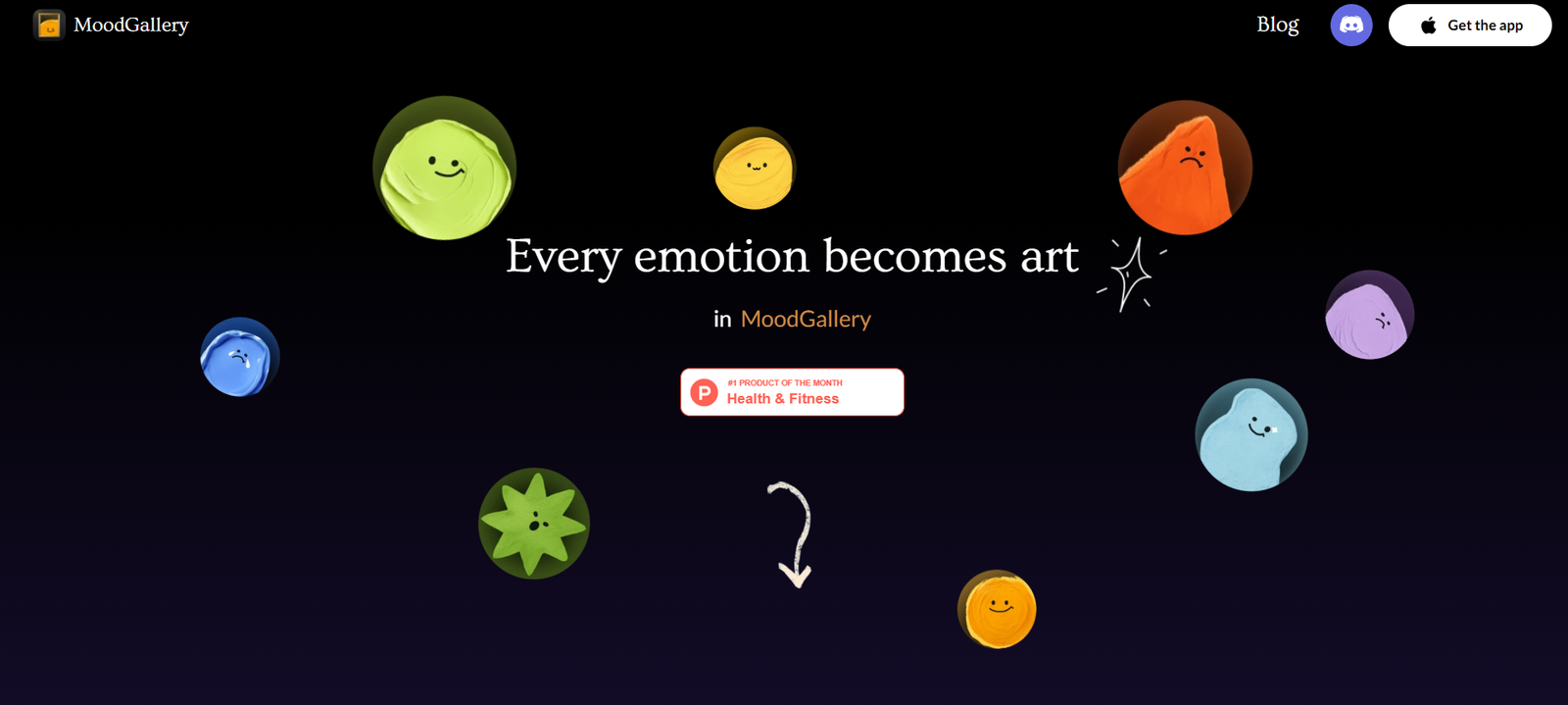
MoodGallery is a mobile and web-based journaling app that uses artificial intelligence to convert your emotions into personalized visual art. Instead of writing long entries, you simply reflect on how you’re feeling, select your mood, and let the AI create a visual representation of it.
This visual journal becomes a gallery of emotions, allowing you to track how you’ve been feeling over time through artwork. It’s a blend of emotional expression, self-reflection, and aesthetic creativity—crafted for users who may find traditional journaling overwhelming, or who are seeking a more engaging and artistic way to connect with their inner world.
MoodGallery isn’t a mental health diagnosis tool. Rather, it’s an emotional companion that promotes regular check-ins and self-understanding through art, accessible to all users regardless of age or journaling experience.
Features
MoodGallery focuses on combining simplicity with emotional depth through AI-powered features that are both user-friendly and impactful.
At the heart of the app is the AI Mood Visualization Engine. Users log how they feel using a mood scale, and the AI instantly generates a piece of art that reflects their emotional state. This creates a unique and personal visual diary over time.
The Emotion Gallery is a timeline-style feed where all your generated mood visuals are stored. Each entry includes the mood, date, and optionally, a few words or notes. This provides a powerful visual history of your emotional journey.
Users are encouraged to check in daily or whenever they feel the need. These micro-reflections create a gentle habit of mindfulness and self-awareness without requiring long writing sessions.
The interface is minimalist and soothing, designed to help users feel calm and comfortable while using the app. It emphasizes beauty and emotion over data or analytics.
Each mood art piece is generated using cutting-edge generative AI models. These models are trained to translate mood inputs into visual representations, creating images that feel emotionally resonant.
Users can download or share their artworks if they wish. However, everything remains private by default unless a user chooses to share.
MoodGallery is available on both desktop and mobile browsers. A dedicated mobile app is planned for future release, enhancing accessibility and daily use.
How It Works
Using MoodGallery takes less than a minute per session, but its impact can be long-lasting.
First, users visit the MoodGallery app and select how they’re feeling from a simple mood scale. This can range from joyful and calm to sad, anxious, or frustrated.
They can optionally add a short note describing the context or reason for the mood. This is not required but can add personal context to each entry.
Once the mood is selected, the AI generates a piece of visual art that reflects the chosen emotion. Each artwork is completely unique and personalized.
The final image is stored in the user’s personal gallery, along with the date and mood label. Users can view past entries as a visual timeline of their emotional life.
This quick and engaging process encourages consistency while providing a safe, creative space for emotional reflection.
Use Cases
MoodGallery serves a diverse range of users who benefit from visual journaling in different ways.
Users managing stress or anxiety find it helpful to log their emotions without needing to write detailed reflections. The visual aspect makes it feel lighter and more engaging.
Creative professionals use MoodGallery to stay emotionally aware and use their mood art as inspiration for personal or professional work.
Teens and young adults enjoy the creative and visual nature of the tool, making emotional awareness more approachable and less clinical.
Busy professionals use it for quick check-ins throughout the week, helping them stay in tune with their mental state without lengthy journaling.
People in therapy or counseling may use it as a complementary tool to share visual representations of how they’ve been feeling between sessions.
Mindfulness practitioners incorporate MoodGallery into their self-awareness routines, using the app as a digital reflection tool.
Pricing
MoodGallery is currently free to use during its public beta phase. Users can create as many mood entries as they want and generate unlimited AI artwork.
According to the official website, premium plans may be introduced in the future, offering features such as:
High-resolution downloads
Customizable themes or art styles
Enhanced privacy controls
Advanced mood analytics
Integration with calendars or health tools
However, no pricing details have been made public as of now. Users are encouraged to sign up early and be part of the beta community to enjoy full access before any paid tiers are implemented.
All mood entries are stored securely, and users retain full control over their data.
Strengths
MoodGallery transforms emotional journaling into a creative, engaging experience that appeals to both the reflective and the visually inclined.
It removes barriers often associated with journaling—like not knowing what to write or having limited time—by simplifying the process to just a few taps and visual output.
Its unique value lies in the way it makes emotions visible. The gallery allows users to look back not just on how they felt, but on how those feelings looked, offering a new dimension of self-understanding.
The minimalist design and calm tone of the app make it a welcoming space for all users, regardless of their mental health background.
By focusing on daily micro-reflection rather than deep analysis, MoodGallery supports mental wellness in a gentle, non-invasive way.
Drawbacks
MoodGallery is primarily focused on visual journaling and does not currently offer text-heavy journaling features or long-form reflection space.
There is no clinical analysis or mood tracking dashboard beyond the emotion gallery, which may limit its appeal to users seeking detailed insights.
The tool does not currently integrate with wearable devices, calendars, or third-party wellness platforms.
Since the mobile app has not yet been released, users must access it through a browser, which could be a limitation for those who prefer app-based experiences.
Premium features and pricing structures have not yet been defined, making long-term planning or comparisons difficult.
Comparison with Other Tools
MoodGallery occupies a unique space between mood tracking, journaling, and art therapy. Unlike traditional journaling tools such as Day One or Reflectly, it does not focus on writing or structured prompts.
Compared to mental wellness apps like Moodpath or Youper, MoodGallery does not offer diagnostic insights or coaching. Its strength lies in emotional expression rather than clinical evaluation.
Its use of generative AI to create mood-based visuals is one of the most innovative features in the mental wellness space. While similar AI art platforms exist, none are built around emotional tracking the way MoodGallery is.
It’s best suited for users looking for a creative and emotionally intuitive journaling experience rather than data-heavy mood tracking or structured mental health support.
Customer Reviews and Testimonials
The official website does not currently feature a testimonials section. However, early adopters and beta users are encouraged to share their experiences directly with the team.
The app’s calming interface and unique concept have started gaining attention on social media platforms, with users sharing their mood artworks and praising the emotionally resonant visuals.
As MoodGallery continues to grow, it is likely to develop a strong community of creative-minded users who value emotional expression through art.
Conclusion
MoodGallery is redefining digital journaling by turning emotions into art. This AI-powered tool offers a beautiful, creative way to check in with yourself, reflect on your feelings, and build a visual history of your emotional journey.
By simplifying journaling into a visually rewarding, low-effort experience, MoodGallery makes emotional awareness more engaging and less intimidating. It’s ideal for anyone looking to incorporate mindfulness, creativity, and emotional reflection into their daily routine—without the pressure of words.