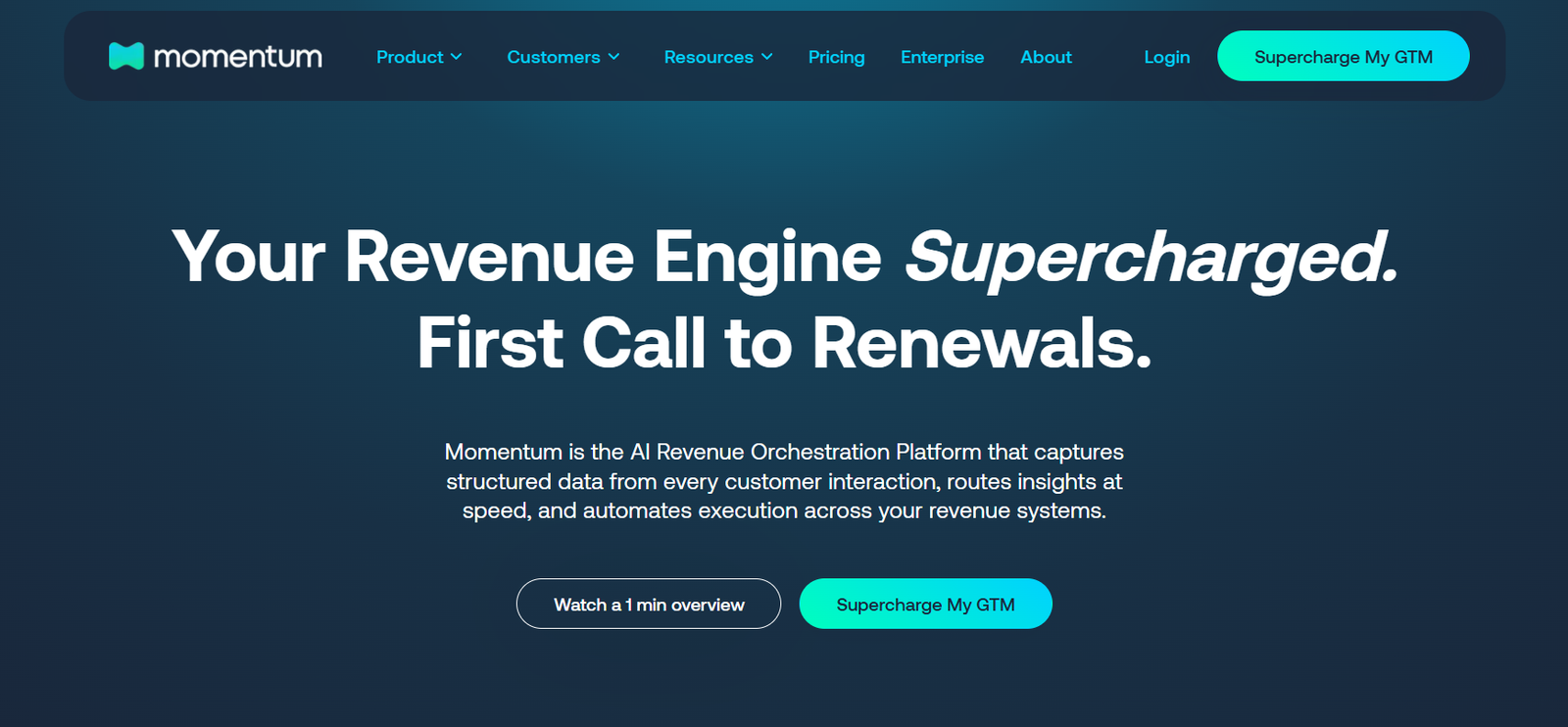
Momentum is an AI-powered sales collaboration and revenue operations platform designed to bring speed, automation, and consistency to modern go-to-market (GTM) teams. Built specifically for B2B companies using Slack and Salesforce, Momentum streamlines sales processes by integrating communication, deal tracking, and task automation—all within the tools sales teams already use every day.
With sales cycles becoming more complex and distributed, Momentum gives teams a central nervous system for deals—enabling real-time collaboration, intelligent alerts, and seamless CRM updates that eliminate manual work. The result is faster deal cycles, cleaner CRM data, and better alignment across sales, RevOps, customer success, and executive leadership.
Features of Momentum
Slack-First Deal Collaboration
Momentum natively integrates into Slack, creating dedicated channels for deals and automatically posting updates, alerts, and task reminders. This allows sales teams to collaborate on opportunities where they already communicate.
AI-Powered Deal Rooms
Automatically generated “deal rooms” in Slack bring together AEs, SEs, managers, and RevOps around a specific opportunity—centralizing communication, context, and accountability.
CRM Syncing and Automation
Momentum integrates deeply with Salesforce (and other CRMs via API), ensuring that actions in Slack—like updates, notes, or stage changes—are reflected instantly in your CRM.
Smart Alerts and Playbooks
Users can define custom triggers (e.g., deal stage changes, time since last activity, forecast adjustments) and launch automated workflows like task creation, internal alerts, or template messaging.
Gong and Chorus Integrations
Integrate conversation intelligence from platforms like Gong and Chorus to automatically surface insights, action items, and coaching moments inside Slack.
Approval Workflows
Enable RevOps and leadership to create approval workflows for discounts, legal reviews, and pricing—triggered based on deal conditions.
Post-Sales Handoff Automation
Once a deal is closed, Momentum automates customer handoff tasks—like notifying implementation teams, collecting customer info, and syncing with onboarding systems.
Analytics and Reporting
Track metrics like deal velocity, touchpoints, stuck deals, and process compliance directly through Momentum’s dashboards or connected BI tools.
Security and Compliance
Enterprise-grade security including SSO, audit logs, SOC 2 compliance, and permissioned access to data.
How Momentum Works
Connect Slack and CRM
After connecting your Salesforce instance and Slack workspace, Momentum starts pulling in deal data and syncing activity.Enable Deal Rooms
As opportunities progress, Momentum creates or updates Slack deal channels, populating them with relevant data, alerts, and team members.Define Playbooks and Workflows
Teams can set up workflows for deal reviews, approval requests, forecast changes, and onboarding handoffs—triggered by real-time events.Automate Updates and Collaboration
When a rep moves a deal to a new stage, logs a call in Gong, or misses a meeting, Momentum posts the update to Slack, triggers alerts, or schedules tasks automatically.Analyze and Iterate
Leadership can review win/loss patterns, deal cycle bottlenecks, and CRM hygiene based on behavior captured through Momentum.
Use Cases for Momentum
Revenue Operations Automation
RevOps teams use Momentum to eliminate manual tasks like pipeline review updates, approval tracking, and reporting.
Sales Collaboration and Coaching
Momentum’s Slack-native deal rooms promote collaboration between reps, managers, and SEs, while surfacing coaching insights from Gong or Chorus.
Pipeline and Forecast Accuracy
Momentum alerts users to deals at risk, changes in value or close dates, and pipeline shifts—improving forecast visibility and actionability.
Post-Sale Workflow Automation
Streamlines the handoff from sales to onboarding and customer success teams through structured workflows and Slack notifications.
Legal and Finance Approvals
Trigger automated approval requests for redlines, pricing exceptions, and procurement tasks based on deal stage or size.
Customer Lifecycle Integration
Syncs with tools like Gainsight, Asana, or Notion to keep the customer lifecycle consistent and data-rich across teams.
Pricing of Momentum
As of June 2025, Momentum offers custom pricing based on team size, features, and integrations. While pricing isn’t published publicly, plans typically consider:
Number of users (especially sales and RevOps team members)
CRM and third-party tool integrations (e.g., Salesforce, Gong, Slack)
Custom workflow requirements
Volume of automated processes and data syncs
Support and onboarding needs
To get a quote, companies can request a personalized demo and consultation via the official website: https://www.momentum.io.
Strengths of Momentum
Seamless Slack-first experience reduces context switching for sales teams
Deep Salesforce integration keeps CRM updated automatically
Powerful workflow automation reduces RevOps workload
Smart alerts help teams respond quickly to deal risk or stage changes
Enhances pipeline visibility and forecasting accuracy
Customizable to fit GTM processes across industries
Easy onboarding and intuitive interface for busy sales teams
Drawbacks of Momentum
Slack-centric design may be less beneficial to organizations not using Slack
Requires integration setup with Salesforce and other platforms
Primarily focused on mid-to-large GTM teams; less suited for solo users
As a relatively new platform, some advanced analytics features are still maturing
No native mobile app—relies on Slack mobile capabilities for on-the-go access
Comparison with Other Tools
Momentum vs. Clari
Clari offers AI-based forecasting and pipeline intelligence. Momentum focuses more on workflow automation and collaboration within Slack.
Momentum vs. Troops (now part of Salesforce)
Both integrate with Slack and Salesforce, but Momentum offers richer automation and custom workflows tailored to RevOps teams.
Momentum vs. Gong/Chorus
Gong and Chorus focus on conversation intelligence. Momentum pulls insights from those tools and operationalizes them in Slack and CRM workflows.
Momentum vs. Asana or Monday.com
While Asana and Monday are generic workflow tools, Momentum is purpose-built for sales and RevOps, integrating deeply with CRM and sales tools.
Customer Reviews and Testimonials
Momentum is widely praised for increasing team productivity and reducing deal friction:
“Momentum keeps our deals moving and our team in sync. It’s the missing piece in our GTM tech stack.” – VP of Sales, Series B SaaS Company
“It saves hours of manual work each week and keeps our pipeline up-to-date automatically.” – Head of RevOps, Mid-Market Tech Firm
“Momentum gives us real-time visibility into stuck deals and helps us collaborate faster across departments.” – Sales Manager, Enterprise Software Provider
Momentum has been featured on Product Hunt and is trusted by high-growth SaaS teams scaling their sales motions.
Conclusion
Momentum is more than just another sales tool—it’s a real-time automation engine and collaboration layer for modern B2B go-to-market teams. By embedding sales workflows into Slack and syncing directly with Salesforce, Momentum helps teams accelerate deal cycles, clean up their CRM, and keep everyone aligned across sales, RevOps, marketing, and customer success.
For growing SaaS companies, revenue teams, or anyone tired of copy-pasting updates between tools, Momentum offers a smarter, faster way to work—all powered by AI, automation, and collaboration.