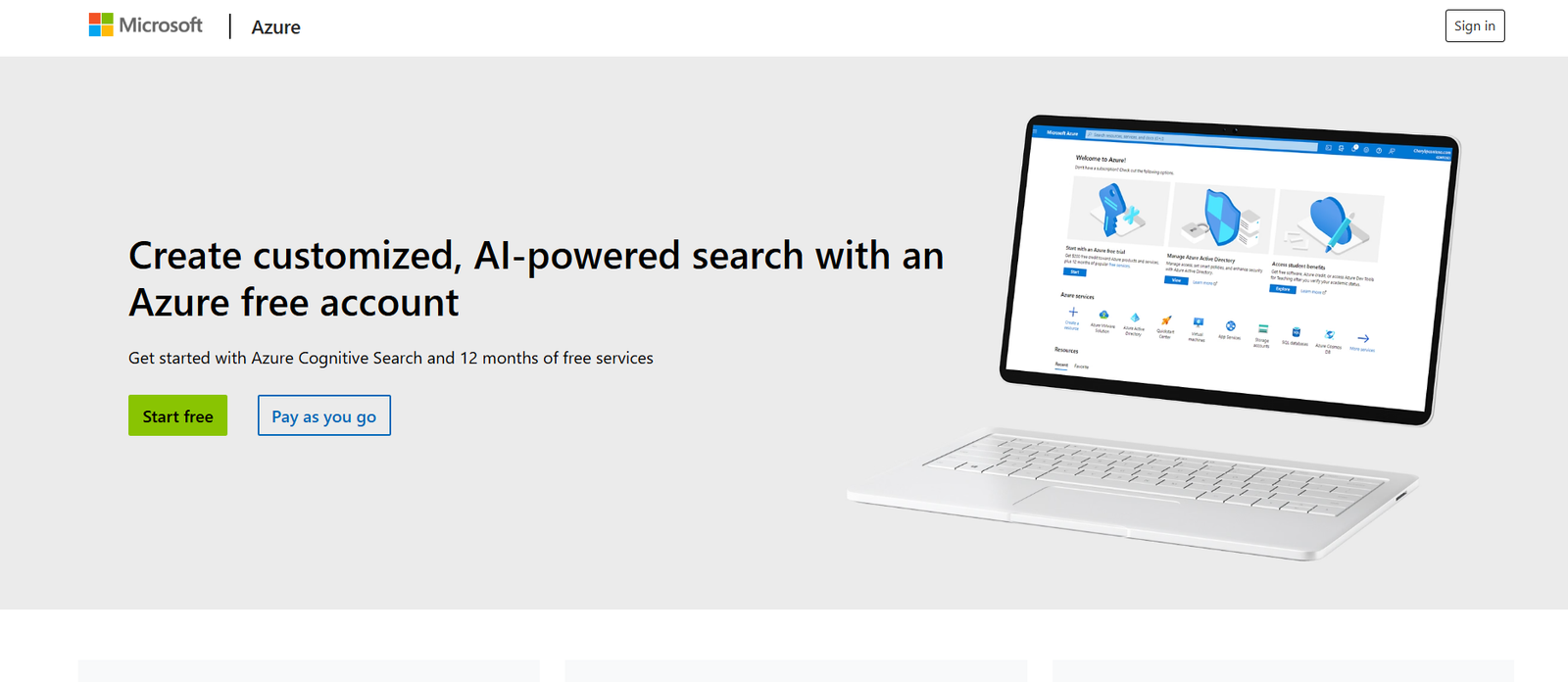
Microsoft Azure is a leading global cloud computing platform and infrastructure developed by Microsoft. It offers a broad set of solutions, including virtual machines, databases, AI services, developer tools, analytics, networking, and storage—all delivered through Microsoft-managed data centers across the world.
Azure enables organizations to build, manage, and deploy applications using a range of tools and frameworks, making it suitable for enterprises, startups, government agencies, and individual developers alike. As one of the “big three” cloud providers (alongside Amazon Web Services and Google Cloud), Microsoft Azure stands out for its enterprise integration, hybrid cloud capabilities, and compliance certifications.
Features of Microsoft Azure
Compute Services
Azure offers a wide variety of computing services such as Virtual Machines, Azure Kubernetes Service (AKS), App Services, and Functions (serverless computing) to host and run applications reliably and securely.
AI and Machine Learning
Azure provides a full suite of AI tools via Azure AI Services like Azure OpenAI, Azure Cognitive Services, and Azure Machine Learning. These services help teams embed intelligence into applications using pre-trained models and custom AI workflows.
Data and Analytics
Azure supports powerful analytics tools, including Azure Synapse Analytics, Azure Data Lake, Power BI integration, and Azure Data Factory for data movement and transformation.
DevOps and Developer Tools
Developers can leverage Azure DevOps for continuous integration/continuous delivery (CI/CD), GitHub Actions integration, and Visual Studio tools for cloud-native development.
Networking Services
Azure’s networking offerings include Azure Virtual Network, Load Balancer, VPN Gateway, ExpressRoute, and Azure DNS, providing the foundation for secure and scalable cloud infrastructure.
Storage
With services like Azure Blob Storage, File Storage, Disk Storage, and Archive Storage, Azure offers redundant, geo-distributed data storage with encryption and high availability.
Databases
Azure supports a range of databases, including Azure SQL Database, Cosmos DB (NoSQL), PostgreSQL, MySQL, and MariaDB, enabling scalable and managed database solutions.
Hybrid Cloud and Edge
Azure’s Hybrid capabilities with Azure Arc, Azure Stack, and Azure IoT enable businesses to manage data and services across cloud and on-premise environments seamlessly.
Security and Compliance
Azure includes built-in security services like Azure Security Center, Microsoft Defender for Cloud, and identity management via Azure Active Directory (AD). It meets a wide array of global compliance standards including ISO, HIPAA, FedRAMP, GDPR, and more.
How Microsoft Azure Works
Create an Azure Account
Users sign up through https://azure.microsoft.com and gain access to the Azure Portal for managing services and subscriptions.Choose Services and Resources
Depending on business needs, users select from over 200 Azure services, including compute, database, AI, storage, and networking options.Deploy Resources
Azure allows deployment through the portal, Azure CLI, PowerShell, or ARM templates, enabling consistent infrastructure-as-code practices.Monitor and Scale
Azure Monitor and Azure Autoscale allow teams to observe performance, configure alerts, and dynamically scale resources based on traffic or load.Secure and Manage
Use Azure AD, role-based access control (RBAC), and policy enforcement to manage user access and governance.
Use Cases for Microsoft Azure
Enterprise Application Hosting
Azure provides scalable infrastructure for hosting mission-critical enterprise applications, ERP systems, and databases, with robust SLAs and disaster recovery options.
AI and Machine Learning Projects
Leverage Azure Machine Learning, Azure OpenAI Service, and data pipelines to train, deploy, and monitor AI models with ease.
DevOps and Agile Development
Azure DevOps supports version control, CI/CD pipelines, automated testing, and environment management—enabling fast and reliable software delivery.
Data Analytics and Warehousing
Azure Synapse and Power BI integration enable real-time analytics, big data processing, and reporting for enterprise-level insights.
Hybrid Cloud Infrastructure
Businesses with both cloud and on-prem systems can unify operations using Azure Arc, managing resources across environments from a single dashboard.
Backup and Disaster Recovery
Azure provides cost-effective solutions like Azure Backup and Site Recovery to ensure business continuity.
Web and Mobile App Hosting
From static web apps to scalable APIs, Azure App Service offers developers the tools to build, deploy, and maintain apps efficiently.
Pricing of Microsoft Azure
Azure uses a pay-as-you-go pricing model with free tiers, reserved instances, and enterprise agreements. Here’s a breakdown of typical cost structures:
Free Tier
12 months of free services (e.g., Virtual Machines, SQL Database, Blob Storage)
Always-free services like Azure Functions and Cosmos DB (with usage caps)
$200 free credit for the first 30 days
Pay-As-You-Go
Charges based on actual usage per service (e.g., per compute hour, per GB stored)
No upfront commitment or termination fees
Reserved Instances
Commit to 1- or 3-year plans to save up to 72% compared to on-demand pricing
Ideal for predictable workloads
Enterprise Agreements
Tailored contracts for large organizations with usage-based discounts, support, and billing flexibility
You can estimate costs using the Azure Pricing Calculator.
Strengths of Microsoft Azure
Deep integration with Microsoft products (e.g., Office 365, Dynamics 365, Power Platform)
Comprehensive service portfolio covering AI, analytics, storage, compute, and networking
Enterprise-ready with strong security, compliance, and hybrid cloud capabilities
Rich developer ecosystem and tool support (Visual Studio, GitHub, Azure DevOps)
Extensive global data center presence in over 60 regions
Powerful AI services including integration with OpenAI
Transparent pricing and flexible plans for businesses of all sizes
Drawbacks of Microsoft Azure
Steeper learning curve for users new to cloud computing or Microsoft’s ecosystem
Complexity in cost management across numerous services and SKUs
Some services may not be available in all regions
Pricing for advanced AI or analytics workloads can be high
Enterprise features may require Microsoft-specific tools and infrastructure familiarity
Comparison with Other Tools
Azure vs. AWS
AWS has a broader service catalog and earlier market entry. Azure offers tighter integration with Microsoft products and better hybrid cloud solutions via Azure Arc and Stack.
Azure vs. Google Cloud
Google Cloud excels in AI/ML innovation and developer-friendly tools. Azure provides greater enterprise tooling, stronger identity management, and more data residency options.
Azure vs. IBM Cloud
IBM Cloud focuses on legacy system integration and niche enterprise use cases. Azure is more versatile and developer-friendly with a larger global footprint.
Customer Reviews and Testimonials
Microsoft Azure has earned strong reviews from enterprise and mid-size users alike:
“Azure gave us a single platform to host applications, manage databases, and integrate AI—all under one subscription.”
— CTO, Enterprise Retail Firm
“With Azure DevOps, we reduced our deployment time from days to minutes. The CI/CD process is seamless.”
— Lead Developer, SaaS Startup
“Azure’s hybrid model allowed us to keep sensitive data on-prem while leveraging the scalability of the cloud.”
— IT Manager, Government Agency
Azure also maintains high ratings on platforms such as G2 and Gartner Peer Insights.
Conclusion
Microsoft Azure is a robust, enterprise-grade cloud platform that supports organizations at every stage of their digital transformation. With its broad portfolio of services, intelligent automation tools, and hybrid cloud capabilities, Azure enables businesses to innovate faster, scale globally, and operate securely.
Whether you’re migrating existing systems, building new applications, or exploring AI-driven experiences, Microsoft Azure provides a trusted and scalable environment to do it all—backed by Microsoft’s decades of enterprise expertise.