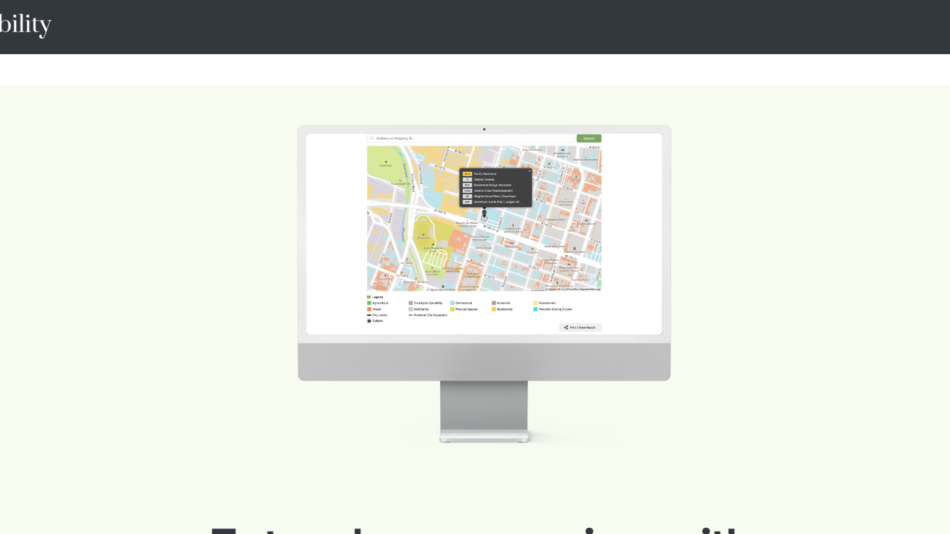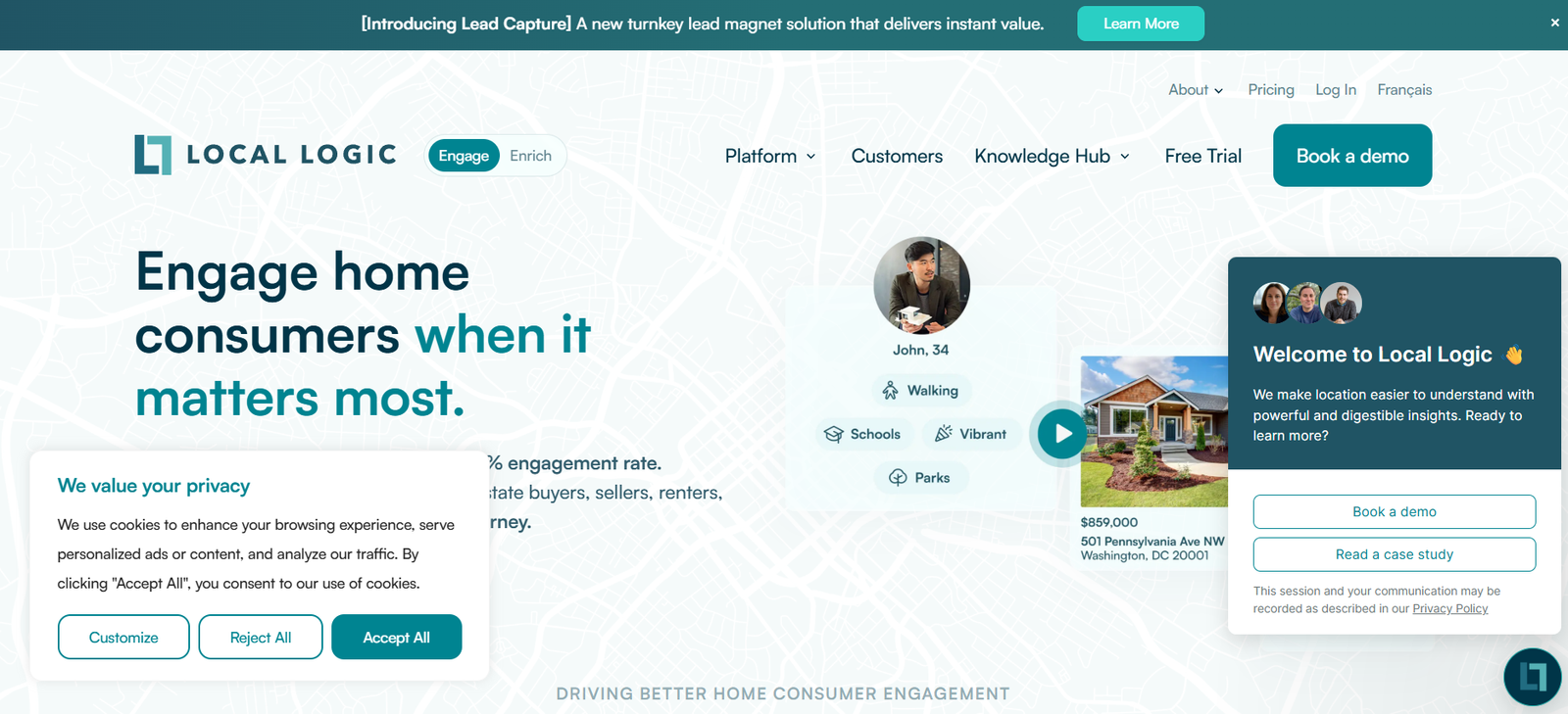
Local Logic is a location intelligence platform that provides data-driven insights into the characteristics of neighborhoods, cities, and individual properties. Designed for real estate professionals, developers, investors, and digital marketplaces, Local Logic transforms raw location data into meaningful analytics to support smarter property decisions.
Using over 85 billion data points and advanced AI models, Local Logic helps users understand how location impacts property value, livability, walkability, access to transit, demographics, and more. It offers solutions for both B2B real estate companies and property technology (proptech) platforms looking to enrich their user experience with hyper-local information.
Local Logic brings transparency and standardization to location data, helping professionals quantify what makes a place desirable—and why it matters for real estate outcomes.
Features
1. Location Scores
Each address is scored across multiple lifestyle factors such as walkability, transit, parks, retail, schools, and quietness.
2. Neighborhood Profiles
Detailed information about nearby amenities, infrastructure, and lifestyle attributes—used to assess the suitability of a property.
3. Location Reports
AI-generated reports with demographic trends, land use, development potential, and urban context—ideal for developers and planners.
4. API and Data Integration
Local Logic’s API allows websites and apps to integrate location scores, neighborhood data, and maps directly into their platforms.
5. Local Search Widgets
Customizable widgets to embed location insights into real estate listings and search pages, improving user experience and engagement.
6. Market Analytics
Use predictive location insights to inform development strategy, site selection, or portfolio optimization.
7. Demographic Data Layers
Access population growth, household income, age distribution, education levels, and more—mapped at the neighborhood level.
8. Real Estate Use Cases
Tailored tools for agents, brokerages, developers, and listing platforms to surface local context and drive conversions.
9. Sustainable Location Metrics
Evaluate environmental and social indicators, including access to green space, sustainable mobility options, and emissions.
10. Urban Planning Intelligence
Support land use planning, zoning decisions, and community design by analyzing how people interact with physical environments.
How It Works
Data Collection
Local Logic aggregates and analyzes massive amounts of public and proprietary data from urban infrastructure, mobility networks, demographics, land use, and more.AI-Driven Modeling
AI and geospatial modeling transform raw data into location scores and analytics for over 250 million locations across North America.Platform Access or API Use
Clients can use Local Logic’s dashboard to access insights directly or embed its data into websites, apps, CRMs, and analytics tools via API.Real-Time Location Intelligence
As users interact with properties or maps, Local Logic dynamically displays the surrounding amenities, lifestyle scores, and market insights.Customization for Business Needs
Enterprises can customize the data outputs, integrate into user workflows, and align insights with internal models and property evaluations.
Use Cases
1. Real Estate Portals and Marketplaces
Improve home search experience with location scores, amenity maps, and neighborhood guides to help users make better decisions.
2. Real Estate Developers
Assess multiple locations at scale based on demographics, zoning, infrastructure, and livability to choose the best sites.
3. Real Estate Brokers and Agents
Differentiate listings by adding hyper-local context that appeals to buyers and sellers focused on lifestyle fit.
4. Urban Planners and Governments
Use land use data and location insights to inform zoning, transportation, and urban design policies.
5. Institutional Investors
Evaluate market potential and neighborhood trends when assessing multifamily, office, or retail investments.
6. PropTech Platforms
Enhance user engagement and lead quality by embedding Local Logic’s location insights into digital tools and applications.
Pricing
Local Logic does not publicly display its pricing on the website. Pricing is customized based on:
Type of client (developer, brokerage, marketplace, etc.)
Use case (API, widgets, dashboard access)
Geographic coverage required
Data volume and frequency of use
Enterprise features (custom reporting, integrations)
To get a tailored quote or schedule a product demo, interested businesses can contact Local Logic directly at:
https://locallogic.co/contact
Free Trial or Demo:
Available upon request for qualified businesses and platforms.
Strengths
1. Deep Location Insight
Offers unparalleled depth in neighborhood analytics, lifestyle data, and urban context.
2. AI-Driven and Scalable
Processes massive datasets using AI, delivering consistent and scalable outputs across markets.
3. Wide Industry Applications
Supports real estate, urban planning, development, investment, and proptech platforms.
4. Easy Integration via API
Data can be easily embedded in listings, apps, and internal systems using APIs and widgets.
5. Helps Visualize Intangible Value
Quantifies non-obvious factors like “quietness,” “vibrancy,” or “transit accessibility,” helping users make smarter decisions.
Drawbacks
1. No Self-Serve Pricing or Plans
Requires direct consultation to get started, which may delay onboarding for small teams or startups.
2. Not Consumer-Facing
Local Logic is a B2B tool—homebuyers or renters can’t directly use the platform without accessing it through a partner site.
3. Geographic Expansion May Vary
Although focused on North America, some international markets or rural areas may have less detailed coverage.
Comparison with Other Tools
Local Logic vs. Walk Score
Walk Score provides walkability, transit, and bike scores but offers limited depth and no development or demographic insights. Local Logic is far more comprehensive.
Local Logic vs. Placer.ai
Placer.ai focuses on foot traffic analytics and consumer behavior for commercial real estate. Local Logic focuses on location characteristics and urban context.
Local Logic vs. Reonomy
Reonomy offers ownership, sales, and property data for commercial real estate. Local Logic provides location-based context to evaluate the surrounding area.
Customer Reviews and Testimonials
Local Logic is trusted by top real estate portals and developers across North America, including Realtor.com, Redfin, and CoreLogic.
Client Feedback Includes:
“Local Logic helps our users understand not just the home, but the neighborhood.”
“We use Local Logic to prioritize development sites based on transit, amenities, and long-term livability.”
“It adds depth to our listings, giving us a competitive edge.”
While user reviews on public platforms like G2 or Capterra are limited, case studies and testimonials on Local Logic’s website highlight its strong impact across use cases.
Conclusion
Local Logic is a powerful location intelligence platform that enables real estate professionals and platforms to understand the full context of a property beyond its walls. By quantifying how neighborhoods function and how people experience them, Local Logic empowers better decision-making, improved customer engagement, and smarter investments.
Whether you’re a developer selecting your next site, a brokerage enhancing your listings, or a proptech company looking to enrich your platform, Local Logic delivers high-value insights that drive results.