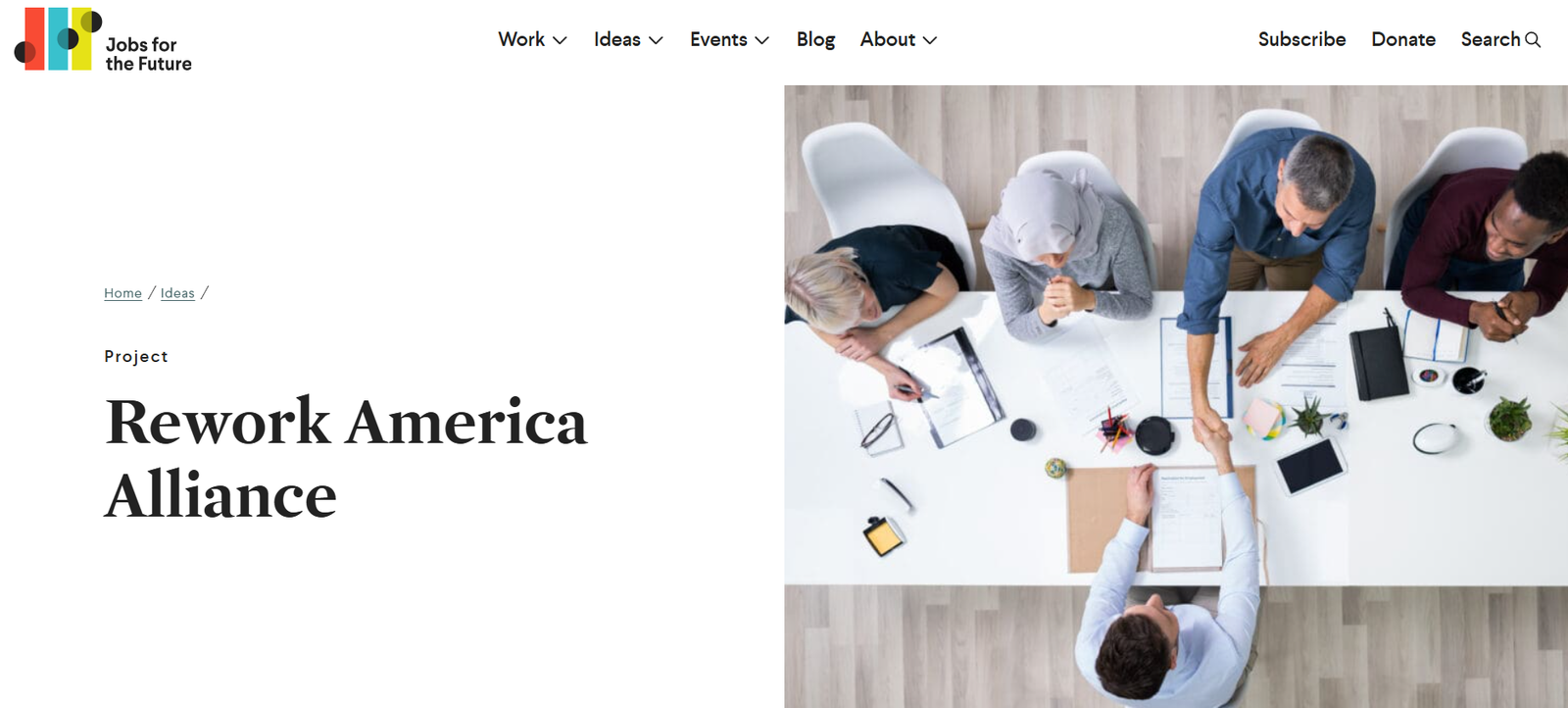
JFF, or Jobs for the Future, is a national nonprofit organization focused on transforming the American education and workforce systems to promote equitable economic advancement. Founded in 1983, JFF partners with educators, employers, policymakers, and community organizations to design solutions that create access to quality education and good jobs for all, particularly underserved populations.
With a mission to drive equitable economic mobility, JFF develops and scales strategies that combine education, career development, and employer engagement. The organization works across a variety of sectors including K–12, postsecondary education, workforce development, and career pathways to ensure more people gain the skills and credentials needed for in-demand careers.
Headquartered in Boston, JFF operates nationally and plays a pivotal role in influencing workforce and education policy, funding innovation, and convening thought leaders across sectors.
Features
Workforce Development Programs
JFF designs and supports workforce programs that connect learners to high-demand careers, working directly with employers, training providers, and community organizations.
Education-to-Career Pathways
The organization develops scalable models that bridge the gap between education and employment, including dual enrollment programs, work-based learning, and industry-recognized credentials.
Policy and Advocacy
JFF advises state and federal policymakers on reforms that improve workforce and education systems. Its research and policy recommendations are used to shape national legislation and state initiatives.
Center for Apprenticeship & Work-Based Learning
JFF supports the expansion of earn-and-learn models like apprenticeships. It works with employers to modernize apprenticeships across industries beyond traditional trades, including IT and healthcare.
Accelerator and Innovation Hubs
Through initiatives like JFFLabs, JFF invests in and scales emerging technologies and innovative solutions that improve education and workforce outcomes.
Research and Insights
JFF publishes in-depth reports, policy briefs, toolkits, and case studies that provide data-driven insights into the effectiveness of programs and reforms.
Strategic Partnerships
The organization builds coalitions among public institutions, foundations, community colleges, employers, and technology providers to drive systemic change.
How It Works
JFF operates through a multi-pronged approach involving research, program development, partnerships, policy advocacy, and innovation investment.
The organization begins by identifying critical gaps in education and workforce systems—particularly those that impact marginalized populations. It then works with stakeholders such as schools, employers, state agencies, and nonprofits to co-design scalable solutions. These might include curriculum development, apprenticeship models, career readiness programs, or technology deployment.
Once developed, JFF pilots these solutions, gathers data, and publishes outcomes to refine the approach and inform national best practices. At the same time, JFF’s policy team works to influence legislation that supports the adoption of these models at scale.
Through JFFLabs, the organization also invests in startups and technologies that align with its mission, helping bridge the gap between innovation and impact.
Use Cases
K–12 Schools and Districts
Implement early college and career pathways
Partner with employers for work-based learning programs
Integrate career readiness into high school curricula
Community Colleges and Postsecondary Institutions
Create stackable credential pathways aligned with local labor markets
Collaborate with industry partners for curriculum co-design
Expand apprenticeships and hands-on training opportunities
Employers
Develop custom workforce pipelines with training providers
Implement or modernize apprenticeship programs
Upskill and reskill employees using JFF-supported models
Government and Policymakers
Use JFF research to inform legislation and funding decisions
Scale statewide education-to-career strategies
Partner with JFF to evaluate program impact
Nonprofits and Foundations
Collaborate on initiatives to support underserved populations
Leverage JFF’s expertise for program development and evaluation
Invest in scalable workforce innovations through JFF platforms
Pricing
JFF is a nonprofit organization and does not charge individuals for access to resources or participation in public initiatives. Funding comes from a mix of philanthropic foundations, government grants, and private-sector partnerships.
Organizations interested in engaging JFF for consulting, technical assistance, or partnership initiatives may be involved in grant-funded projects or custom engagements, which are priced based on scope and funding availability.
No subscription or membership fees are required to access public resources, publications, or many of JFF’s open-access programs and events.
Strengths
Strong track record of over 40 years in workforce and education transformation
Deep partnerships across education, government, and industry
Data-driven approach backed by rigorous research and insights
National influence on education and workforce policy
Focus on equity and access for underserved populations
Leader in modernizing apprenticeships and work-based learning
Drawbacks
Programs are often implemented through institutional or state-level partnerships, limiting direct access for individuals
Not a direct service provider for learners seeking immediate job placement or training
Outcomes may depend on long-term systemic changes rather than short-term solutions
Comparison with Other Tools
JFF vs. Jobs Corps
Jobs Corps is a federally funded training and education program offering direct services to youth. JFF, on the other hand, works at a systemic level to influence how such programs are designed and scaled. It does not directly offer training but supports organizations that do.
JFF vs. Coursera or edX
Coursera and edX are online learning platforms offering direct courses and certifications. JFF does not deliver direct courses but helps institutions develop systems and models that use such platforms effectively in workforce and education strategies.
JFF vs. National Skills Coalition
Both organizations work in the policy and advocacy space, but JFF has a broader operational scope that includes direct partnerships with schools, employers, and startups through JFFLabs.
Customer Reviews and Testimonials
JFF is widely respected in the workforce and education community. Stakeholders across sectors commend the organization for its collaborative approach and long-term commitment to equity.
Policymakers have cited JFF’s research in legislative hearings and educational leaders have adopted JFF-designed models to improve student outcomes. Corporate partners appreciate JFF’s role in building inclusive talent pipelines and supporting modern workforce development strategies.
Quotes from partners on the JFF website and public reports consistently highlight its role as a trusted advisor, innovator, and catalyst for change.
Conclusion
JFF (Jobs for the Future) stands at the forefront of education and workforce transformation in the United States. With a clear mission to promote equitable economic advancement, JFF empowers systems-level change through research, partnerships, and innovation.
Whether shaping national policy, helping employers modernize training, or supporting the next generation of learners, JFF delivers measurable impact rooted in inclusion, innovation, and collaboration.