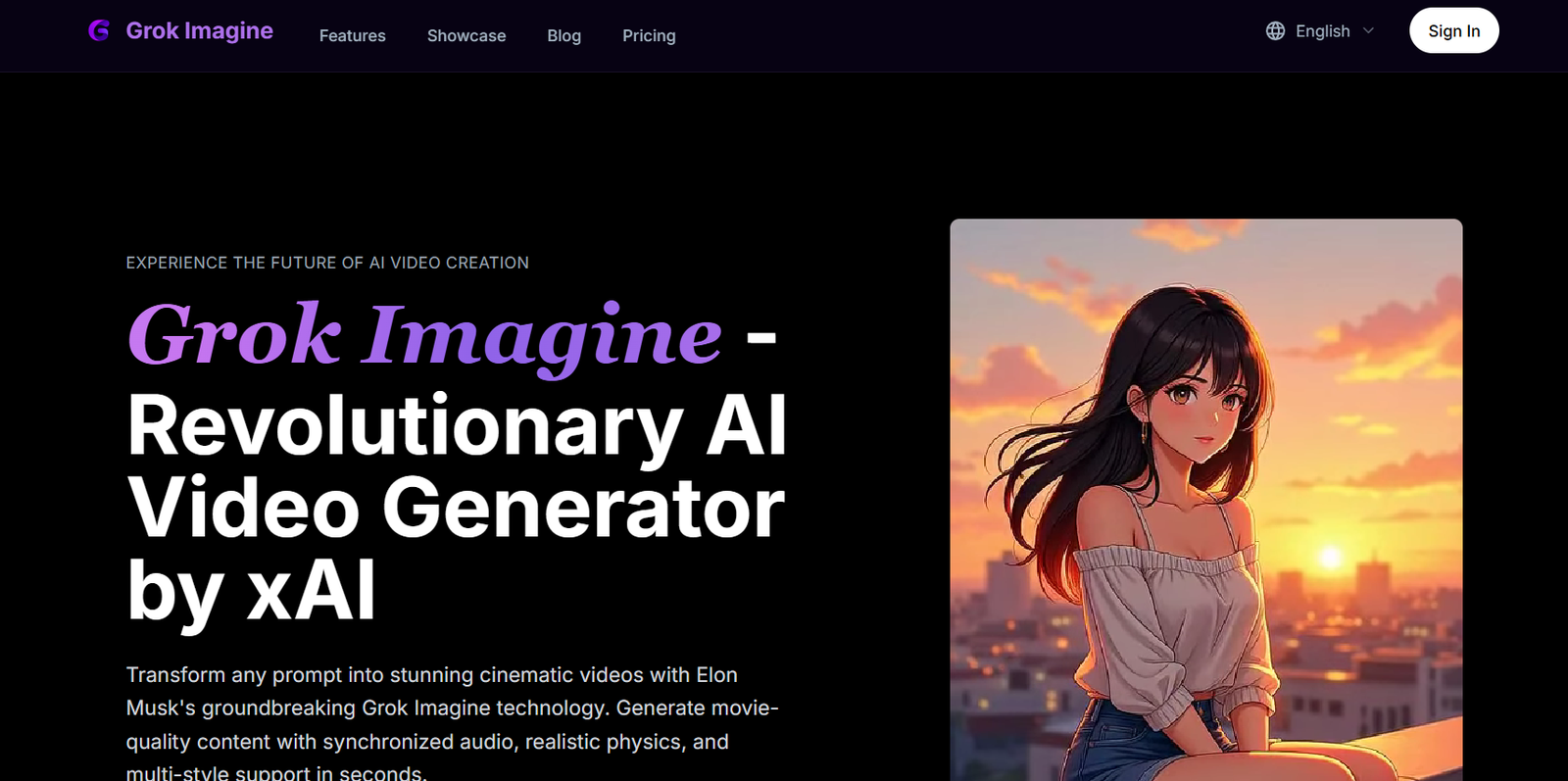
Grok Imagine is an AI-powered platform built for visual storytellers, enabling users to turn written scenes into cinematic visuals with minimal effort. Designed primarily for writers, screenwriters, and filmmakers, the tool converts text prompts into storyboard-style imagery that captures mood, emotion, and action.
The platform blends the capabilities of generative AI with a cinematic lens, helping users conceptualize how their scenes might appear on screen. Whether you’re preparing a pitch, drafting a script, or just trying to visualize a narrative, Grok Imagine bridges the gap between words and visuals. It empowers creators to see their stories before production begins, making it ideal for concept development and pre-visualization.
Features
Grok Imagine provides a targeted set of features built for creative professionals in visual storytelling:
Text-to-Image Generation: Converts written descriptions of scenes into vivid, cinematic visuals
Scene-Level Visualization: Supports sequential storytelling by turning entire passages into multiple visuals
Mood and Style Control: Lets users choose the atmosphere, lighting, and tone of each visual
Character Consistency: Helps maintain continuity in recurring characters across scenes
High-Quality Output: Produces sharp, stylized visuals suitable for storyboarding or concept art
Timeline-Based Organization: Allows users to build and organize visuals into a chronological narrative
Collaborative Workflows: Enables sharing and feedback with teams or collaborators
Intuitive Interface: Designed for storytellers, not just AI or design experts
These features support a visual storytelling pipeline from script to storyboard, making Grok Imagine valuable in early creative development stages.
How It Works
Grok Imagine is built around a simple but powerful workflow. Users input a scene or narrative description in plain language. The AI model interprets the input, understands the emotional tone and visual cues, and then generates cinematic images that reflect the story.
Users can further refine outputs by selecting visual styles or modifying elements such as lighting, mood, and setting. For multi-scene narratives, Grok Imagine allows you to link visuals in sequence, creating a storyboard-like timeline. This approach is particularly useful for film directors, content creators, or authors who want to visualize how their story flows from one moment to the next.
The platform operates in-browser, with no design or coding knowledge required. The goal is to make professional-level visual storytelling accessible to anyone with a narrative to tell.
Use Cases
Grok Imagine caters to a broad range of creative professionals and use cases:
Screenwriters creating storyboards to accompany scripts for pitching or planning
Novelists visualizing key scenes for promotional or adaptive purposes
Film directors developing previsualizations for production planning
Game designers outlining story sequences or cutscenes
Content creators producing visual assets for storytelling on social platforms
Creative agencies designing cinematic pitch decks for clients
Animators building visual references for scene transitions and emotional tone
The platform serves as a fast and intuitive solution for any creator needing to visualize a written story.
Pricing
As of now, Grok Imagine is currently in early access. Pricing information is not publicly listed on the official website. Users are invited to join the waitlist or request early access to explore the platform and receive updates on availability and pricing.
This indicates that Grok Imagine may be operating under a closed beta or limited release while the team gathers feedback and prepares for broader rollout.
To request access or receive pricing updates, visit https://grok-imagine.art
Strengths
Grok Imagine offers several advantages for storytellers and visual artists:
Purpose-built for narrative visualization, not just general image generation
Easy to use for writers and non-designers
Supports multi-scene storyboarding and visual storytelling
Generates high-quality, stylized images that reflect cinematic depth
Flexible for solo creators or collaborative teams
Encourages creativity by helping users see their ideas unfold visually
Ideal for pre-production and pitch development
Its narrative-first approach gives Grok Imagine a distinct position in the growing market of AI image generators.
Drawbacks
While Grok Imagine shows strong potential, there are some limitations worth considering:
Early access model means limited availability or features during rollout
No published pricing could be a barrier for some users
Not yet integrated with external writing tools or production software
May require multiple refinements for complex scenes or visuals
Limited public documentation or tutorials currently available
These drawbacks are expected for a new tool in development and may be addressed as the platform evolves.
Comparison with Other Tools
Compared to general AI image generators like Midjourney or DALL·E, Grok Imagine is specifically built for story-based image generation. While Midjourney excels in aesthetic visuals and DALL·E supports flexible prompt interpretation, Grok Imagine focuses on scene continuity, emotional storytelling, and cinematic composition.
Unlike Canva or Adobe Express, which focus on graphic design and layout, Grok Imagine is a creative ideation tool — helping users visualize scenes, not just design them.
It is also different from writing tools like Scrivener or Final Draft, as it complements narrative development with visuals rather than text formatting. Its strength lies in visualizing moments, not just illustrating words.
Customer Reviews and Testimonials
Grok Imagine is still in early access, and as such, there are limited public reviews on platforms like Product Hunt or G2. However, initial feedback from creators on social platforms and creative forums suggests:
Strong enthusiasm from screenwriters and indie filmmakers
Positive reactions to the cinematic quality of the visuals
Appreciation for its ease of use and storytelling orientation
Excitement around its potential to speed up the pre-production process
The Grok Imagine team appears to be actively engaging with its early user base to refine and improve the platform.
Conclusion
Grok Imagine is an emerging AI tool that brings stories to life through cinematic visuals, offering a new way for writers, filmmakers, and creatives to explore, refine, and present their narratives. By turning simple text descriptions into high-quality, scene-based imagery, it enables storytellers to visualize their ideas with clarity and confidence.
While still in early access and awaiting broader availability, Grok Imagine presents a fresh approach to storytelling tools — merging the worlds of AI, film, and narrative art. Whether you’re developing a script, writing a novel, or preparing a pitch deck, Grok Imagine provides a powerful way to show the story, not just tell it.