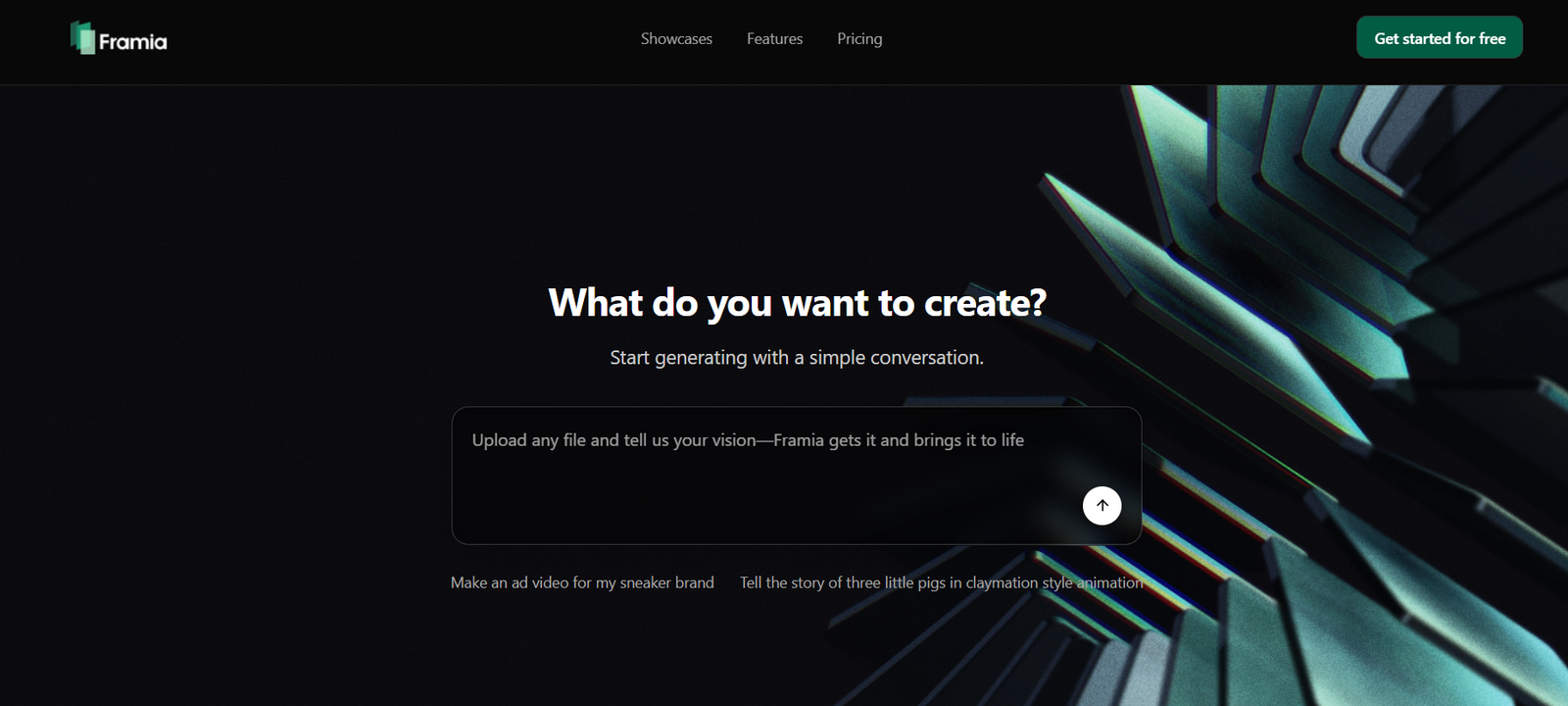
Framia AI is an AI platform designed to help businesses automate client communication using intelligent, customizable agents. Built to act like human assistants, Framia agents can engage clients, answer questions, collect leads, schedule appointments, and guide users through onboarding. Unlike static chatbots, Framia agents are designed to simulate real conversations, offering dynamic and context-aware responses tailored to specific business needs.
The tool is especially beneficial for solopreneurs, coaches, agencies, and small businesses looking to scale client interactions without hiring additional staff. By embedding AI agents on websites or sharing them as direct links, users can streamline their workflows and improve engagement through 24/7 automated support.
Features
Framia AI offers a range of features focused on enhancing customer experience, streamlining communication, and boosting business efficiency.
Custom AI Agents: Users can create and configure agents with distinct personalities, tones, and goals. Each agent is tailored to handle specific use cases like lead capture, client onboarding, or FAQ responses.
Conversational Interface: Framia’s agents are built on top of advanced large language models that can simulate natural, human-like conversations. The agents adapt based on user input and provide intelligent, contextual replies.
Agent Templates: The platform provides pre-built templates for different industries and use cases. These templates help users get started quickly without building their agents from scratch.
Link and Embed Options: Framia agents can be shared through public links or embedded directly into websites, making them accessible across different platforms and marketing channels.
Custom Workflows: Users can define workflows for their agents, guiding the conversation path through specific stages such as qualifying leads, booking meetings, or redirecting to other tools.
Lead Collection: Framia agents can collect lead information, such as names, emails, and phone numbers, and sync it with external tools or export it for follow-up.
Analytics Dashboard: The platform includes a performance dashboard where users can monitor key metrics such as engagement rate, completion rate, and leads captured.
Multi-Agent Capability: Businesses can create and manage multiple agents tailored to different parts of their operations, such as one for sales, one for support, and one for onboarding.
How It Works
Framia AI works by allowing users to build intelligent agents that can be trained and deployed in minutes. After signing up, users select a use case or start with a blank agent. Each agent is created using a prompt-based configuration, where the user defines the purpose, behavior, and tone of the agent.
Once configured, the agent can be deployed via a link or embedded on a webpage. When a visitor interacts with the agent, the AI initiates a contextual conversation based on the training provided. It can answer questions, ask for information, and guide users through a series of steps.
All data collected during the interaction is stored in the backend, where users can review conversations, export data, or integrate it with external systems using webhooks or third-party tools. The process requires no coding and is accessible to non-technical users.
Use Cases
Framia AI can be used in various industries and business contexts, especially where client interaction and lead nurturing are important.
Client Onboarding: Automate the onboarding process by collecting client preferences, answering initial questions, and guiding them through setup steps.
Lead Qualification: Framia agents can engage website visitors, gather their information, and determine if they meet the criteria to become qualified leads.
Customer Support: Provide 24/7 support by answering frequently asked questions or guiding users to helpful resources.
Appointment Scheduling: Agents can prompt users to schedule calls or meetings by integrating with third-party scheduling tools.
Coaching and Consulting: Coaches can use Framia to qualify prospects, share program details, and streamline the application process.
Agency Sales: Agencies can build branded AI agents that guide prospects through service offerings and capture project details.
Portfolio Showcasing: Freelancers and creators can use agents to explain their portfolio, collect inquiries, and share booking links.
Pricing
Framia AI currently offers three pricing tiers designed to fit different business needs. Pricing is billed monthly, with an option to pay annually at a discounted rate.
Starter – $19/month
Includes 2 AI agents
Up to 300 messages per month
Basic analytics and lead capture
Email support
Ideal for freelancers or individual users testing the platform
Pro – $49/month
Includes 10 AI agents
Up to 2,000 messages per month
Advanced analytics
Priority email support
Webhook access and integrations
Best for small teams and growing businesses
Agency – $99/month
Includes 30 AI agents
Up to 5,000 messages per month
White labeling options
Team collaboration features
Priority support and custom domain
Designed for agencies managing multiple clients
All plans come with a 7-day free trial. Users can cancel or upgrade at any time. Full pricing details are available at https://framia.pro
Strengths
Framia AI is easy to use and requires no technical skills, making it accessible to a wide range of users. Its customization options allow businesses to craft AI agents that reflect their brand voice and objectives.
The flexibility to embed agents or share them via link makes deployment seamless. Framia’s templated use cases and multi-agent support allow businesses to manage various workflows within one platform. Real-time analytics and webhook integration add further value for growth-oriented teams.
The platform is also competitively priced, offering solid features even in the entry-level plan.
Drawbacks
Framia AI may not be suitable for enterprise-scale operations or highly regulated industries that require deep compliance and security measures. The message cap on lower-tier plans may also limit usage for high-traffic websites.
As of now, native integrations with major CRM platforms and scheduling tools are limited, requiring manual setup or use of third-party connectors. Additionally, advanced AI tuning options for more complex use cases are currently not available, which may restrict customization for technical users.
The platform is still evolving, and some features like mobile app support or advanced team collaboration tools are not yet fully developed.
Comparison with Other Tools
Compared to tools like ManyChat or Chatfuel, which primarily focus on social media messaging (especially Messenger and WhatsApp), Framia AI offers more versatility for web-based agents and branded AI experiences.
Unlike traditional live chat solutions like Tidio or Crisp, which rely on human agents, Framia focuses on automating interactions through AI-driven conversations. This makes it more scalable for small teams who want to minimize manual handling.
In contrast to enterprise-level platforms like Intercom or Drift, Framia is far more affordable and user-friendly for small businesses. However, it lacks some of the deeper analytics and marketing automation features those platforms provide.
Customer Reviews and Testimonials
Framia AI has been positively received by early users, particularly for its ease of use and ability to generate leads passively. Users have praised its intuitive agent builder and the ability to launch working agents in under 10 minutes.
On platforms like Product Hunt, reviewers have highlighted that Framia helps reduce their workload while maintaining high client engagement. Users also appreciated the customization of tone and brand alignment that Framia enables through its agent settings.
One common suggestion from users is the desire for more native integrations and a larger template library. Overall, feedback suggests that Framia is a highly effective tool for small businesses looking to automate parts of their communication without needing technical expertise.
Conclusion
Framia AI offers a smart and efficient way for businesses to automate client interactions using customizable, conversational agents. With its no-code interface, multi-agent support, and easy deployment options, it’s a valuable tool for freelancers, coaches, and small agencies.
While it may not replace enterprise CRM systems or complex marketing automation platforms, it fills a critical gap for businesses that want to scale their communication without additional staff or technical barriers. As the platform continues to evolve, it’s likely to become even more powerful with additional integrations and features.