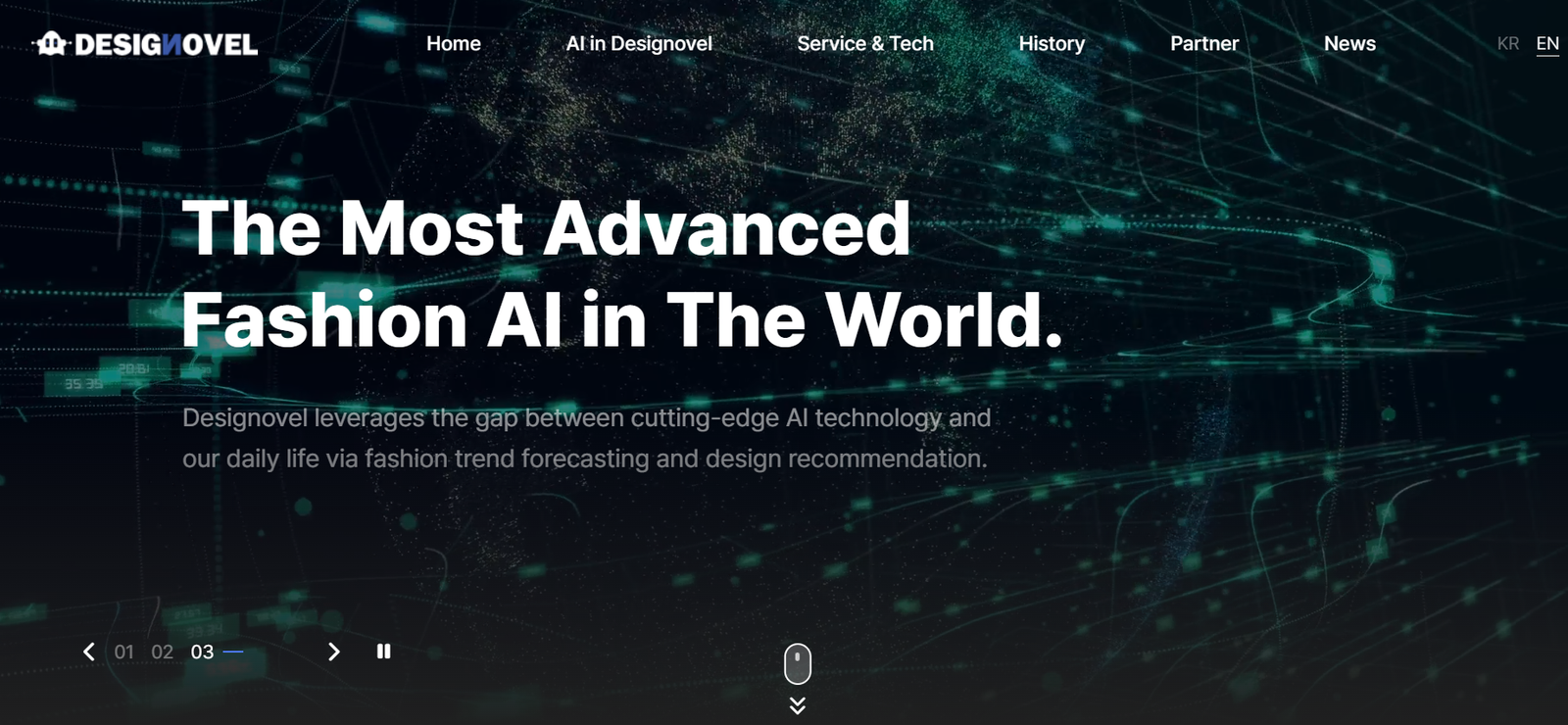
Designovel is a South Korea-based AI platform that supports the entire fashion development cycle—from inspiration and design to forecasting and sales prediction. It uses artificial intelligence to analyze massive amounts of fashion data from online sources, runways, retail, and social media to help brands make informed design and business decisions.
The tool is designed to assist fashion professionals, including designers, merchandisers, buyers, and marketers, by providing real-time insights and predictions. Its goal is to reduce the guesswork and subjectivity typically associated with fashion design and trend planning.
Features
Designovel offers a range of intelligent features tailored for the fashion industry:
Trend Forecasting
Predict upcoming fashion trends based on data analysis from global fashion platforms, social media, and consumer behavior.AI-Powered Design Suggestions
Generate or refine apparel designs using AI that understands current styles, patterns, and market demands.Market Analysis
Analyze product popularity, regional preferences, and market shifts using big data to improve planning accuracy.Sales Forecasting
Estimate product performance and consumer demand by forecasting potential sales before launching a product.Design Evaluation
Assess the marketability of a proposed design by comparing it with trending or best-selling items.Mood Board Generation
Create mood boards or design references using AI to support the creative process.Visual Search Integration
Upload an image to find similar fashion products or trend references across markets.
How It Works
Designovel uses proprietary AI models trained on fashion data collected from a variety of digital and retail sources. Here’s how the process works:
Data Collection
The platform aggregates fashion images, trend reports, customer reviews, and retail listings from global online and offline channels.AI Analysis
Machine learning models process this data to detect patterns in color, silhouette, fabric, design features, and consumer behavior.Trend Prediction
The system identifies emerging trends and forecasts their longevity and popularity by region and market segment.Design Evaluation and Enhancement
Designers can upload their sketches or images, which Designovel analyzes for commercial viability, offering enhancement suggestions based on predicted trends.Sales and Demand Forecasting
The AI predicts product performance using historical data, market sentiment, and current fashion cycles, helping businesses avoid overproduction or understocking.
Use Cases
Designovel is used across various stages of the fashion value chain. Typical applications include:
Designers
Receive AI-based suggestions to improve the aesthetic and market-fit of their collections.Merchandisers and Buyers
Use data insights to determine which products to source, when to launch them, and in what quantities.Fashion Brands
Analyze trend evolution to shape seasonal collections and align them with customer expectations.Retailers
Predict which SKUs will sell best, adjust inventory accordingly, and reduce unsold stock.Fashion Schools and Research Institutes
Use the tool for educational purposes or industry research in fashion innovation.
Pricing
Designovel does not publicly list its pricing plans on its official website. Instead, it offers custom enterprise pricing, which varies based on the organization’s needs and scale.
Potential clients are invited to request a demo or consultation by contacting the company directly through their contact form.
Key pricing factors likely include:
Number of users or seats
Desired features or modules (trend analysis, sales prediction, etc.)
Data volume and geographic coverage
Integration requirements with internal systems
Strengths
Provides highly visual, data-backed trend forecasts
Supports end-to-end fashion workflow: inspiration to commercialization
Offers AI-assisted design improvement and mood board creation
Helps reduce unsold inventory through accurate sales forecasting
Customizable solutions for brands, retailers, and design teams
Drawbacks
No free plan or self-serve pricing publicly available
Geared toward enterprise users, not ideal for independent designers or small startups
The website lacks detailed documentation for self-evaluation
Comparison with Other Tools
Designovel can be compared to tools like WGSN, Heuritech, and Stylumia—all of which provide trend forecasting for fashion.
Designovel vs. WGSN
WGSN is a well-known trend forecasting agency with strong editorial and design insights, but it is largely human-led. Designovel, on the other hand, is tech-driven and offers real-time AI-powered insights with image processing and visual search capabilities.Designovel vs. Heuritech
Heuritech also uses AI to analyze social media and influencers to forecast trends. However, Designovel adds more features like design suggestions, mood board generation, and integrated sales prediction.Designovel vs. Stylumia
Stylumia focuses more on demand prediction and visual intelligence for e-commerce. Designovel offers a more holistic workflow for the fashion design process, from ideation to market entry.
Customer Reviews and Testimonials
While specific customer testimonials are not listed on the Designovel website, the platform has received recognition from the South Korean government and innovation hubs for its contributions to fashion technology.
Designovel has also been featured in innovation showcases and academic conferences related to AI and fashion design, reflecting industry interest and credibility.
Feedback from fashion professionals on platforms like LinkedIn and event appearances suggest that the tool is especially valued for:
Accelerating trend analysis
Reducing product development cycles
Minimizing design risks
For verified user reviews, industry professionals may find more insights through direct demos or by contacting Designovel for references.
Conclusion
Designovel is an innovative AI tool that empowers fashion brands, designers, and retailers to make smarter, data-driven decisions throughout the product lifecycle. From predicting trends to refining designs and forecasting sales, it covers the full spectrum of needs in a fast-evolving industry.
Although primarily tailored to enterprise clients, the platform holds significant potential for shaping the future of fashion design and merchandising. By combining creative tools with market intelligence, Designovel reduces guesswork and enhances decision-making across the fashion supply chain.