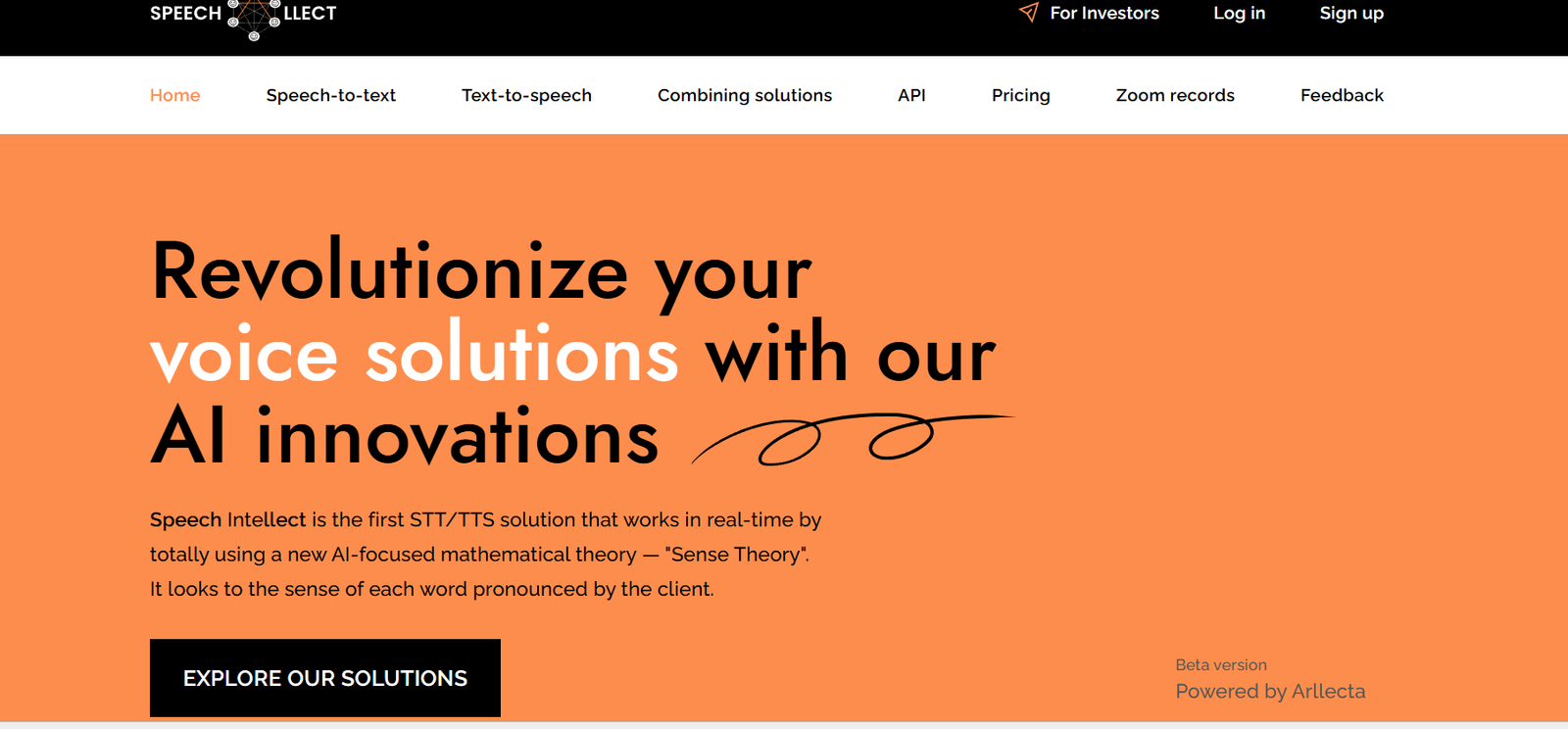
Speechllect is an AI-powered voice technology platform designed for speech recognition, speech synthesis and automated voice interactions. The platform combines Speech-to-Text and Text-to-Speech technologies with a proprietary approach called “Sense Theory,” which focuses on understanding the meaning, tone and emotional context of spoken communication.
Unlike basic transcription tools that primarily convert spoken words into written text, Speechllect aims to capture additional information about how something is being said. Its Speech-to-Text technology analyzes emotion and tone while converting voice into text with a semantic component.
The Text-to-Speech solution takes the opposite approach. It converts written content into synthesized speech while allowing the generated voice to reflect characteristics such as intonation, tone, age and gender.
Speechllect also provides combined STT and TTS solutions for businesses interested in automating customer interactions and predefined communication workflows. Potential applications include call centers, customer support, gaming, websites, smart homes and other voice-enabled services.
The platform is currently presented as a beta version and is powered by Arllecta.
Features
AI Speech-to-Text
Speechllect converts spoken language into written text. Its speech recognition technology is designed to consider not only the words being spoken but also the context and characteristics of the conversation.
Emotion and Tone Detection
A distinctive part of Speechllect’s approach is its focus on emotional information. The Speech-to-Text engine is designed to identify tone and emotion before combining this information with the transcription.
This could be useful in situations where understanding how a customer or user is speaking is nearly as important as understanding the actual words.
Text-to-Speech
Speechllect can transform written text into synthesized speech. The platform aims to create more natural sounding output by incorporating intonation and tonal characteristics into generated speech.
Custom Voice Characteristics
Its speech synthesis technology can generate voices according to characteristics such as age, gender and emotional tone. This can make it useful for creating different types of virtual characters and voice experiences.
Sense-to-Sense Technology
Speechllect uses its own “sense-to-sense” approach for processing speech. The technology focuses on meaning and context rather than relying only on direct conversion between audio and text.
Combined Speech Solutions
Businesses can combine Speech-to-Text and Text-to-Speech functionality to create automated communication workflows. This could support customer service, sales interactions and other structured conversations.
API Access
Speechllect provides an API option for developers and organizations interested in integrating its speech technologies into their own applications, platforms or business processes.
Cloud-Based Processing
The platform uses cloud infrastructure to process speech and other data. This allows its algorithms to operate without requiring users to run the complete AI processing infrastructure locally.
Security Technology
Speechllect states that it uses a technology called Amorphous Encryption for storing and transmitting user data. Organizations considering the platform should review its current security documentation and privacy terms according to their own compliance requirements.
Custom Business Workflows
Organizations can develop voice-based scenarios for different areas of their operations. The platform presents possible applications ranging from reception and customer communication to technical support and production workflows.
Zoom Recording Option
The Speechllect website includes a dedicated Zoom records section, indicating support for processing or working with Zoom-related recordings through its platform.
How It Works
Users first create a Speechllect account or log in to the platform.
They can then select the required solution, such as Speech-to-Text, Text-to-Speech or a combined voice workflow.
For Speech-to-Text, users provide speech or audio for processing. Speechllect analyzes the spoken information and converts it into text while also considering elements such as emotion and tone.
For Text-to-Speech, users provide written content that needs to be converted into voice. The AI processes the text and generates synthesized speech with appropriate vocal characteristics.
Businesses and developers can explore the API for incorporating Speechllect capabilities into their own software or workflows.
Organizations requiring more advanced automation can combine STT and TTS technologies to create voice-based customer interactions and predefined business processes.
Use Cases
Call Centers
Call centers can use speech recognition and synthesis technologies to automate parts of customer conversations. Tone analysis may also provide additional context about customer interactions.
Customer Support
Businesses can create automated voice support workflows for handling common questions and routine customer interactions.
Video Games
Game developers can use Text-to-Speech technology to generate voices for characters. The ability to adjust age, gender and emotional characteristics could be useful when creating different character profiles.
Website Voice Assistants
Companies can integrate voice-based communication into websites to create virtual assistants or automated customer interaction systems.
Smart Home Applications
Speech synthesis and recognition can support voice-based interactions between users and connected smart home systems.
Developers
Developers can explore Speechllect’s API to add speech recognition, voice generation or related functionality to their applications.
Sales Teams
Businesses with structured sales processes could use combined speech technologies to automate certain repetitive interactions or initial customer conversations.
Conversation Analysis
The platform’s focus on emotion and tone may be useful where organizations want more context from spoken conversations than a standard transcription alone provides.
Pricing
Speechllect uses a request-based pricing approach rather than presenting conventional monthly subscription plans.
The official pricing page allows users to select the number of requests they require and purchase a corresponding package. The website states that purchased packages do not expire and can be used when needed.
However, specific pricing rates for different request volumes are not clearly displayed in the publicly accessible information reviewed. Users should check the live pricing calculator or their Speechllect account for current package costs.
Strengths
One of Speechllect’s main strengths is that it provides both Speech-to-Text and Text-to-Speech functionality within the same platform.
Its focus on emotional tone and semantic meaning differentiates its approach from basic transcription services that mainly concentrate on converting spoken words into text.
The ability to combine STT and TTS functionality may be valuable for businesses developing automated voice conversations.
API availability makes the platform potentially useful for developers who want to incorporate speech technology into existing applications.
Its request packages reportedly do not expire, which may suit users who prefer usage-based purchasing instead of recurring monthly subscriptions.
The platform also addresses several different applications, including call centers, gaming, websites, smart homes and customer support.
Drawbacks
Speechllect is presented as a beta product, so users should consider that its features and overall service may continue to evolve.
The public pricing page does not clearly provide a simple list of prices for different usage levels, making it harder to estimate costs without interacting with the pricing system.
Some of the platform’s technology and performance claims are highly ambitious. Businesses should independently evaluate transcription accuracy, emotion recognition, speech quality, latency and security before adopting it for critical operations.
The website provides less public documentation and practical product information than some established speech AI platforms.
Users looking primarily for straightforward audio transcription may also find its broader semantic and automation approach more complex than necessary.
Comparison with Other Platforms
Traditional Speech-to-Text platforms generally focus on accurately converting audio into written content, while Text-to-Speech services concentrate on generating natural sounding voices from text. Speechllect attempts to bring both capabilities together while adding analysis of tone, emotion and semantic meaning.
This makes it potentially more suitable for applications where the context of a conversation matters, such as customer service and automated voice interactions.
Compared with established speech AI providers, Speechllect appears more focused on its proprietary Sense Theory and combined speech automation approach. Larger competing platforms may offer broader language coverage, extensive developer documentation and mature enterprise ecosystems.
The right choice therefore depends on the application. Users needing simple transcription or voice generation may prefer a specialized platform, while businesses interested in experimenting with emotion-aware speech processing and combined STT/TTS workflows may find Speechllect worth exploring.
Customer Reviews and Testimonials
Customer reviews and testimonials are not clearly available on the official website.
Conclusion
Speechllect is an interesting AI speech platform for businesses, developers and organizations looking beyond basic transcription and voice generation. It combines Speech-to-Text, Text-to-Speech, tone recognition, emotion analysis and semantic processing within one system.
Its strongest potential lies in applications where understanding the meaning and emotional context of speech can improve automated communication. Call centers, customer support operations, game developers, website owners and companies developing voice assistants may find its approach particularly relevant.
Since Speechllect is presented as a beta platform, users considering it for important business applications should test its accuracy, voice quality, API capabilities and performance with their own real-world content before making a larger commitment.