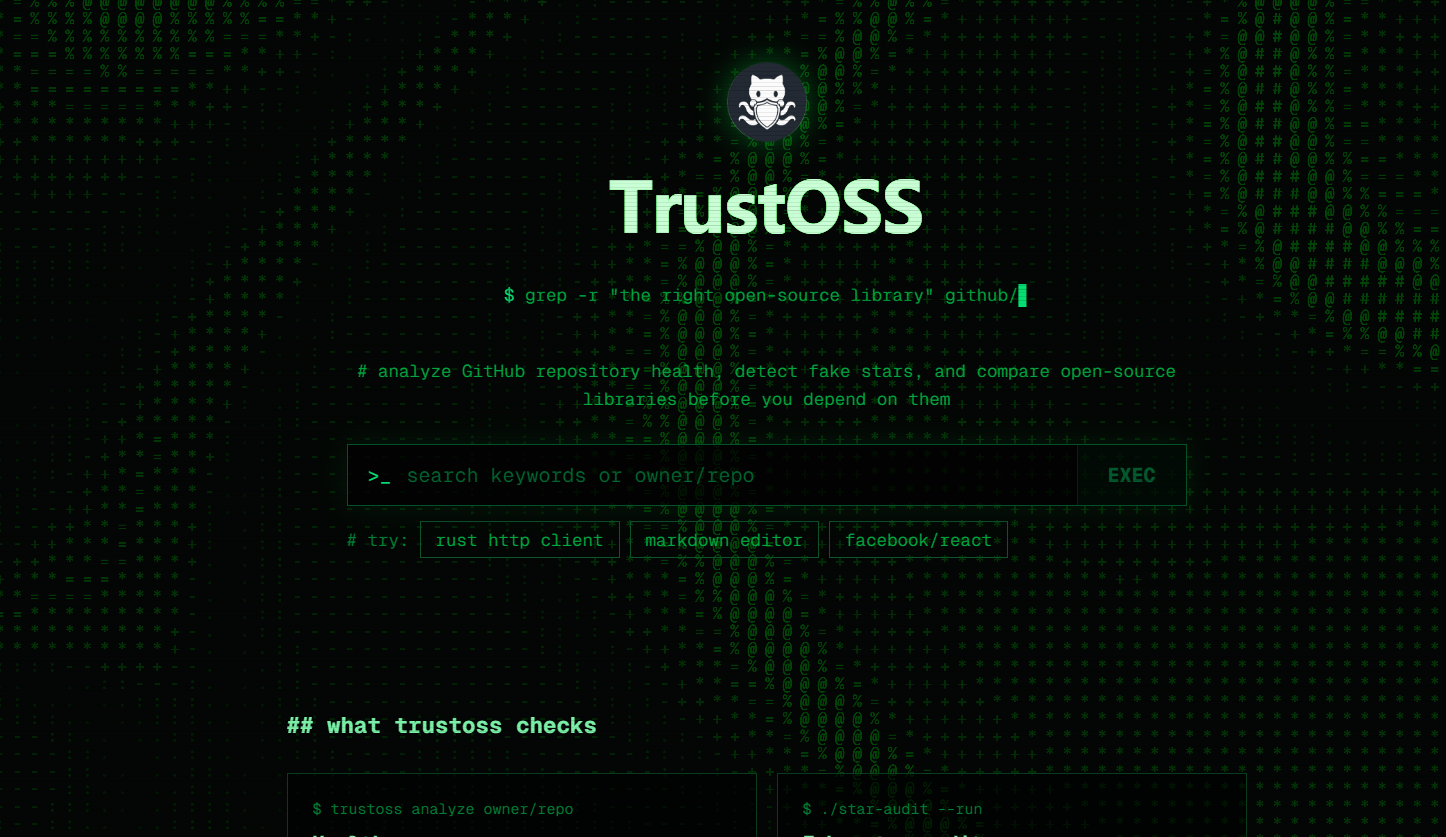
TrustOSS is an open-source AI governance platform designed to help organizations manage the lifecycle of artificial intelligence systems responsibly. It provides tools for AI policy management, compliance monitoring, risk assessment, governance workflows, and documentation to support the safe and transparent deployment of AI solutions. The platform aims to simplify AI governance while helping organizations align with emerging regulatory and industry standards.
Built for enterprises, government organizations, compliance teams, developers, and AI practitioners, TrustOSS centralizes governance activities in a single platform. It emphasizes transparency, collaboration, and extensibility through an open-source approach, making it suitable for organizations seeking greater control over AI governance processes.
Features
AI Governance Dashboard
Monitor AI assets, governance activities, and compliance status from a centralized interface.
Policy Management
Create, organize, and maintain AI governance policies with version control and structured workflows.
Risk Assessment
Evaluate AI systems for operational, ethical, legal, and regulatory risks before deployment.
Compliance Monitoring
Track AI systems against governance frameworks and compliance requirements to identify potential gaps.
AI Inventory
Maintain an organized inventory of AI models, applications, vendors, and associated documentation.
Open-Source Architecture
Deploy, customize, and extend the platform according to organizational requirements without vendor lock-in.
Documentation and Audit Support
Maintain governance records, policies, and evidence to support internal reviews and external audits.
How It Works
Organizations deploy TrustOSS within their environment, register AI systems and projects, define governance policies, perform risk assessments, monitor compliance, and maintain documentation throughout the AI lifecycle. Governance teams can review findings, assign remediation tasks, and generate evidence for regulatory or internal audits.
Use Cases
Enterprise AI governance and oversight.
AI risk and compliance management.
Policy documentation and lifecycle management.
Preparation for AI regulations and governance frameworks.
Vendor and third-party AI evaluation.
Internal AI audits and governance reporting.
Pricing
TrustOSS appears to be an open-source platform. The official website does not clearly publish commercial pricing or subscription plans. Organizations interested in enterprise support or managed services should consult the project’s official resources if available.
Strengths
Open-source and customizable.
Supports responsible AI governance initiatives.
Helps centralize AI compliance activities.
Suitable for organizations adopting AI at scale.
Reduces reliance on manual governance processes.
Drawbacks
Public documentation is currently limited.
May require technical expertise for deployment and customization.
Advanced enterprise capabilities may require additional configuration.
AI governance standards continue to evolve, requiring ongoing updates.
Comparison with Other Platforms
Unlike proprietary AI governance solutions, TrustOSS emphasizes an open-source approach that enables organizations to customize governance workflows and avoid vendor lock-in. While commercial platforms often provide managed services and prebuilt integrations, TrustOSS focuses on flexibility, transparency, and community-driven development.
Customer Reviews and Testimonials
Customer reviews and testimonials are not clearly available from public official sources.
Conclusion
TrustOSS is a promising open-source platform for organizations seeking to establish structured AI governance, compliance, and risk management practices. Its focus on transparency, customization, and responsible AI makes it a valuable option for enterprises, developers, and governance teams looking to build trustworthy AI systems. However, because the official website currently provides limited public information, prospective users should review the latest project documentation before deployment.