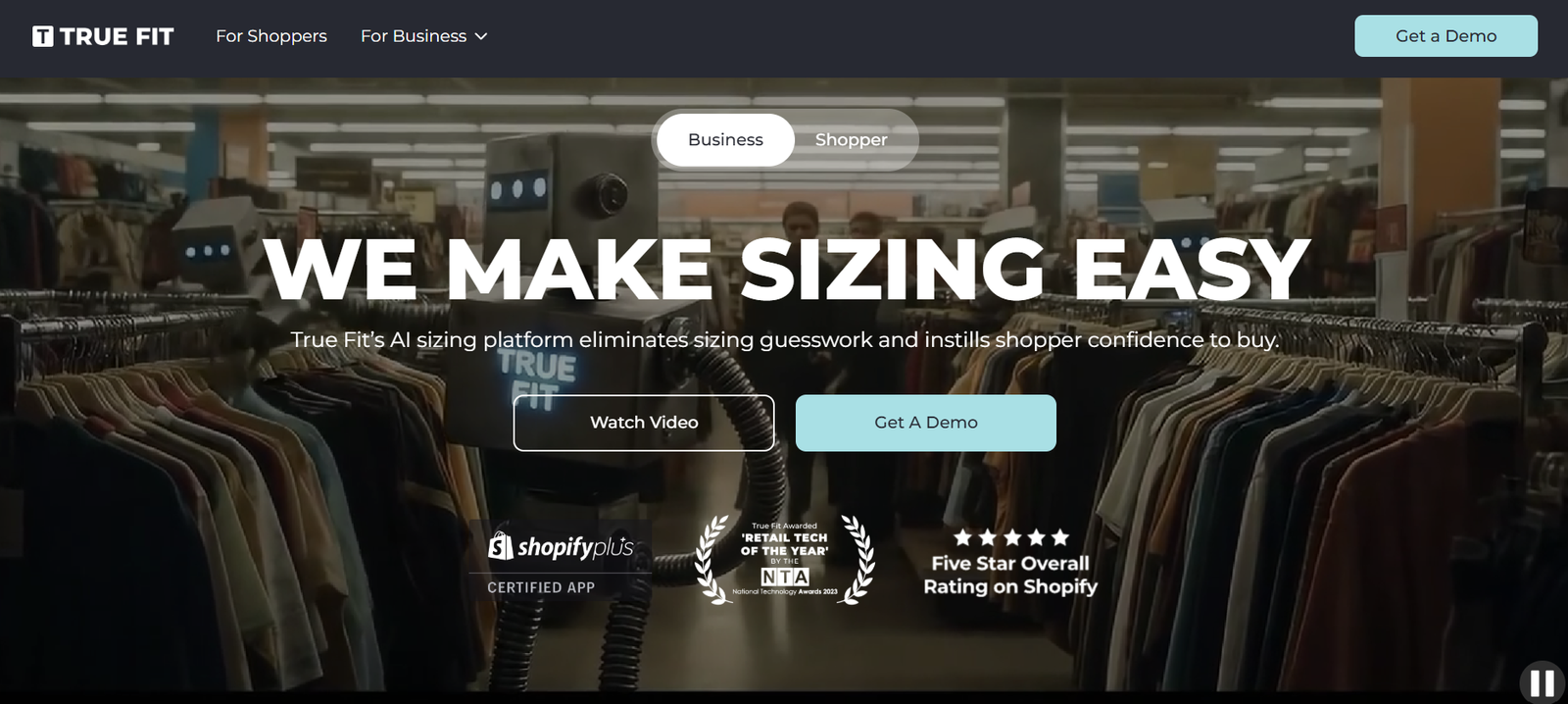
True Fit is an AI-powered personalization platform designed specifically for fashion and footwear retailers. It helps online shoppers find the right size and fit, reducing returns and increasing customer confidence. By leveraging the world’s largest connected dataset of apparel and footwear, True Fit delivers accurate size and style recommendations based on each shopper’s preferences, purchase history, and body profile. The platform is integrated directly into e-commerce websites, offering a frictionless, data-driven fit recommendation experience. Retailers use True Fit to improve conversion rates, reduce cart abandonment, and create more loyal customers by making online fashion shopping as personalized as the in-store experience.
Features
True Fit’s platform includes several advanced features tailored for the fashion e-commerce industry. At the core is Fit Personalization, which delivers accurate size and fit guidance using a shopper’s profile, previous purchases, and product-specific data. This eliminates the need for size guesswork and improves buyer confidence.
The platform also includes Style Matching, which goes beyond size to recommend styles based on a user’s preferences, returns, and purchase behavior. This helps brands boost cross-sell and upsell opportunities by suggesting items the shopper is more likely to keep.
True Confidence is a data layer that powers each recommendation, driven by True Fit’s Fashion Genome — the industry’s largest connected data set for apparel and footwear. This includes SKU-level product data, customer preferences, and style profiles collected from hundreds of retailers and millions of shoppers.
The FitHub Widget is the front-end component embedded in retailer websites, providing a clean and intuitive experience for users to receive fit suggestions with just a few clicks. This widget integrates seamlessly into product pages and requires minimal customer input.
True Fit also offers Retail Analytics, giving brands access to performance metrics on conversion uplift, return reduction, and engagement rates. Retailers can use these insights to inform inventory planning, merchandising, and product development strategies.
How It Works
True Fit operates by using a combination of machine learning, proprietary data, and consumer behavior modeling. When a shopper visits a product page, they are prompted to enter basic information such as gender, height, weight, and age. They can also optionally provide preferences and past purchases to enrich the accuracy of their profile.
This information is used to build a True Fit Profile, which maps the shopper’s unique fit and style preferences against a retailer’s product catalog. The platform then analyzes product data — including brand sizing, material, and cut — and recommends the best size for that specific shopper.
The more the customer interacts with True Fit, the smarter the recommendations become. The platform refines its predictions using data from purchases, returns, and behavior across the retailer’s site as well as the broader True Fit network.
Retailers integrate True Fit using JavaScript, APIs, or through partnerships with major e-commerce platforms. Once integrated, the widget delivers real-time fit and style guidance, helping users make confident choices during their shopping journey.
Use Cases
True Fit is used by fashion retailers across apparel, footwear, and activewear verticals to solve key challenges in size uncertainty and high return rates. A common use case is fit guidance during product discovery, where customers rely on True Fit to choose the right size without trying items on physically.
Retailers use the platform to reduce size-related returns, which are one of the most costly issues in fashion e-commerce. By recommending the correct size the first time, True Fit helps brands reduce operational costs and improve profitability.
Another use case is personalized styling, where the platform recommends items based on style compatibility and customer preferences. This improves product discoverability and increases basket size.
Large omnichannel retailers integrate True Fit both online and in mobile apps to provide consistent fit guidance across all customer touchpoints. The platform is also used to collect data insights for inventory and assortment planning, helping brands align their offerings with real shopper behavior.
Pricing
True Fit does not publish standard pricing on its website, as it offers customized pricing models based on the size and needs of each retailer. Factors such as product catalog size, integration complexity, traffic volume, and usage of analytics tools influence the final cost.
True Fit works primarily with mid-size to large enterprise retailers and offers bespoke solutions that scale across international markets and multi-brand businesses.
Retailers can request a personalized demo and proposal by contacting the True Fit sales team through their official website.
To inquire about pricing or book a demo, visit: https://www.truefit.com/request-a-demo/
Strengths
One of True Fit’s biggest strengths is its unparalleled access to fashion data through its Fashion Genome, which connects millions of user profiles with thousands of brands and products. This results in more accurate, reliable, and context-aware recommendations than generic fit tools.
The platform is user-friendly and integrates directly into product pages, offering immediate value to the shopper without disrupting the user experience. Its ability to personalize both size and style adds significant value to both retailers and consumers.
True Fit’s scalability allows it to support global retail brands with extensive catalogs and high traffic volumes. The platform’s analytics layer adds additional strategic value by turning customer interactions into actionable insights for merchandising and product development.
Brands using True Fit typically see improvements in conversion rate, reduction in return rates, and increased customer satisfaction — key metrics for e-commerce growth.
Drawbacks
While True Fit offers high levels of accuracy and value, its enterprise-level focus may limit access for smaller retailers or startups with tighter budgets or limited development resources.
The initial integration process, while well-supported, can require coordination with development and product teams to ensure a seamless launch. Retailers without strong tech infrastructure may need support to implement advanced features or analytics tools.
Because True Fit is focused on fashion and footwear, it is not suitable for non-apparel categories. Retailers in adjacent industries will not find its services relevant.
The accuracy of recommendations also relies on customer inputs, and while the system improves with usage, first-time visitors may not benefit as much from deep personalization until their profile matures.
Comparison with Other Tools
True Fit is often compared to other fit and size recommendation platforms like Fit Analytics (by Snap Inc.), Bold Metrics, and MySizeID. Compared to Fit Analytics, True Fit offers a broader dataset and more emphasis on both size and style recommendations, making it more comprehensive for retailers seeking full-fit personalization.
Bold Metrics focuses more on body scanning and B2B apparel solutions for uniforms and custom sizing, whereas True Fit is consumer-facing and geared toward enhancing the fashion shopping experience online.
MySizeID uses physical measurements from a mobile device for sizing accuracy, but True Fit leverages behavioral data and historical purchases, reducing user effort and improving scalability.
Overall, True Fit distinguishes itself with its massive data ecosystem, AI-powered personalization engine, and retailer-focused insights, making it a preferred choice for large-scale fashion retailers.
Customer Reviews and Testimonials
True Fit is trusted by hundreds of global retailers, including Macy’s, Nordstrom, Boden, PacSun, and Under Armour. Customers consistently report reductions in return rates and increased customer confidence as key benefits.
In case studies featured on the official site, brands highlight the platform’s impact on metrics such as conversion uplift, higher order completion rates, and better customer satisfaction scores.
For example, Boden reported a 4.8% increase in conversion and a 14.2% reduction in returns after implementing True Fit. Similarly, Lucky Brand saw a measurable impact on engagement and return rate improvements.
Retailers also appreciate the platform’s ability to generate insights for planning, with one executive noting that True Fit helped them “identify size gaps and adjust inventory more strategically.”
Conclusion
True Fit is a leading AI-powered size and fit recommendation platform built specifically for fashion and footwear e-commerce. By combining deep data, machine learning, and a massive connected fashion ecosystem, it delivers personalized guidance that improves shopper confidence and retail performance.
Its strengths in scalability, predictive accuracy, and consumer usability make it ideal for enterprise brands looking to reduce returns, increase conversions, and deliver tailored shopping experiences. While the platform requires investment and integration effort, the return on value in terms of sales uplift, customer satisfaction, and operational efficiency makes it a smart strategic solution.
For fashion retailers aiming to compete in an increasingly personalized and data-driven market, True Fit offers a proven path to smarter commerce.