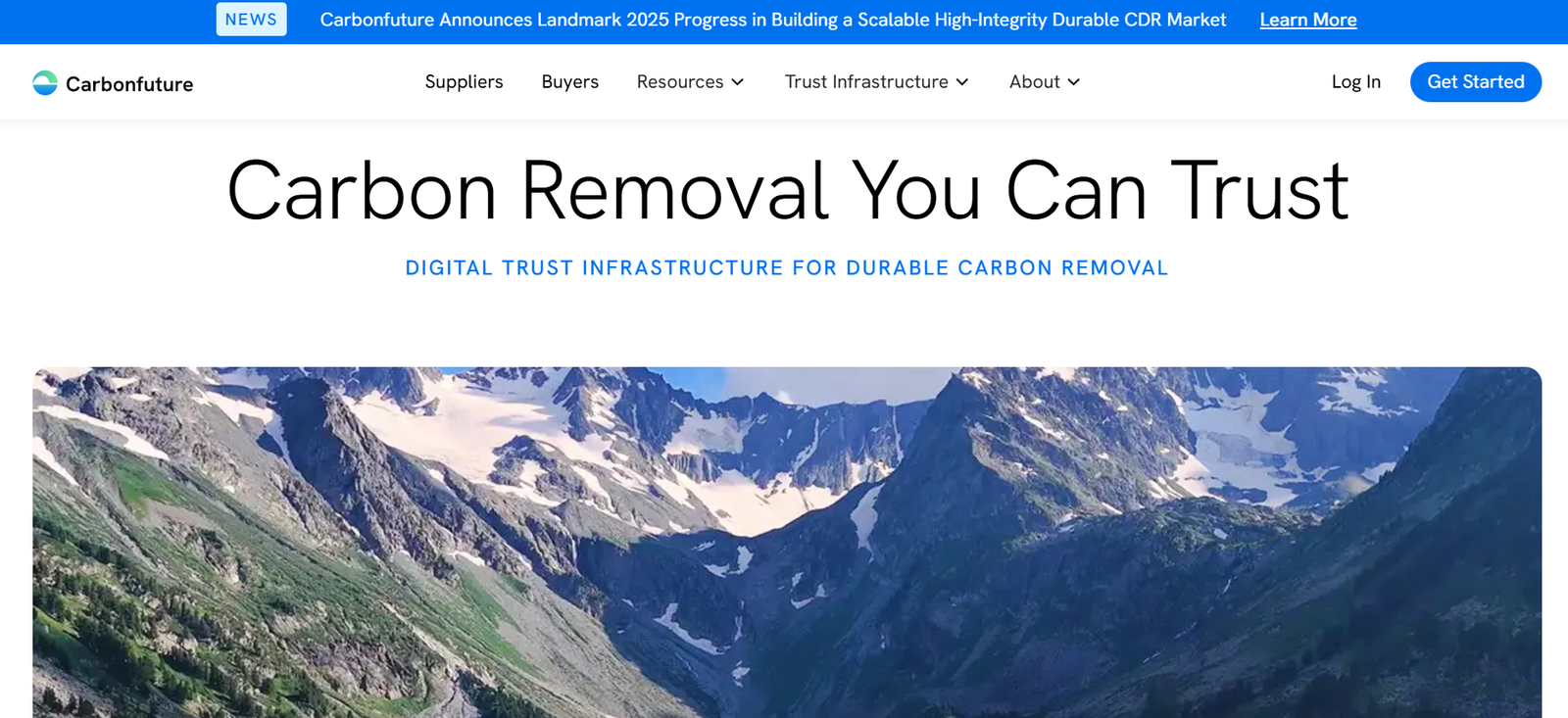
Carbonfuture is a science-based carbon removal platform that provides end-to-end tracking, verification, and certification of high-quality carbon removal credits. It bridges the gap between carbon removal suppliers and climate-conscious buyers by ensuring every ton of CO₂ removed from the atmosphere is measurable, durable, and fully traceable.
Founded in Germany, Carbonfuture supports scalable, trustworthy carbon removal using technologies such as biochar, enhanced weathering, and other carbon sequestration methods. It serves businesses aiming to meet net-zero targets, governments pursuing environmental goals, and suppliers seeking transparent, data-driven carbon credit generation.
With an emphasis on transparency, permanence, and scientific integrity, Carbonfuture is helping shape the future of the carbon removal economy.
Features
Carbonfuture offers a full suite of tools and services focused on enabling the transparent and trustworthy deployment of carbon removal.
A core feature is its Trust Infrastructure, which provides transparent tracking of carbon removal credits from issuance to retirement. Each credit is linked to real-world monitoring data, geolocation, and detailed metadata to ensure integrity.
The Carbonfuture MRV+ system (Monitoring, Reporting, Verification Plus) enables continuous data capture, scientific assessment, and independent verification of carbon removal projects. This ensures that the carbon removed is quantifiable, additional, and durable.
Carbonfuture supports project developers by offering tools to help generate, certify, and market high-quality carbon removal credits. The platform integrates with recognized certification bodies and methodologies to streamline compliance.
The Carbon Removal Marketplace allows companies to browse, evaluate, and purchase credits that meet their climate goals and ESG commitments. Each credit comes with transparent documentation and tracking tools.
Carbonfuture also offers data dashboards and APIs, giving enterprise buyers and project developers visibility into credit performance, carbon flows, and retirement data.
By supporting durable carbon removal methods such as biochar, it ensures carbon is stored for centuries, not just decades.
How It Works
Carbonfuture functions as both a registry and tracking platform for carbon removal, with integrated MRV capabilities and a trusted marketplace.
Carbon removal suppliers (e.g., biochar producers) begin by enrolling their projects on the platform. Through MRV+, they upload data such as material origin, production processes, transport logistics, and application location.
This data is used to validate carbon removal claims, applying rigorous scientific models and third-party verification. Once verified, credits are issued and assigned a unique digital identity.
Buyers—typically corporations with net-zero commitments—can browse verified credits on the Carbonfuture Marketplace. Each credit includes detailed information such as method used, storage durability, verification reports, and geolocation.
After purchase, the credit is tracked until it is officially retired, ensuring full traceability and eliminating double counting.
Carbonfuture provides continuous updates and audit trails, making it easy for buyers to integrate this data into their sustainability or ESG reporting.
Use Cases
Carbonfuture is used by a range of stakeholders across the climate action ecosystem.
Corporate buyers use the platform to offset hard-to-abate emissions with verified, durable carbon removal credits. These are typically firms in industries like tech, logistics, manufacturing, and finance that have climate targets.
Carbon removal project developers leverage the platform to certify, track, and sell their carbon removal credits. This includes producers of biochar, enhanced weathering solutions, and other carbon storage technologies.
Governments and public institutions use Carbonfuture to explore innovative climate mitigation approaches and meet environmental targets with validated carbon removal initiatives.
Carbon credit brokers and sustainability consultants use the marketplace and APIs to procure and manage credits for clients.
Climate tech innovators and MRV partners integrate with Carbonfuture’s infrastructure to provide specialized monitoring tools and services.
Pricing
Carbonfuture does not publish public pricing, as costs vary based on credit volume, project scale, methodology, and buyer requirements.
For carbon removal suppliers, fees may apply for credit verification, certification, and platform access. Specific costs depend on project type, data integration level, and verification pathway.
For buyers, the price of carbon credits depends on:
Type of carbon removal (e.g., biochar, enhanced weathering)
Durability (e.g., storage for 100+ years)
Verification and certification method
Volume purchased
Organizations can request a custom quote or consultation through Carbonfuture’s official website to discuss their project or procurement needs.
Strengths
Carbonfuture excels in offering end-to-end transparency, with each credit backed by verified data and complete tracking from source to retirement.
Its science-first approach ensures high integrity, focusing on carbon removal methods that offer durability and permanence, not short-term offsetting.
The MRV+ system is a major differentiator, enabling continuous, auditable monitoring that exceeds traditional verification practices.
The platform fosters trust among buyers and suppliers, reducing reputational risk and helping organizations meet stringent ESG requirements.
By supporting a variety of carbon removal technologies, Carbonfuture allows buyers to diversify their climate portfolios.
The use of digital infrastructure and APIs allows for seamless integration with sustainability reporting systems.
Drawbacks
Carbonfuture focuses exclusively on carbon removal, not avoidance or reduction credits, which may limit options for buyers seeking broader offset portfolios.
Because of its commitment to high-integrity removal, credit prices may be higher than standard offsets, which could be a barrier for smaller buyers.
The project enrollment process requires rigorous data input and verification, which may pose challenges for new or small-scale carbon removal developers.
As a relatively new market, scalability may be constrained by supply availability of high-quality removal projects.
No public pricing or self-service options may delay exploration for buyers or developers looking for immediate solutions.
Comparison with Other Tools
Compared to platforms like Verra or Gold Standard, Carbonfuture focuses specifically on durable carbon removal and includes built-in tracking and MRV rather than acting only as a registry.
Compared to Puro.earth, which also focuses on high-durability removal methods, Carbonfuture offers greater integration of data and analytics through its MRV+ and Trust Infrastructure.
In contrast to marketplaces like Patch or Cloverly, Carbonfuture emphasizes scientific integrity and traceability, with fewer but higher-quality options.
Unlike traditional offsetting platforms, Carbonfuture does not support avoided emissions or nature-based solutions like reforestation, instead focusing on long-term carbon storage solutions.
Customer Reviews and Testimonials
Carbonfuture works with a growing list of international buyers and suppliers.
Client testimonials emphasize the platform’s trustworthiness, transparency, and scientific depth. Buyers appreciate knowing exactly where, how, and for how long the carbon is removed.
Suppliers note the platform’s support in navigating complex MRV requirements and accessing high-quality buyers aligned with long-term climate goals.
Carbonfuture’s partnerships with CarbonPlan, Microsoft, Puro.earth, and other climate tech leaders enhance its credibility and adoption.
Conclusion
Carbonfuture is setting a new standard for transparency and trust in the carbon removal market. Through its advanced monitoring, verification, and tracking systems, it offers buyers and project developers a reliable way to invest in meaningful, durable climate solutions.
With its emphasis on scientific rigor, data integrity, and long-term impact, Carbonfuture plays a crucial role in building the infrastructure for a net-zero future.