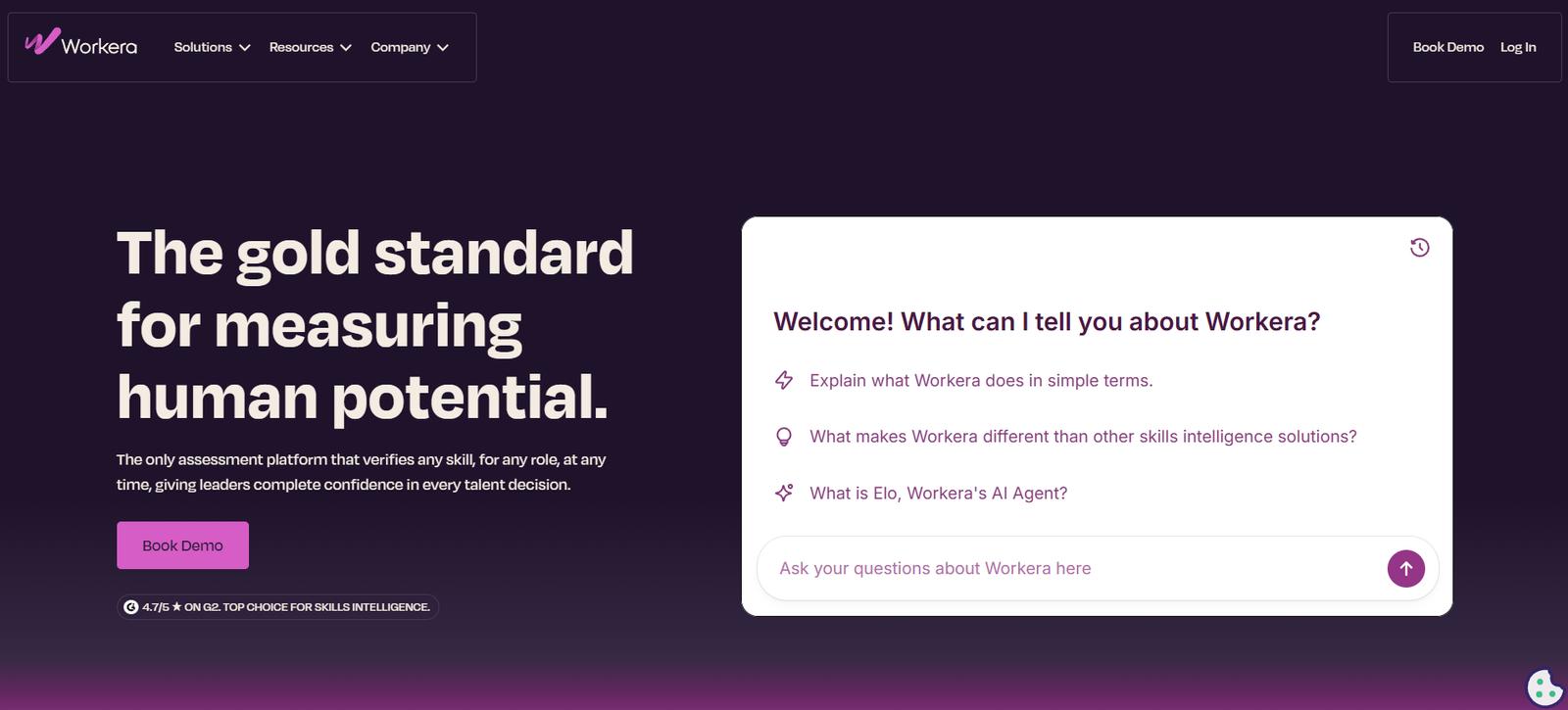
Workera is an AI-powered skills intelligence platform that helps organizations assess, understand, and develop the technical capabilities of their workforce. Designed specifically for enterprises operating in fast-evolving fields like AI, data science, software engineering, and cloud, Workera delivers personalized assessments and learning plans that align with business goals.
Founded in 2020 and based in California, Workera is built to serve the needs of companies undergoing digital transformation. It goes beyond traditional learning management systems by focusing on granular skills measurement, workforce benchmarking, and talent development strategies tailored to organizational needs.
With Workera, organizations can map individual and team skills, identify knowledge gaps, benchmark against industry standards, and recommend targeted learning pathways—all powered by AI and data analytics.
Features
Workera offers a comprehensive suite of features for skill measurement and talent development.
AI-Powered Skill Assessments: The platform provides adaptive, role-specific assessments that measure over 7,000 micro-skills across domains such as AI, data science, software engineering, cybersecurity, and cloud.
Granular Skill Profiles: After assessments, users receive detailed skill profiles showing strengths, weaknesses, and development areas at a micro-skill level.
Workforce Intelligence Dashboard: Organizations get a complete view of team skills, trends, and gaps, enabling better decision-making around talent development and team structuring.
Skill Benchmarking: Workera benchmarks individual and team performance against industry standards, global peers, and top-performing professionals.
Personalized Learning Plans: Based on skill gaps, Workera recommends tailored learning paths from integrated platforms like Coursera, edX, LinkedIn Learning, and internal company resources.
Custom Role Profiles: Companies can define custom role requirements and use Workera to assess readiness, match talent, and identify high-potential candidates.
Talent Mobility: HR and L&D teams can identify employees ready for promotions or lateral moves based on verified skill readiness.
Skills Ontology: Workera’s proprietary skills ontology keeps pace with emerging technologies, ensuring assessments and recommendations remain relevant.
Integration Capabilities: Workera integrates with popular HRIS, LMS, and LXP platforms, enabling seamless workflows within existing enterprise systems.
Privacy and Security: The platform is SOC 2 certified and designed with enterprise-grade privacy controls and compliance in mind.
How It Works
Workera helps organizations and learners build a data-driven understanding of skills in a structured process:
Step 1 – Define Skills Strategy: Organizations define strategic roles, capabilities, or transformation objectives.
Step 2 – Assess Skills: Employees take AI-powered assessments that dynamically adapt based on answers, providing a granular analysis of strengths and gaps.
Step 3 – Visualize Insights: HR, L&D, and team leads access a real-time dashboard that visualizes individual and team-wide skill data.
Step 4 – Benchmark Performance: Compare internal talent with external benchmarks to identify leaders, laggards, and strategic needs.
Step 5 – Recommend Learning: Workera generates personalized learning journeys mapped to each user’s skill gaps and the organization’s goals.
Step 6 – Track Progress: Over time, skill progress is tracked, enabling continuous development and performance improvement.
Use Cases
Workera supports a variety of use cases across industries and organizational functions:
AI and Tech Workforce Development: Upskill engineers, data scientists, and ML professionals to keep up with the rapid pace of technological change.
Digital Transformation: Support large-scale transformation initiatives by understanding existing skill readiness and closing capability gaps.
Talent Mobility: Help HR identify internal talent ready for new roles, reducing the need for external hiring.
L&D Personalization: Deliver customized learning journeys based on individual skill profiles instead of generic course catalogs.
Hiring and Talent Acquisition: Use assessments to evaluate job candidates on technical roles and benchmark them against internal talent.
Team Structuring: Use skill data to build balanced, high-performing teams based on complementary strengths.
Leadership Development: Identify high-potential individuals and tailor leadership training based on technical and strategic competencies.
Mergers and Acquisitions: Evaluate technical skill capabilities of acquired teams to integrate them effectively into the organization.
Pricing
Workera does not publicly list detailed pricing information on its website. Instead, it offers custom pricing models based on enterprise needs, team size, and integration requirements.
Workera typically works with mid-sized to large enterprises and tailors solutions for HR, L&D, and transformation teams.
To get accurate pricing, companies must request a demo or contact Workera’s sales team through the official contact page.
Strengths
Workera offers several strengths that differentiate it from traditional learning and development tools:
Granular Skill Assessment: Unlike basic quizzes or course completions, Workera evaluates thousands of micro-skills for deep insights.
Role-Specific Benchmarks: Assessments are tailored to real job roles, ensuring alignment with business needs.
AI-Powered Personalization: Adaptive assessments and learning journeys match the pace and needs of each learner.
Enterprise-Ready Platform: Built for scale, privacy, and security, with integrations into existing HR and L&D systems.
Data-Driven Strategy: Provides actionable insights for HR and business leaders to inform hiring, promotion, and learning decisions.
Content Agnostic: Integrates with multiple learning providers so companies can use existing resources while adding precision.
Continuous Skill Development: Supports lifelong learning and internal mobility by tracking progress and skill evolution over time.
Drawbacks
While powerful, Workera has a few limitations that may affect some users or use cases:
Enterprise Focused: The platform is not available for individual users or small teams without enterprise agreements.
Opaque Pricing: Lack of publicly listed pricing may delay decision-making for smaller organizations.
Requires Strategic Buy-In: To get full value, companies must align Workera with broader HR or transformation strategies, which can take time.
Technical Domains Only: Workera currently focuses on technical and data-related roles; non-technical functions may not have the same level of support.
Initial Setup: Customizing skill frameworks and integrating data may require onboarding support and internal resources.
Comparison with Other Tools
Workera is different from traditional LMS platforms like Cornerstone or learning content libraries like Udemy Business. While those focus on content delivery, Workera focuses on skills intelligence—the measurement and development of skills in a strategic and data-driven way.
Compared to Degreed or Pluralsight, which offer learning paths and assessments, Workera goes deeper into granular skill evaluation, benchmarking, and adaptive testing.
Workera is most comparable to Eightfold or Gloat in terms of talent intelligence, but its unique strength lies in the technical depth of its assessments and the AI-powered personalization of learning strategies.
If your organization needs not just learning content but real clarity on team skills and development paths, Workera offers a more precise solution.
Customer Reviews and Testimonials
Workera is used by global enterprises including Siemens Energy, Accenture, Samsung SDS, and other Fortune 500 companies. According to customer testimonials on the official site and case studies, users appreciate the depth of skill insights and the ability to align learning to business outcomes.
Organizations using Workera have seen improvements in time-to-productivity, better internal mobility, and more effective transformation execution.
Testimonials also highlight the credibility of Workera’s assessments, which are developed in collaboration with experts in AI, software engineering, and data science.
While public reviews are limited due to the enterprise nature of the product, client feedback points to high satisfaction with platform accuracy, insights, and enterprise support.
Conclusion
Workera is a next-generation platform for enterprises looking to build data-driven, AI-enabled talent strategies. Its focus on skill measurement, benchmarking, and personalized development makes it a powerful tool for organizations undergoing digital transformation or scaling technical teams.
Unlike traditional LMS platforms that focus on course delivery, Workera emphasizes understanding skills at a deep level—so companies can make better hiring decisions, improve internal mobility, and drive continuous workforce development.
If your organization needs a smarter way to assess and grow your technical talent, Workera offers a strategic, enterprise-grade solution built for the demands of today’s digital economy.