Chamberly is an AI-powered legal assistant designed to simplify the contract lifecycle for businesses, lawyers, and professionals. Built specifically for legal document creation, review, and analysis, Chamberly leverages artificial intelligence to help users draft, edit, and understand contracts faster and more accurately.
The platform is designed to reduce reliance on manual legal processes and empower users to generate legally sound contracts without needing constant input from legal counsel. Whether it’s reviewing complex clauses or generating a fresh NDA, Chamberly automates tedious legal tasks with precision.
Chamberly is particularly valuable for startups, small businesses, legal teams, and individuals who need fast, reliable legal support without high attorney fees.
Features
Chamberly offers a robust set of AI-driven features tailored for legal workflows:
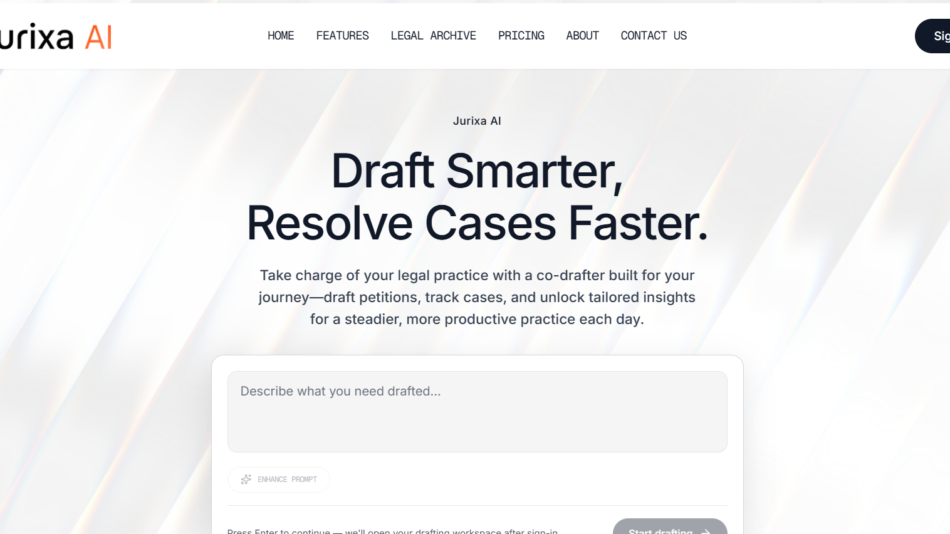
Contract Drafting: Automatically drafts legal contracts such as NDAs, employment agreements, service contracts, and more based on user input.
Clause Library: Provides a growing library of pre-vetted legal clauses that users can insert, modify, or review as needed.
Contract Review: Upload existing contracts to get a clause-by-clause breakdown, analysis, and suggested improvements or risk flags.
AI Legal Summaries: Summarizes complex legal language into plain English, helping non-lawyers understand key obligations and risks.
Contract Comparison: Highlights changes between different versions of the same contract, useful for redlining and negotiation.
Custom Clause Insertion: Add and edit custom clauses with AI assistance to ensure alignment with the overall contract language and tone.
Legal Query Chat: Users can ask legal questions about their contract, such as “What does this clause mean?” or “Is this clause enforceable?”
Data Privacy & Security: Uses secure encryption to handle sensitive legal data, maintaining client confidentiality.
Browser-Based Interface: Accessible via web browser with no need for software installation.
How It Works
Chamberly’s user experience is centered around simplicity and legal accuracy. Users begin by selecting whether they want to draft a new contract, review an existing one, or edit specific clauses.
For drafting, the platform asks for inputs such as contract type, parties involved, jurisdiction, and key terms. It then generates a complete, editable contract using legally standardized language. Users can insert or replace clauses as needed using the AI-powered clause library.
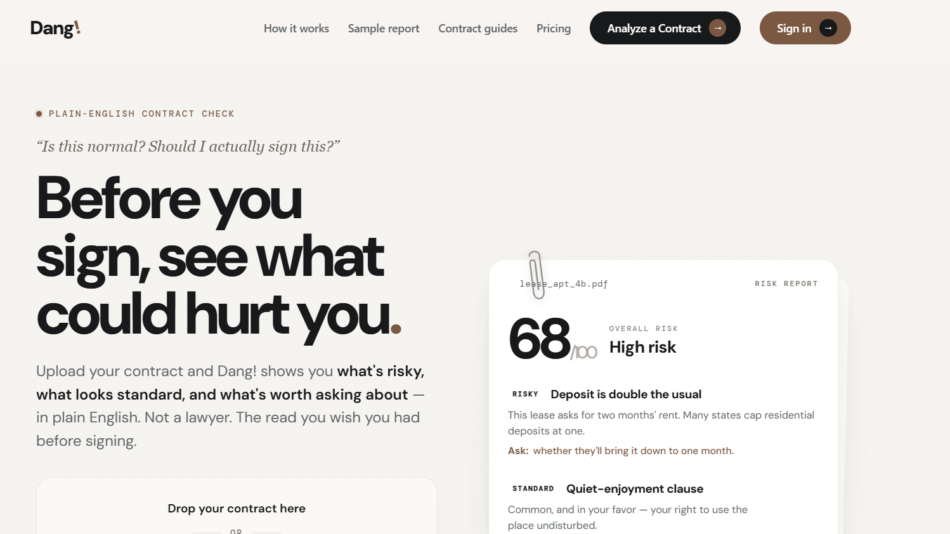
For reviewing existing contracts, users upload a document, and the AI provides a detailed breakdown of each clause, highlighting potential legal risks, obligations, or ambiguities. It also suggests edits and provides plain-language summaries for easier understanding.
Chamberly’s legal query function allows users to interact with the document, asking natural language questions to clarify legal concepts or obligations within the contract.
Use Cases
Chamberly is designed to support a wide variety of legal and business use cases:
Startups and SMBs: Generate contracts quickly without hiring a full-time legal team. Draft NDAs, partnership agreements, and vendor contracts on demand.
Freelancers and Consultants: Create professional service agreements and protect intellectual property with solid legal templates.
In-House Legal Teams: Accelerate contract workflows by automating first drafts, redlines, and reviews across departments.
Law Firms: Use AI to handle repetitive drafting tasks and provide faster client service, especially for high-volume contract work.
Procurement and HR Teams: Draft employment contracts, service agreements, and vendor terms with minimal legal bottlenecks.
Sales and BD Teams: Review incoming contracts or redline proposed terms during negotiations to reduce dependency on legal counsel.
Pricing
Chamberly does not list standard pricing on its website. Instead, the platform is currently in early access or private beta, and prospective users are encouraged to request access or schedule a demo through the site.
Pricing will likely vary based on usage volume, team size, and feature access. The company appears to be targeting professionals, legal departments, and startups, which suggests a subscription-based or usage-tiered model is likely.
To request access or get pricing information, visit https://www.chamberly.net and fill out the early access form.
Strengths
Chamberly’s primary strength lies in its legal specificity. Unlike general-purpose AI writing tools, Chamberly is purpose-built for legal content, which ensures higher accuracy, relevance, and compliance.
The platform’s intuitive interface and intelligent clause analysis make it highly accessible for users with little to no legal background, while still offering deep value for legal professionals.
Its contract review and summarization features are especially useful for speeding up negotiations and ensuring informed decision-making. The ability to ask legal questions directly within a document further enhances productivity.
Chamberly also appears committed to privacy and data security—critical elements for handling sensitive legal materials.
Drawbacks
Chamberly is currently in limited access, which means that many users will need to wait for approval or onboarding before using the platform. This may slow adoption for teams needing immediate solutions.
Because the tool is AI-driven, it may not always capture the full legal context or jurisdiction-specific nuances of complex contracts. Users are still advised to seek legal review for high-risk agreements.
There is also no indication yet of integrations with contract management systems, e-signature tools, or document storage platforms—features that would be helpful for enterprise workflows.
Additionally, the lack of transparent pricing may deter some potential users looking to compare solutions quickly.
Comparison with Other Tools
Chamberly competes in a growing category of AI legal tools alongside platforms like Spellbook, LawGeex, and DoNotPay.
Compared to Spellbook, which integrates with Microsoft Word to assist lawyers while drafting contracts, Chamberly offers a more standalone platform ideal for both legal and non-legal users.
LawGeex is tailored for enterprise legal teams and focuses more on contract review automation, while Chamberly combines both drafting and reviewing in one interface.
Unlike DoNotPay, which focuses on consumer-facing legal issues (e.g., fighting parking tickets), Chamberly is built for professional contract generation and business workflows.
Its flexibility, usability, and AI clause support make it a balanced option for teams that need end-to-end contract assistance without full legal outsourcing.
Customer Reviews and Testimonials
As Chamberly is still in early access, there are currently no public customer reviews or case studies available on the website.
However, based on the professional design, feature set, and positioning, it appears targeted at business users and legal professionals seeking a reliable, AI-enhanced alternative to manual contract work.
As adoption increases, reviews are likely to appear on platforms like Product Hunt or legal tech directories. For now, interested users can monitor updates via the company’s site or newsletter.
Conclusion
Chamberly is a promising AI legal assistant built for modern contract workflows. By combining automated drafting, intelligent clause review, and natural language support, it allows businesses and legal professionals to accelerate contract creation and analysis without compromising on accuracy.
Its easy-to-use interface and AI-guided suggestions make legal work more accessible to non-lawyers while offering time-saving tools for legal teams and solo practitioners.
While still in early access, Chamberly represents a forward-thinking approach to legal automation—making legal support faster, smarter, and more affordable for growing businesses.