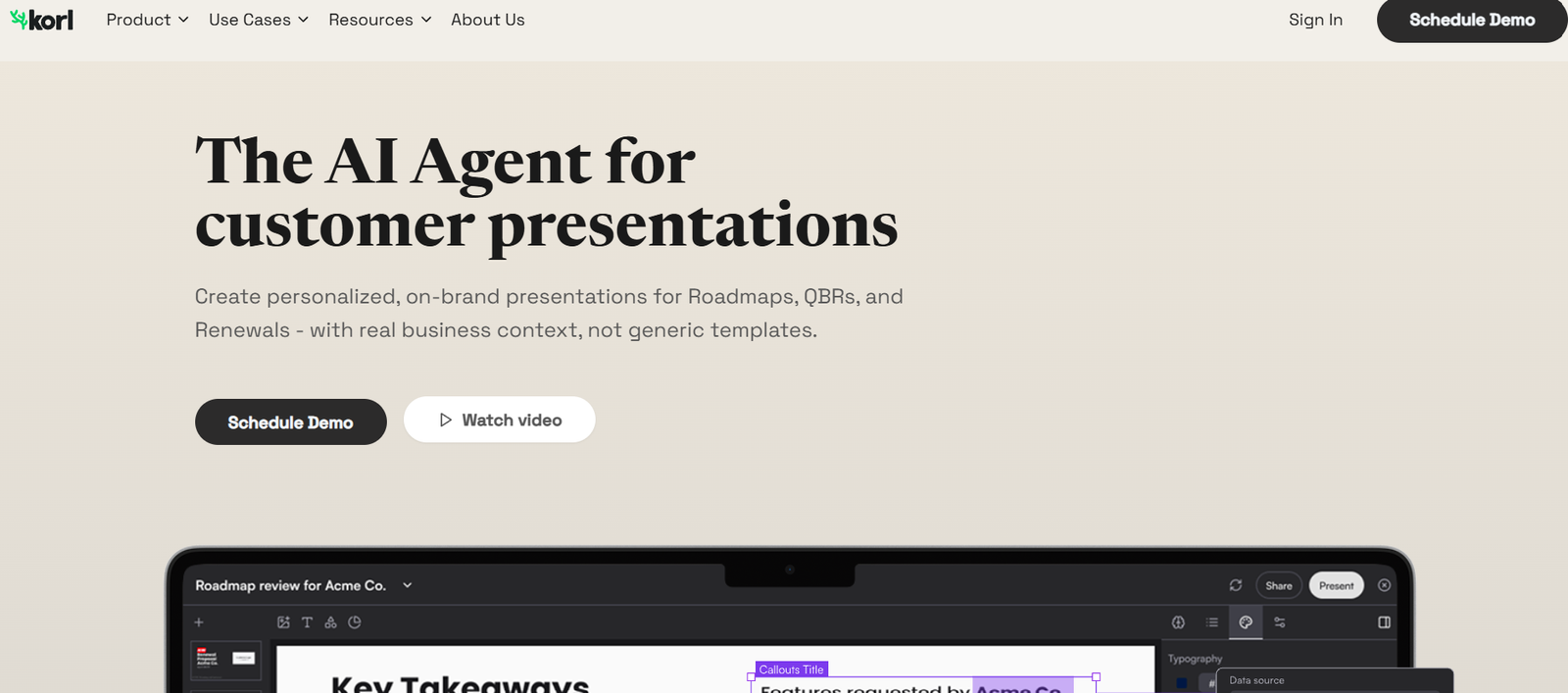
Korl is an AI-powered workspace designed to help teams automate the way they work while documenting their workflows in real time. It bridges the gap between process execution and process documentation by observing how users perform tasks across tools and translating those actions into clean, shareable workflows. Korl is particularly useful for fast-moving teams looking to scale operations, train new members efficiently, and maintain organizational knowledge without interrupting daily productivity. By removing the manual effort from process documentation, Korl enables companies to create living knowledge bases, streamline onboarding, and ensure that every step of their work is captured, clarified, and repeatable.
Features
Korl offers a set of intelligent features designed to automate workflow capture and make knowledge transfer seamless. The core functionality revolves around observing how users complete tasks in their day-to-day work and using that information to automatically generate detailed documentation. As team members complete processes such as onboarding a client, updating a CRM, or launching a marketing campaign, Korl quietly tracks the sequence of steps taken across tools and interfaces. It then transforms those sequences into structured workflows that can be saved, edited, and shared across teams. These workflows are visually clear and easy to understand, which reduces the need for repeated explanations and manual write-ups.
Another core feature is Korl’s AI-powered assistant that helps refine workflows into more formal documentation. Users can interact with the assistant to clarify steps, add context, or adjust the language of the instructions. The platform also supports centralized workflow management, enabling teams to store and organize process knowledge in one unified space. This eliminates the confusion of scattered documentation across wikis, PDFs, or Slack threads. Because Korl operates in the background, it minimizes disruption and captures work as it naturally happens, rather than requiring users to switch tools or stop what they’re doing to document processes manually.
How It Works
Korl is designed to integrate seamlessly into a team’s daily work without introducing friction. After onboarding, Korl runs in the background and monitors task execution as team members go about their responsibilities across software tools. It captures the user journey by recording the steps taken, such as clicking through tools, entering data, switching between platforms, or completing specific actions. This recorded behavior is then processed by Korl’s AI, which transforms the raw data into a structured and readable workflow. Users can review and refine the draft workflow, add annotations or explanations, and approve it for sharing with others.
Once a workflow is finalized, it can be stored in the team’s shared workspace, where it is accessible for training, reference, and reuse. The platform’s design focuses on minimizing active participation so that teams can focus on the work itself while Korl takes care of documentation in the background. Because the system learns from real actions rather than user guesses or assumptions, the resulting documentation tends to be more accurate and useful. Korl replaces the need for screen recordings, step-by-step screenshots, or manually written guides by automatically generating contextual, navigable process documents.
Use Cases
Korl is built for teams that rely on repeated processes and need to share how things get done. One primary use case is internal training and onboarding. Companies often struggle to teach new hires the right way to complete tasks without pulling senior staff away from their responsibilities. With Korl, teams can create onboarding documentation automatically simply by having an experienced employee complete the task once. The resulting workflow becomes a reusable training asset for future hires.
Another strong use case is for scaling teams that are trying to establish operational consistency. As companies grow, their internal processes evolve quickly. Without proper documentation, teams risk making avoidable mistakes or duplicating efforts. Korl enables organizations to capture those evolving processes in real time so that the most up-to-date method is always accessible. Customer-facing teams can use it to document client workflows, technical support steps, or onboarding sequences. Operations and RevOps teams can document internal systems usage such as CRM workflows, financial reporting steps, or procurement procedures.
Startups, remote-first teams, and companies experiencing high turnover can also benefit from Korl, as it ensures that process knowledge is not lost when individuals leave or change roles. By creating a centralized and automated record of how things are done, Korl supports both productivity and long-term knowledge retention.
Pricing
Korl currently offers early access through its waitlist, and full pricing details are not published on the homepage at the time of writing. Based on its positioning and the invitation to join for early access, Korl is likely operating in a closed beta or limited release phase. Teams can request access via the website by filling out a brief form. Once approved, users receive onboarding support and access to the platform’s features. While public pricing tiers are not available, the early access model suggests Korl is actively working with users to refine its feature set and deliver high value before launching a general pricing model. Interested companies are encouraged to join the waitlist to receive updates on availability and pricing when it launches to the wider public.
Strengths
Korl stands out in the crowded process documentation and workflow automation space by taking a proactive, AI-driven approach to knowledge capture. Its passive tracking model reduces friction, making documentation a byproduct of doing the work rather than a separate task. This approach supports natural adoption and avoids the resistance teams often face when asked to document their work manually. Korl’s AI assistant enhances the raw capture by translating actions into clearly worded steps, creating usable guides that are ready to share or refine. The centralized workspace for storing workflows ensures that teams have a reliable, searchable source of truth for internal processes.
Another strength is the visual clarity of the workflows produced. Instead of cluttered notes or ambiguous guides, Korl provides clean, structured documentation that reflects how users actually perform tasks. This not only helps with training and scaling but also improves operational consistency. Korl’s real-time process capture ensures that documentation evolves with the team, making it more accurate than static manuals or internal wikis that often fall out of date. Its focus on real workflows rather than idealized processes gives teams a more authentic and practical approach to knowledge sharing.
Drawbacks
While Korl offers several innovative advantages, it also has limitations typical of early-stage products. As of now, access is limited to early users through a waitlist, which means not all interested teams can start using it immediately. The lack of publicly available pricing may make it harder for some businesses to evaluate the platform’s fit within their budget. Additionally, integration details are not widely documented on the homepage, so users may need to inquire directly about compatibility with specific tools or tech stacks.
Since Korl relies on passive observation of workflows, privacy and data handling will be important considerations for some teams, especially those in regulated industries. While the platform is designed to operate securely and respectfully, companies may want to conduct additional due diligence depending on their internal policies. Another area to watch will be the level of customization offered, particularly for teams with complex or highly variable processes that may not map cleanly into structured workflows.
Comparison with Other Tools
Korl differentiates itself from traditional process documentation tools like Notion, Confluence, or Loom by automating the capture process. Where tools like Notion and Confluence require manual input, and Loom requires manual recording, Korl offers a background solution that generates documentation automatically. Compared to digital adoption platforms or SOP builders that also rely on manual setup, Korl takes a more user-centric approach by capturing work as it happens. This reduces the need for training or documentation specialists and shifts the responsibility from designated roles to a platform-driven process.
While there are other tools that offer process capture, many of them are browser extension-based or limited to a specific stack. Korl appears to be platform-agnostic, capturing across tools without requiring constant configuration. This makes it more scalable for teams working across various apps and systems. Its focus on clarity, automation, and centralization makes it a strong contender in the emerging category of intelligent work documentation platforms.
Customer Reviews and Testimonials
As of now, Korl does not feature public customer reviews or testimonials directly on its homepage. However, its current early access model indicates that it is working closely with teams to fine-tune the platform based on real-world feedback. The emphasis on use cases such as team onboarding, scaling internal knowledge, and improving documentation quality suggests that user experience and feedback are core to its development strategy. Interested users are invited to join the waitlist and experience the product as early adopters, providing input that helps shape the platform as it moves toward a broader public release.
Conclusion
Korl is a forward-thinking AI workspace that transforms the way teams document and scale their processes. By capturing workflows passively and transforming them into clear, shareable documentation, Korl eliminates one of the most time-consuming aspects of organizational growth. Its automation-first approach reduces the need for manual documentation, streamlines onboarding, and creates a real-time knowledge base that evolves with the team. While still in early access, Korl offers a compelling vision for how intelligent documentation can enhance productivity, support operational consistency, and future-proof institutional knowledge. For companies looking to scale smarter, onboard faster, and document more efficiently, Korl is a solution worth watching.